

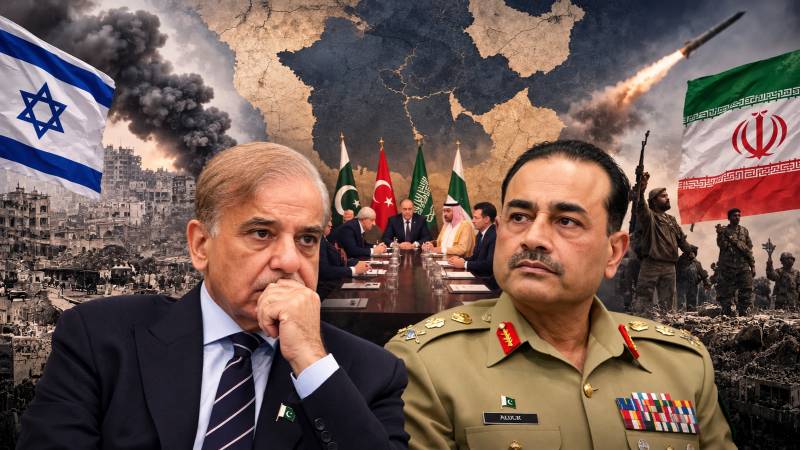
When Shehbaz Sharif and Asim Munir offered to mediate peace in the Middle East, I prayed for their success, though I was no fan of either man or of the path they had taken to secure this role. The undertaking was noble and a compulsion of geopolitics. Was there never any doubt however that our Big Twos had taken a plunge where the angels feared to tread. It was still worth its while and therefore we reminded our hybrid heads that once you chose to take a risk or start a hard task, you must not fear the troubles that follow – jab okhli mein sir diya to moosli ka dar kya. The fact but remains that good intentions or brave actions were never enough to clinch an issue. And then for someone who has seen first hand how the best laid plans come to naught, there were reasons to sound alarm.
Every year in Oslo, they collect some of the best expertise to resolve conflicts. The success rate is close to zero. Even their flagship projects like the mid 1990s accords on Israeli-Palestinian conundrum, which bagged three Nobel Peace Prizes, were virtually dead on arrival. The fate of our own Composite Dialogue that withstood bolts like Kargil, nuclear tests, and 9/11 has not been much different – hardly anyone remembers what it was all about. Stumbling blocks ahead of our latest efforts to save the world from going over the edge are indeed far more complex.
Peace is a Process — and the Path is the Target. This one is full of thorns all the way. Don’t take your eye off the ball.
By all accounts Israel was the instigator of the war started on the 28th of February. To survive as a Zionist state, the country has to live in a state of conflict or, risk getting buried in sand or drowned in the read and the dead seas. Ceasing hostilities without a reasonable claim of success would sound death knell for Tel Aviv. Trump may not be in quite as desperate a situation, but he was still reluctant to end the war without some so-called face-saving. With many of his closest allies unable to endorse his rhetoric, he certainly finds himself in a pickle. In view of all these complexities, how come we thought about the Mecca Pact! Wasn’t it obvious that for the success of our mission, acting neutral, as an honest broker in other words, was the sine qua non! Any bias for an American favourite like the MBS led Kingdom was bound to deliver a fatal blow to our status. No idea what led the two countries, Pakistan and Turkey, not exactly known for any profound thinking, take the bait but the cardinal sin they committed was ignoring the first principle of war — the maintenance of aim. A military led dispensation was expected to pursue that at all cost.
What for example could happen if the Iranians were compelled to bomb Prince Sultan Air Base used against them, or the Houthis found reasons to drone some targets in Saudi Arabia! It was not too difficult to figure out, nor how to rationalise any lack of response. Since we did not, chances of our joining the war on the Saudi side became brighter and of the mediatory role less credible. It’s immaterial why we got sucked in to defend the sacred shrines; fulfil a historical commitment; or get more money. A holy mission was jeopardised. It may still be possible to get back from the brink. Wars are the preferred options for many, who find the price of peace less affordable. The American-Israeli nexus seems to believe that it hasn’t yet bled enough. If that were to be too tall an order, please remember that Peace is a Process and the Path is the Target. This one is full of thorns all the way. Don’t take your eye off the ball.