


‘Accelerationism,’ once an obscure preoccupation of 1990s British academia, has mutated into a potent theological and political tool for various radical movements. While its origins lie in a postmodern critique of Marxist theories, its contemporary application by right-wing Zionists, Christian nationalists and Islamists reflects a shift from secular dialectics to apocalyptic action. Arguably, it is a typical outcome of postmodernist theories.
This article explores the transition of Accelerationism to its current role as a catalyst for societal collapse, aimed at ushering in divergent visions of an authoritarian or divinely-mandated order.
The Philosophy
In the early months of 2026, the Middle East has become the primary laboratory for a dangerous geopolitical experiment: the application of accelerationist logic to state-level warfare. The joint US-Israel strikes against Iran represent more than a standard military intervention. Following the assassination of Supreme Leader Ali Khamenei in February 2026, the rhetoric surrounding the conflict has shifted from strategic containment to an explicit desire for total systemic collapse.
This conflict illustrates how accelerationism, the philosophy of ‘speeding up’ a perceived inevitable collapse to birth a new order, now influences high-level statecraft. In Washington and Jerusalem, proponents argue that the Iranian regime’s internal fragility, exacerbated by economic misery and the 2025–2026 protests, presents a singular opportunity to shatter the existing regional architecture. According to The Cairo Review of Global Affairs, by intentionally provoking a high-velocity confrontation, these actors seek to bypass traditional diplomacy in favour of a singularity (or a single event) that they believe will forcibly reset the Middle East.
The story of accelerationism begins at the University of Warwick in the mid-1990s. Young intellectuals Nick Land and Sadie Plant posited that capitalism was not a system to be overthrown from the outside, but a self-augmenting force that should be pushed to its furthest limits to trigger a ‘singularity.’ As documented in Land’s early work, the sheer velocity of digital technology and market forces would eventually dissolve the human subject and the state alike.
However, Land’s trajectory shifted significantly following his relocation to Shanghai, China. Abandoning the quest for an ‘equitable’ post-capitalist future, he became a central figure in the so-called Neoreactionary (NRx) movement born from what in 2012, Land termed as the ‘Dark Enlightenment’. In this phase, Land advocated for ‘Patchwork’ or a world of sovereign, authoritarian city-states managed by CEOs. This vision has found a receptive audience among Silicon Valley figures like Peter Thiel, who famously wrote in a 2009 essay: “I no longer believe that freedom and democracy are compatible.”
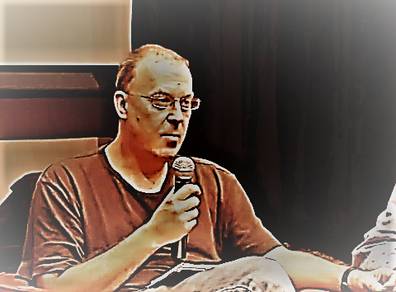
By 2025, journalists have noted Land’s influence at events such as the ‘Coronation Ball’ for populist figures, where the ‘RAGE’ (Retire All Government Employees) program, a strategy to dismantle the federal bureaucracy, was openly discussed as a means to achieve ‘techno monarchy.’
While Land’s accelerationism is technocratic, its logic that one must hasten a collapse to achieve a desired end has been adopted by religious movements that view current geopolitical stability as an obstacle to ‘divine prophecy.’
Impatience With History
In the context of contemporary Israel, accelerationist logic is visible in the non-secular factions of Zionist movement, specifically regarding the reconstruction of the Third Temple. Mainstream Orthodox Judaism traditionally maintains a ‘quietist’ stance, believing the Temple will be rebuilt only upon the arrival of the Messiah. However, groups such as the Temple Institute represent a proactive accelerationism.
By advocating for a Jewish presence on the Temple Mount and preparing ritual elements, such as the breeding of Red Heifers imported from Texas in 2022, these actors seek to ‘force the hand’ of the Divine. These rituals are viewed as the ‘key’ to the Temple. These groups want to effectively accelerate the possibility of a regional ‘Final Battle,’ which they believe is the necessary precursor to the Messianic age.
As the 'liberal' West succumbs to high-velocity populist outrage, the ultimate bulwarks against accelerationism may surprisingly be found in fiercely pragmatic states like China, Pakistan and Türkiye
In the United States, Christian nationalist accelerationists often utilize the Seven Mountain Mandate (7MM). This dominionist theology holds that Christians must occupy the ‘seven mountains’ of societal influence: family, religion, education, media, arts, business and government. The accelerationist element lies in the desire to dismantle the secular state to ‘clear the ground’ for this dominion. In his book, The Seven Mountains Mandate: The Rise of Christian Imperialism (2025), Matthew Boedy argues that this movement has moved from the evangelical fringes to the White House.

By supporting ‘wrecking ball’ populist politics and radical deregulation, these actors aim to trigger an institutional collapse that they believe will allow for the ‘Christianisation’ of America. For these believers, the destruction of democratic norms is a tactical necessity for the return of Christ.
A parallel accelerationism is observable in the rise of radical Hindu nationalism (Hindutva) in India. While mainstream politics focuses on development, more radical factions seek to accelerate the collapse of India’s secular, constitutional framework to usher in a Hindu Rashtra (Hindu nation). This movement seeks to ‘reset’ history by aggressively undoing the legacies of Mughal and British rule.
According to C Bhatt in Hindu Nationalism and the Politics of History (2025), this involves the demolition of legacy structures and the rapid rewriting of institutional norms. By heightening communal tensions through digital mobilisation, these actors aim to reach a ‘breaking point’ where the secular state is rendered unworkable, forcing a transition into a ‘civilisational state’ that mirrors Land’s vision of an ethnocentric, authoritarian enclave.
To the Islamist accelerationist, the collapse of the modern nation-state system is a tactical goal. They use the speed of social media and encrypted technology to accelerate the ‘End of Days’ narrative, viewing the ensuing chaos as the crucible in which the true Caliphate will be forged. Islamist militancy, particularly in the evolution of ISIS (Da’esh) and its affiliates, operates on a purely accelerationist framework. Unlike traditional political Islam, which may seek gradual reform, groups such as ISIS-K utilise extreme violence to polarise societies. This is a tactic they call ‘eliminating the grey zone.’ By conducting high-profile attacks and leveraging digital propaganda, they aim to provoke state overreach and ‘Crusader’ intervention.
Accelerationism, now embedded across right-wing Christian, Zionist, Hindutva and Islamist actors, is designed to make coexistence impossible, forcing a total collapse of the international order.

The common thread between the Third Temple activist, the Hindu nationalist, the Christian nationalist and the Islamist militant is a profound impatience with history. Digital technology has served as the ultimate accelerant, providing the tools for radicalisation and the platforms for spreading ‘hyperstitions’ or fictions that make themselves ‘true’ or at least are explained as such. This concept was first introduced by Land in 1995. It is a slight spin on the idea of self-fulfilling prophecies.
Actioning Dystopia
The presence of tech titans like Elon Musk and Jeff Bezos at political inaugurations alongside accelerationist ideologues suggests that the dystopian version of accelerationism has moved from theory to practice. It seeks a future in which the state is replaced by a ‘gov-corp’ (a state run by CEOs) as theorised by the far-right ideologue Curtis Yarvin in Formalist Manifesto (2008).
The success of accelerationism relies on ‘uncanny facilitators’: populist leaders who, while perhaps not self-identifying as accelerationists, serve as the delivery mechanism for systemic shock. Figures such as Donald Trump, Jair Bolsonaro, Benjamin Netanyahu, Narendra Modi and Imran Khan became vital to this philosophy because they seek to do away with the ‘limitations’ of established government norms.
In the US and Brazil, Trump and Bolsonaro targeted the ‘Deep State’ and environmental/economic regulations, intentionally weakening the institutional guardrails of their respective republics. By painting state institutions as the inherent ‘enemies of the people,’ they validated the accelerationist belief that the modern state is ‘legacy code’ that must be deleted.
In Israel, Netanyahu’s reliance on far-right ministers has allowed accelerationist agendas regarding the Temple Mount to enter the cabinet, moving fringe apocalyptic goals into the realm of state policy.

In India, Modi has leveraged digital surveillance and a ‘muscular’ leader image to bypass traditional democratic checks, rebranding the state as a civilisational entity.
Similarly, Imran Khan in Pakistan utilised digital technology to mobilise a populist base against the ‘legacy’ political establishment. He attempted to overthrow it, no matter what the cost. Perhaps this is why western politicians who openly sympathise with Israel’s right-wing Zionist regime and, on the other hand, with American Christian nationalism, have been vocal about demanding Khan’s release from jail? They see him as an accelerant.
By fostering an atmosphere of total institutional distrust and ‘cleansing’ the old guard, these populists create the very vacuum that accelerationists believe is necessary for the transition to a techno-theocratic or CEO-led order. The current US-Israel attacks on Iran are being pursued by accelerationists as the ultimate ‘cleansing’ fire. By decapitating the Iranian leadership and striking nuclear facilities, these actors are not seeking a better treaty. They are seeking the total disintegration of the Iranian state. To the accelerationist, a collapsed Iran is the wild card that will destroy the current global energy and security architecture, clearing the way for Land’s ‘Patchwork’ or the Temple Mount’s ‘Messianic Age.’
In a dark irony, Islamist groups such as ISIS and TTP find themselves in a symbiotic relationship with right-wing Western accelerationists. Their apocalyptic worldviews are remarkably compatible. Both sides believe that a final, cataclysmic confrontation between Jewish/Christian forces and the ‘true’ Caliphate is the only way to resolve history.
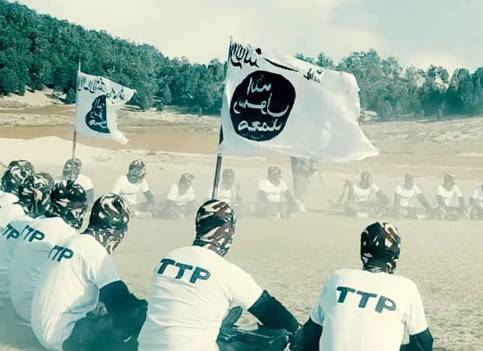
This might explain why ISIS and the TTP overwhelmingly target Muslim-majority states who they consider ‘faulty’ Muslims. In their view, these Muslim-majority states are obstacles of the ‘grey zone’ that must be removed to allow the ‘pure’ forces to meet their Western counterparts in an ‘End of Times’ battle.
End of Times or A New Beginning?
According to Yarvin, when the state will be replaced by a ‘gov-corp’ or a techno-religious fiefdom, the world as we know it, built for and by ordinary people, will be lost. Accelerationism relies on the belief that the current world is already a ‘corpse.’ Therefore, protecting the ‘worn out’ institutions of international order and the supposed ‘limitations’ of law may be the only way to prevent landing in an accelerated authoritarian void.
But with the ‘liberal’ West rapidly being defanged by right-wing forces, and paralysed by the erosion of the post-War order that it shaped, the traditional defenders of stability are vanishing. Therefore, the final barriers to accelerationism may be found elsewhere. It may well be aggressively secular, authoritarian states such as China, already an economic and military superpower, and the-now ruthlessly pragmatic, heavily armed Muslim-majority states such as Pakistan and Türkiye that become the bulwarks against this chaotic tide.
In a scenario in which the world seems intent on rushing toward the abyss, the most radical act may simply be to slow down to absorb what the great powers in the Global North once held but are now seeing slipping away through their fingers. This involves a deliberate reclamation of the concept of the 'long-term', or the steady, institutional stewardship that ensured predictability and public trust. While Western powers as well as Asian regions such as India succumb to the high-velocity churn of populist outrage and digital disruption, the states that survive may be those that dodge the 'singularity' of collapse.
Drawing on the work of the 19th-century Muslim ‘modernist’ Syed Ahmad Khan, one could argue that great European epochs such as the Renaissance and the Enlightenment which empowered Western societies through science, reason and the demystification of religion, were originally inspired by a ‘golden age’ of Islamic learning and innovation. This period of material and intellectual growth flourished under Muslim empires before they eventually collapsed into a state of inertia, superstition and conservatism.
Viewed through this historical lens, Nick Land’s ‘Dark Enlightenment’ might uncannily represent a reversal of that very trajectory. As Western civilisations today appear to slide into their own form of inertia and reactionary fantasy, a vacuum is being created. This presents a distinct opportunity for Muslim societies to absorb the very ideas, systems and principles of progress that are currently up for grabs, reclaiming a legacy of progressive pragmatism as the Global North abandons it.