

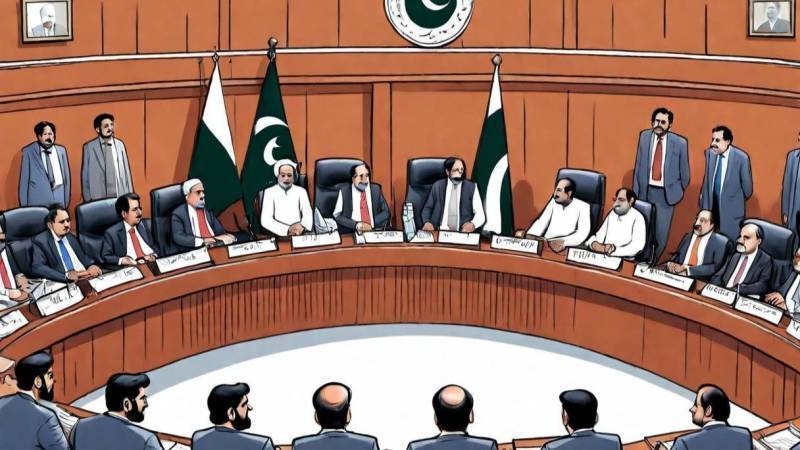
As Max Weber famously noted, the legitimacy of bureaucracy rests on its neutrality and the clear separation between personal and official spheres, ensuring that policies are seen as products of the state and not of personalities. If government servants maintain personal social media accounts, appearing in uniform or using official settings dangerously blurs this line, making it seem as though individual opinions are endorsed by the state. Denhardt, a prominent scholar in public administration, argues that the principle of “serving citizens, not customers” anchors public administration in humility, civility, and collective responsibility. Yet, again this ethos is compromised when officials transform routine and statutory administrative duties into opportunities for self-promotion, effectively presenting mandated bureaucratic functions as personal accomplishments.
Such behaviour shifts the focus from public duty to personal branding and risks eroding the dignity of service, while appearing less as impartial custodians of the public good and more as actors advancing their own reputations. As a result, their actions are framed not as the execution of delegated duties, but as discretionary favours bestowed upon the public as well as the state. As George Eliot once quipped, “The reward of one duty is the power to fulfil another” — not a standing ovation for simply doing one’s job.
In Pakistan’s legal framework, public servants are bound (at least in theory) by strict standards of conduct to safeguard integrity and public confidence in state institutions. The Government Servants (Conduct) Rules, 1964 prohibit any behaviour that compromises neutrality or trust, while the Civil Servants (Efficiency and Discipline) Rules, 2020 establish mechanisms to hold officials accountable for misconduct, including misuse of official or public platforms. These are reinforced by the Prevention of Corruption Act, 1947, relevant provisions of the Pakistan Penal Code (PPC) on abuse of authority, and the Establishment Code (Estacode), which collectively enshrine ethical governance. Within this framework, social media activity that violates these principles is not merely inappropriate; it constitutes professional misconduct that warrants disciplinary action.
However, as in many other instances, the implementation of these rules remains weak in Pakistan. In practice, many civil servants not only maintain personal social media accounts without regard for official restrictions, but also openly flaunt their professional identity and opinions in ways that compromise neutrality. In recent years, several cases have highlighted weak enforcement of conduct rules in Pakistan: in 2020, six Sindh officials were suspended for posting a selfie with a quarantined COVID-19 patient, while in 2021, young “celebrity bureaucrats” faced criticism for using Twitter and photo-ops for self-promotion. More recently, in 2024, the Sindh Police suspended over a dozen officers for TikTok videos in uniform, and the government reissued directives barring civil servants from political or religious expression on social media.
The government must recognise that ordinary competence should not be treated as exceptional; rewarding “blue-eyed” bureaucrats for merely fulfilling their basic duties undermines professional standards and sets a harmful precedent
These incidents highlight a tension in Pakistan’s bureaucracy between formal rules and everyday practice: despite a long history of codified conduct regulations, civil servants often drift towards performative or spectacle-driven behaviour on digital platforms. By contrast, municipalities in Central and Eastern Europe deploy social media in a restrained and professional manner, reflecting a distinct approach to public communication. This contrast is revealing because, like Pakistan, many of these states are relatively recent in consolidating democratic-bureaucratic norms, yet their digital practices signal more disciplined adherence to neutrality.
For instance, a study on public e-service profiles in Polish public institutions found that these entities maintain a consistent and informative presence on major social networking sites. This contrast with Pakistan illustrates that formal rules alone are insufficient; effective implementation, institutional capacity, and political support are all critical in ensuring that digital engagement reinforces professionalism rather than devolving into performativity.
Sociologists like Manuel Castells highlight how unmediated digital visibility can distort hierarchies, privileging “celebrity bureaucrats” who gain public influence outside formal accountability mechanisms. In fragile governance contexts like Pakistan, this spectacle of service reinforces performative governance, where symbolic acts substitute for substantive reform, enabling bureaucrats to shield inefficiencies or misuse of power behind curated narratives, thus normalising discretion and weakening institutions.
When bureaucrats turn official duties into self-promotion, their rule-abiding colleagues are prone to feel demotivated by relative deprivation, which is a psychological state where individuals perceive unfair advantage for others despite doing similar work. Sociologically, this creates a status imbalance within the service, where recognition flows to visibility rather than merit, undermining collective morale and fostering cynicism toward institutional norms. The result is a divided bureaucracy of ‘performers’ and ‘silent workers’, creating a perverse incentive structure where officials pursue visibility and applause rather than fulfilling their duties; a dynamic that can slip into forms of administrative corruption such as favouritism, or bending rules to create showy outputs.
In the long run, as Max Weber emphasised in his theory of rational-legal authority, bureaucratic legitimacy rests on impersonal rules and procedural neutrality rather than charismatic or personalised displays of achievement. Similarly, public administration is grounded in serving the collective good through accountability, equity, and civility, and such values are undermined when routine administrative functions are reframed as individual triumphs on social media. Research on governments’ use of digital platforms, including studies by Bertot et al., demonstrates that when officials engage in self-promotion, it not only distorts the normative foundations of impartiality but also diverts attention from institutional performance to personal visibility, ultimately weakening public trust.
It must also be noted that the allocation and utilisation of public resources in bureaucratic institutions should be guided by principles of accountability, which are central to the discipline of public administration. When civil servants engage in social media exhibitionism — e.g., making reels, sharing photos with official vehicles, or trivial field activities — seeking public validation for routine duties, they divert government resources, including office time, communication infrastructure, and personnel support, towards activities that serve personal interests. Such practices constitute a misappropriation of public resources, violate the normative expectations of bureaucratic responsibility, and compromise the principle of fiduciary duty.
Therefore, civil servants in Pakistan need to maintain a strict separation between their official responsibilities and personal digital engagement. Likewise, the government must recognise that ordinary competence should not be treated as exceptional; rewarding “blue-eyed” bureaucrats for merely fulfilling their basic duties undermines professional standards and sets a harmful precedent.
In essence, doing one’s job should not warrant a red carpet; it is already ticketed and salaried.