

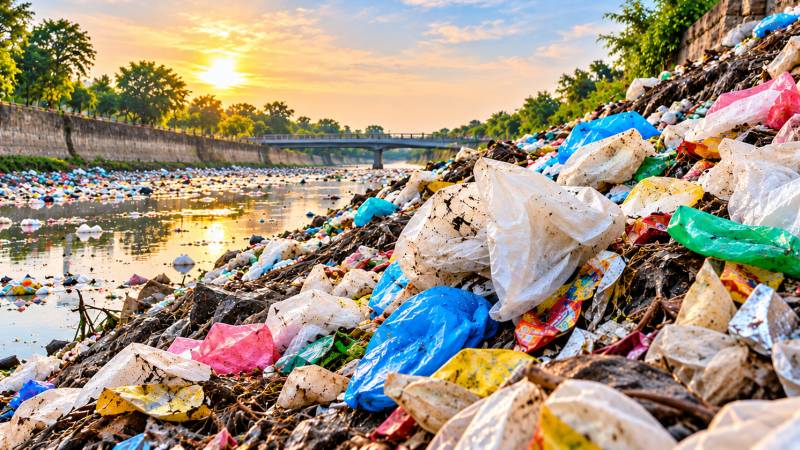
Plastic bags have become one of the most visible symbols of Pakistan’s growing environmental crisis. From clogged drainage systems and polluted canals to contaminated agricultural lands and overflowing landfills, single-use plastic bags are imposing mounting ecological and economic costs on urban and rural communities alike. In Punjab, where rapid urbanization, population growth, and rising consumerism continue to accelerate waste generation, the challenge has become increasingly difficult to ignore.
In response, the Punjab Environmental Protection Agency (EPA) has intensified efforts to restrict the production, sale, and use of single-use plastic shopping bags. Recent enforcement campaigns, raids on manufacturing units, awareness drives, and penalties against violators reflect the government’s attempt to tackle a problem that has persisted for decades. Yet, despite these initiatives, plastic bags continue to dominate retail markets across cities and towns, raising important questions about implementation, governance, and public behaviour.
The environmental consequences of plastic bags are extensive and long-lasting. Unlike biodegradable materials, plastic bags can remain in the environment for hundreds of years. They block sewage systems, worsen urban flooding during monsoon seasons, and contribute significantly to land and water pollution. In many Pakistani cities, blocked drainage caused by plastic waste has repeatedly intensified flooding during heavy rainfall, damaging infrastructure, disrupting transportation systems, and imposing additional financial burdens on municipal authorities.
Agriculture is also increasingly affected by plastic pollution. Plastic waste scattered across farmlands reduces soil quality and can interfere with water absorption and crop productivity. Farmers often face hidden economic losses as polluted irrigation channels and degraded land conditions affect agricultural efficiency. Livestock frequently consume discarded plastic bags while feeding in open waste areas, leading to severe digestive complications and animal deaths. These consequences directly affect rural livelihoods and food systems, particularly in regions where agriculture remains a major source of income.
The problem extends beyond land-based ecosystems. Plastic waste entering rivers and canals eventually reaches larger water bodies, threatening aquatic biodiversity and fisheries. The long-term environmental damage caused by micro-plastics is becoming a growing global concern, with research increasingly linking plastic contamination to food chains and public health risks.
However, the issue is not merely environmental; it is increasingly economic in nature. Poor waste management raises municipal expenditures, damages tourism potential, and creates hidden healthcare costs. Open burning of plastic waste, which remains common in many urban and peri-urban areas, releases toxic pollutants into the atmosphere. These emissions contribute to respiratory diseases, environmental degradation, and declining air quality. Healthcare systems eventually bear the burden of pollution-related illnesses, while citizens pay indirectly through deteriorating living conditions and reduced urban productivity.
Plastic bags have become one of the most visible symbols of Pakistan’s growing environmental crisis, imposing mounting ecological and economic costs through polluted waterways, clogged drainage systems, degraded farmland and overflowing landfills.
Pakistan’s urban centers are already struggling with rising pollution levels, inadequate waste management infrastructure, and increasing population pressures. The unchecked use of plastic bags further amplifies these challenges. Environmental degradation can no longer be viewed as a separate issue from economic planning because polluted cities eventually experience reduced investment attractiveness, weaker tourism activity, and declining public well-being.
The Punjab EPA’s intervention, therefore, represents more than an environmental campaign. It reflects a broader recognition that environmental externalities must be integrated into economic and governance frameworks. The agency’s recent actions, including crackdowns on illegal manufacturers and penalties for non-compliance, demonstrate institutional willingness to address plastic pollution more aggressively than in previous years.
Yet, enforcement alone may not be sufficient. One of the major structural challenges lies in Pakistan’s large informal economy. Thousands of small-scale manufacturers, wholesalers, and retailers depend on low-cost plastic products for their businesses and livelihoods. Abrupt restrictions without affordable alternatives can generate resistance among businesses and consumers alike. Many shopkeepers continue to distribute plastic bags because customers expect convenience and low-cost packaging options as part of their routine purchasing behaviour.
This highlights the importance of behavioral transformation alongside regulation. Environmental policies often fail when public participation remains weak. Consumers frequently underestimate the long-term consequences of routine plastic use because the immediate convenience outweighs distant environmental concerns. Changing this mindset requires more than temporary awareness campaigns. It demands sustained environmental education through schools, universities, media platforms, local governments, and civil society organizations.
Educational institutions can play an important role in cultivating environmentally responsible behaviour among younger generations. Similarly, digital media campaigns and community outreach programs can help strengthen public understanding regarding sustainable consumption patterns. Environmental responsibility must gradually become part of everyday social norms rather than remaining limited to occasional government initiatives.
Equally important is the availability of affordable alternatives. Cloth bags, biodegradable packaging, reusable shopping materials, and eco-friendly packaging solutions often remain relatively expensive or inaccessible for lower-income households and small retailers. Without improving access to affordable substitutes, plastic restrictions risk becoming difficult to sustain in practice. Policymakers must therefore encourage green entrepreneurship and support local industries producing sustainable packaging alternatives.
Incentive-based approaches may also prove more effective than relying exclusively on punitive measures. Tax reductions, subsidies, or financing support for environmentally friendly businesses can accelerate market transitions away from plastics. Small and medium enterprises working on biodegradable packaging technologies should receive greater institutional and financial support to encourage innovation within the green economy.
The private sector also has a critical role to play. Supermarkets, restaurants, food delivery services, and retail chains can significantly reduce their dependence on plastic through responsible packaging strategies and consumer incentives. Some businesses globally have successfully introduced reusable bag systems or charged consumers additional fees for plastic bags to discourage unnecessary usage. Similar market-based strategies can gradually influence consumer behaviour in Pakistan as well.
International experience demonstrates that environmental sustainability becomes more effective when governments, businesses, and citizens collectively participate rather than relying solely on enforcement agencies. Countries that successfully reduced plastic bag consumption often combined legislation with awareness campaigns, economic incentives, and widespread public engagement. Pakistan can learn valuable lessons from such experiences while adapting solutions to local economic realities.
Punjab’s anti-plastic initiatives also reflect a wider global transition toward sustainable development and responsible consumption. Across many countries, governments increasingly recognize that environmental degradation directly affects economic resilience, food security, climate adaptation, and public health systems. Pakistan, already vulnerable to climate-induced disasters including floods, heatwaves, and water scarcity, cannot afford to neglect environmental governance within its broader development agenda.
The debate surrounding plastic bags, therefore, represents a deeper policy question about the future direction of urban development in Pakistan. Will cities continue prioritizing short-term convenience over long-term sustainability, or can environmental considerations become integrated into economic planning and governance structures? The answer will shape the quality of life for future generations. Punjab’s current efforts should therefore be viewed as an important beginning rather than a complete solution. Long-term success will depend on policy consistency, institutional coordination, effective enforcement, public awareness, private sector participation, and innovation in sustainable packaging industries. Environmental reforms often require patience because behavioral and structural transformations occur gradually rather than immediately.
Ultimately, the fight against plastic pollution is not simply about banning a product. It is about redefining the relationship between economic growth, consumer culture, and environmental responsibility. Cleaner cities, healthier communities, and sustainable urban futures require collective commitment from governments, businesses, and citizens alike.
Without structural reforms and behavioral change, plastic waste will continue to choke Pakistan’s urban future. But with effective policies, stronger institutions, and greater environmental consciousness, Punjab has the opportunity to become a model for sustainable urban governance and responsible environmental stewardship in Pakistan.