

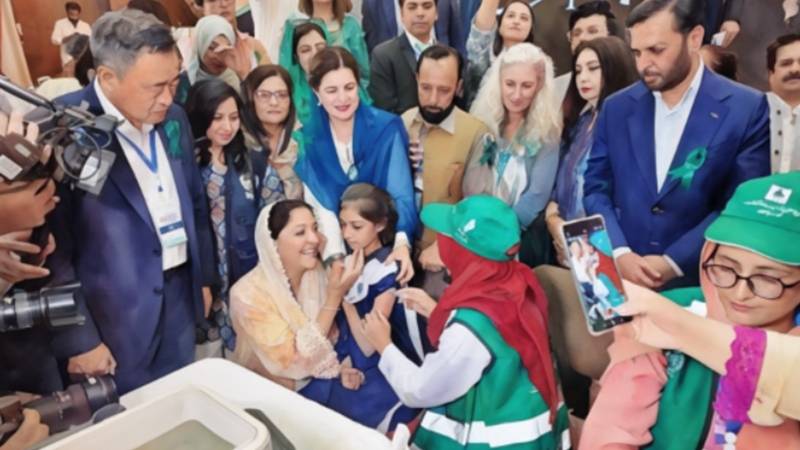
The Human Papillomavirus (HPV) vaccination campaign, the first of its kind in Sindh province, has sparked debate, echoing the proverbial Shakespearean dilemma "To be vaccinated or not to be vaccinated."
Aversion to cervical cancer immunization is not new in our environment, as we have witnessed similar attitudes towards Polio vaccination and COVID-19 immunization among various sections of society. Even Polio vaccination still faces challenges in certain pockets of the population due to propaganda, conspiracy theories, and misconceptions about side effects.
The public perceives successive (provincial and the federal) governments as being driven by self-interest, and immunization programs are often viewed through the lens of monetary manipulation and financial embezzlement of foreign funds. There is a widespread perception that those in charge of these programs are more accountable to donors than to the public, and that they prioritize meeting targets set by funding agencies over genuine public health concerns. This mistrust has deepened in recent years, and it is essential for the ruling elites to address this declining public trust. However, as the pandemic's severity became apparent, the public's attitude shifted. A crucial factor in the HPV vaccination campaign's slow uptake is the lack of prior public awareness and the government's approach, which relied more on ministers and bureaucrats than concerned experts like oncologists, epidemiologists, and paediatricians, etc.
The elephant in the corner is the lack of credible feedback about the vaccine in question.
The government must acknowledge and address this deep-seated mistrust. There is a long-standing perception that governments prioritize foreign funding over public welfare, which undermines their initiatives. It is essential to recognize the public's concerns and work towards rebuilding trust. Without understanding the reasons behind the public's reluctance, the government's efforts will continue to face resistance.
The Sindh government deserves commendation for pioneering a vaccine program that will protect hundreds of thousands of girls from cervical cancer in their later life. The government's initiative to send vaccinators to schools for this drive is crucial. However, the spread of fake videos showing vaccinated girls experiencing pain, fits, and high fever, etc., has significantly eroded public trust in the HPV vaccine.
The Sindh government, particularly the health ministry, made a critical mistake by not generating sufficient public awareness before introducing the vaccine. Ideally, health experts from renowned hospitals should have reached out to the public through electronic and print media to dispel misconceptions associated with the vaccine. The media could have played a vital role by inviting health experts to discuss the vaccine's benefits and temporary side effects (Common side effects like the pain, redness, or swelling in the arm where the shot was given, fever, headache, nausea, muscle pain), thus separating fact from fiction.
Unfortunately, many media outlets prioritize sensationalism over public education. However, it is not too late to rectify this. By inviting experts, such as those specializing in cancer from the health department and private hospitals, the government can address concerns and remove roadblocks caused by propaganda. The provincial government needs to recognise that resistance to the vaccine is not limited to the uneducated; a significant portion of the educated class is also hesitant. This suggests a lack of proper education about the vaccine's benefits.
The front line of the HPV vaccination campaign is in the schools, but a startling feedback suggests the messengers are compromised. With teachers questioning the vaccine's origins and side effects, the campaign's fate hinges on a desperate need to first educate the educators
To make cervical cancer prevention successful, it is crucial to engage the public through credible figures from the health department, particularly from the private sector. The district education machinery and school administrators should organize Parents-Teacher Meetings (PTMs) to inform and educate parents about the importance of vaccinating their daughters. Oncologists concerned should clearly and loudly highlight the benefits of this vaccination through electronic and social media platforms, helping to build trust and dispel misconceptions.
Prevention is better than cure. Imagine the psychological issues associated with cancer and the economic burden borne by those suffering from it. The treatment costs a hefty amount. Only households with a cancer patient can understand the excruciating pain stemming from the cost of treatment, such as chemotherapy, radiotherapy, medical tests, and the exorbitant charges of medicines used to treat patients or given as palliative measures.
A female teacher working in a certain government school disclosed on the condition of anonymity that around 55 girls from different classes, i.e., sixth to eighth class, were vaccinated. This low uptake speaks volumes about the poor response on the part of those to be immunized, due to misconceptions, lack of awareness, and possibly parental concerns, among other factors. In response to my question about the role played by the teaching faculty and the headmistress in educating/convincing those reluctant to get vaccinated, the female teacher said, 'They themselves are prone to propaganda and conspiracy theories, such as it being an Israeli product.' She further added, 'This lack of clarity on the part of role models like teachers and those in school administration is very alarming.' This actually speaks to a lack of inquiry, scientific approach, and research-based thinking, which is phenomenal not only in the social milieu but also in the educational environment.
This feedback was followed by another coordinator from a certain private co-educational school, who disclosed that only 15 girls allowed themselves to be vaccinated out of 105 eligible girls within the age bracket specified by the authorities.
Various educated individuals consider the vaccine program, prioritized by the provincial government, as an encroachment upon their independence in terms of decision-making. Meanwhile, others have fallen prey to propaganda and fake videos showing vaccinated individuals facing serious side effects. It is concerning to have educated citizens who act and behave like the ignorant ones. This mindset is prevalent and needs to change in order to build a society comprising healthy citizens. It is unfortunate that those who should be at the forefront in terms of encouraging and promoting support are themselves misguided and misinformed.
One of the measures that can be handy in terms of educating the public would be to entrust epidemiologists, oncologists, and child health experts with the task of online sessions tailored to first convince the teaching community and students enrolled in schools. It is worth highlighting that in our social milieu, women find it extremely difficult both to discuss and disclose their health issues and diseases like breast cancer and cervical cancer. Families often face unprecedented hesitation in revealing this information even to their close relatives. Given the taboos and social stigmas attached to these health issues, preventive care is the most effective solution.
Muheen Zaman Mir, Gilgit-Baltistan-based senior journalist believes that women often remain unaware of their rights—especially concerning Sexual and Reproductive Health and Rights (SRHR) and Menstrual Health Hygiene (MHH). Cultural taboos and societal restrictions continue to silence these crucial conversations, leaving women vulnerable and unsupported.
They suffer in silence. They hardly find a shoulder to cry on once caught in the crossfire of deadly cancers in question. Given the declining uptake of the HPV vaccine even among the educated lot, the following facts and figures should be double-checked by the authorities concerned.
According to a Dawn report recently published titled, "Karachi shocks HPV campaigners with lowest coverage rate”: • 57% girls vaccinated against cervical cancer in seven days across Sindh, EPI data shows • Naushahro Feroze tops the list with 89% coverage • 33% girls immunised in Karachi division; district Keamari ranks last with 12% coverage. The drive targets 4.1 million girls, aiming to cover 1,190 union councils across 30 districts of the province.
According to the data, 57 per cent girls have been vaccinated in seven days across the province with Naushahro Feroze seeing the highest coverage (89%) followed by Qambar (88%), Badin and Sujawal (85% each), Ghotki (84%), Sanghar (82%), Tharparkar (81%), Sukkur (80%), Kashmore (79%), Dadu (74%), Umerkot (73%), Khairpur and Tando Muhammad Khan (72% each), Larkana and Matiari (71% each), Thatta (70%), Jamshoro (66), Shaheed Benazirabad (64%), Shikarpur (59%), Mirpurkhas (51%), Tando Allahyar (50%), Hyderabad (49%) and Jacobabad (46%). Karachi division has seen an overall 33% vaccination coverage. Of the target 887,692, a total of 288,477 girls have been vaccinated so far.
The highest coverage was recorded in District West (65%) followed by Korangi (38%), District South (34%), District Malir (32%), Central (27%), East (22%) and Keamari (12%). “There has been persistent false propaganda against the HPV vaccine by some social media influencers from day one that greatly harmed the campaign in Karachi where they have large following. These people have no medical background. Opposition from certain religious circles came in at a later stage,” Dr Khalid Shafi of the Pakistan Paediatric Association said, while explaining the poor public response to the vaccination campaign in Karachi.
A significant population (affected by the misleading information), he pointed out, decided to wait and see the drive’s outcomes. “Hopefully, the families would re-think their decision. Having said that, our vaccination rates are generally around 70 percent, even without people spreading false information.”
EPI Project Director Dr Raj Kumar described Karachi’s response as “surprising”. “Towns with low literacy levels have performed better. I think area MPAs and political leaders played a key role in encouraging families (in rest of Sindh) to get their daughters vaccinated,” he said, adding that there would not be any major change in the strategy at this moment. “However, we have increased sessions of parental counselling in schools in Karachi where we aren’t seeing encouraging responses. Having said that, the province of Sindh and Karachi have performed better than the rest of Pakistan. For instance, the HPV vaccination coverage in Islamabad is 18 percent so far.” According to officials, Pakistan is the 149th country to introduce this vaccine into its immunisation schedule. It is already being used in Muslim countries including Saudi Arabia, Qatar, and Indonesia.
Cervical cancer is the second deadliest cancer for women worldwide and a major health threat in Pakistan, with a mortality rate exceeding 65 per cent. The HPV is the primary cause of cervical cancer and the HPV vaccine is the first-ever cancer prevention vaccine. The vaccine, experts say, is safe and effective, providing 100 per cent protection from cervical cancer.
According to WHO, vaccines are safe and help prevent millions of deaths every year.
How Do Vaccines Protect You?
When you get a vaccine, your immune system responds by:
Recognizing the virus or bacteria
Helping you produce antibodies
Remembering the disease and how to fight it.
Agha Khan University Hospital has offered important input on this vaccine.
The Department of Paediatrics and Child Health is among the first research teams in Pakistan to collect data on the cancers caused by the Human Papillomaviruses or HPV. This data can inform critical policy-making decisions for the HPV vaccine, which prevents the cancer it causes. We will be conducting a prevalence and incidence study in women from urban and rural settings of Sindh, Pakistan. This project is critical as the results will provide the basis of possible induction of the HPV vaccine in the national immunization program. This, in turn, will help save the lives of thousands of women through the prevention of cervical cancer.
What is HPV? Human papillomavirus, or HPV, is a very common virus with over 150 types. It spreads through sexual contact. There are two kinds of HPV: high-risk and low-risk. High-risk HPV can lead to serious diseases like cancer of the cervix (the lower part of the uterus), anus, and other areas. The most dangerous types are HPV 16 and 18. Low-risk HPV does not cause cancer but can lead to less serious issues like genital warts. It is estimated that over 80% of sexually active people will acquire HPV at some point in their life and prevalence of HPV infection varies depending on factors such as age, gender, sexual behaviour, and geography.
The global burden of HPV-associated cancers is rising, particularly in low- and middle-income countries (LMICs). Asia has more than 1,700 million women aged 15 years and older who are at potential risk of developing cervical cancer. Current estimates indicate that every year more than 350,000 women are diagnosed with cervical cancer and almost 200,000 die from the disease, ranking cervical cancer as the 4th most frequent cancer among women in Asia. While cervical cancer incidence rates are declining in high-income countries, there is an increasing trend in low- and lower middle-income countries, with the highest rates in East and West Africa.
Two globally licensed HPV vaccines have been introduced in Pakistan: a quadrivalent vaccine Gardasil (marketed by Merck, Pakistan) and a bivalent vaccine Cervarix (marketed by GlaxoSmithKline, Pakistan). Gardasil is protective against the HPV serotypes 6, 11, 16, and 18, providing protection against both cervical cancer and genital warts. On the other hand, Cervarix is effective against serotypes 16 and 18, thereby protecting only against cervical cancer. There is a general lack of awareness regarding these vaccines and a low uptake in the general population. One study done in women of the reproductive age group attending outpatients clinics at AKUH (Karachi) estimated the awareness of HPV vaccines to be as low as 20% and their uptake to be less than 10%.
The data we collect in this study is critical to inform policies, that may expedite the induction of the HPV vaccine into the EPI program of Pakistan. Through this program, the cost of HPV vaccine will be significantly reduced for the general population.
Who can get the HPV vaccine and when?
The WHO has issued guidelines:
A one or two-dose schedule for girls aged 9-14 years
A one or two-dose schedule for girls and women aged 15-20 years
Two doses with a 6-month interval for women older than 21 years
The age group targeted for primary series of the HPV vaccine is 9-14 years old. The age group targeted for a multi-age cohort catch-up campaign is 15-20 years old.
The age group that is anticipated to have the highest incidence is newly married girls and women of reproductive age. The youngest recommended age is 9 years for a girl to receive the vaccine. The HPV vaccination is not recommended for women older than 26 years of age by the CDC.
One is dismayed that, on the one hand, people are crying against poor public service delivery and an indifferent economic model; on the other hand, when such cancer deterrence development programs, such as the HPV vaccine, are rolled out, they are being declined. Declining this immunization drive is both a moral depravity and an unscientific approach. Individuals and institutions should play their positive role.
There is a network of disadvantages undermining HPV immunization which are but not limited to: lack of insight into the vaccination by the credible voices, unscientific approach, and mis-disinformation, etc. After the emergence of AI, many meaningful discourses and useful things are slipped into the maze of mis-disinformation and subsequently sensationalism and misleading stuff are promoted. The sorry state of affairs is that the educated lot sometimes falls prey to propaganda. The social ecosystem in our country was not an ideal one before the birth of AI. However, unscrupulous use of digital tools and this machine learning for self-serving and manipulation is a new phenomenon. Thus, we see the casualty of scientific reason on the altar of political point-scoring and political pressure.
Rashid Mehmood Soomro, General Secretary of (JUI), Sindh, was recently quoted by a local newspaper as saying that he was not opposed to the vaccination drive. Adding further, "He said that in a country where dog-bite and Polio vaccination wasn't provided to our population, availability of HPV vaccine is questionable". He demanded the provincial government brief nationalists, religious leaders and others on the HPV vaccine. If convinced, he will get his daughters immunized against cervical cancer.
Dr. Murli Dhar of SIUT convincingly commented that the children are being immunised against multiple diseases in the country; that some have put their foot down when it comes to getting their daughters and sisters vaccinated is beyond imagination. He urged the dilemma-driven sections of society to reach out to the vaccination centres in order to insulate girls from the impending danger called cervical cancer.