

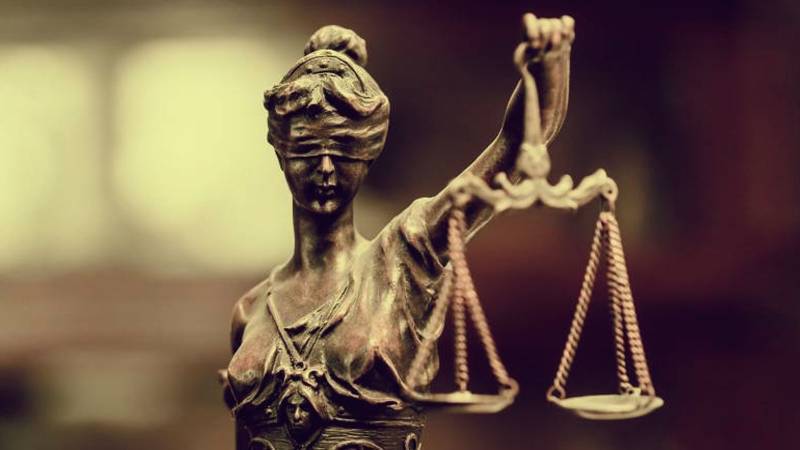
In Pakistan, justice often appears less about truth and more about narrative. Recent cases expose a troubling pattern: journalists and dissenters are dragged into terrorism courts, murder trials collapse under weak investigations, and figures convicted abroad are glorified at home. Taken together, they reveal a system that is overzealous in silencing dissent, ineffective in prosecuting actual violent crime, and deeply inconsistent in its moral compass.
Take the case of Matiullah Jan, a veteran journalist arrested in 2024 on terrorism charges for allegedly snatching a weapon and possessing narcotics. Forensic evidence has already undermined both allegations. The Supreme Court has rightly paused the framing of charges, noting that such restraint causes no prejudice to the State but immense prejudice to the individual. That intervention is welcome, but it should never have been necessary.
The burden of verification belongs with the investigating officer, not the Supreme Court. A preliminary investigation conducted with basic rigour would have exposed the forensic contradictions at the outset. Instead, a compromised case was allowed to travel all the way to the Supreme Court, wasting judicial resources and prolonging the ordeal for everyone involved, including the accused, who deserves a timely resolution, not indefinite legal limbo dressed up as due process.
The SC's role is to correct; it is not designed to compensate for failures that should have been caught at the ground level. Until investigating officers are held accountable for filing cases that cannot withstand basic scrutiny, the pipeline from allegation to terrorism trial will remain as short and as dangerous as it is today.
The broader point is equally damaging: a journalist can be branded a terrorist on the whim of an investigating officer, with extraordinary laws weaponised against inconvenient voices and the Supreme Court left to clean up the mess.
Contrast this with the Dadu triple murder case. Three people were killed in broad daylight, yet after eight years of trial, all eight accused, including a former SHO, were acquitted. If these were not the real killers, who were? The police neither protected the citizens nor apprehended the actual perpetrators.
The prosecution spent eight years on a case that ended in acquittal, leaving the victims' families without justice and the accused without the years they lost to stigma and detention. The verdict has drawn serious questions from victims' families and the media alike, and rightly so.
The system's failures are not confined to high-profile terrorism cases; they run through the entire machinery of adjudication, which too often seems designed to prolong suffering rather than deliver clarity
The contrast with Matiullah Jan's case is not incidental. A journalist with a clean record, accused not of murder but of weapon-snatching, is ensnared in a terrorism trial despite forensic evidence in his favour. Meanwhile, men acquitted of triple murder celebrate their acquittal with aerial gunfire, an illegal act that speaks for itself. The disproportion is not just troubling; it is instructive about where the system chooses to direct its energy.
That disproportion becomes even sharper when set against Pakistan's national narrative around Dr Aafia Siddiqui. Convicted in a US federal court on terrorism-related charges, her case centred on a strikingly similar incident: snatching a weapon and pointing it at US personnel. The US court tried her, weighed the evidence, and delivered a conviction that stands under American law. Pakistan's Supreme Court has no jurisdiction to overturn it; only a US appellate court can review that verdict. Yet domestically, she continues to be celebrated as an innocent victim, with significant resources spent lobbying for her release.
The legal inconsistency here deserves to be stated plainly. The Supreme Court's own precedent, Ghulam Hussain (2020), holds that weapon-snatching does not meet the threshold of terrorism unless specifically designed to spread fear. That standard is not being applied to Matiullah Jan. At the same time, a foreign conviction that has never been overturned is treated domestically as though it does not exist. One person is branded a terrorist without meeting the legal threshold; another is valorised as a national hero despite a standing conviction. This is not a principled distinction. It is political theatre dressed as justice.
Beyond criminal law, the same dysfunction surfaces in civil disputes. The Meesha Shafi harassment case has dragged on for years, becoming a spectacle rather than a resolution. It is a reminder that the system's failures are not confined to high-profile terrorism cases; they run through the entire machinery of adjudication, which too often seems designed to prolong suffering rather than deliver clarity.
These cases are not isolated. Together, they point to a justice system that is selective in its severity, inconsistent in its standards, and captured, at least in part, by the narratives it is meant to adjudicate rather than the evidence before it.
Pakistan cannot sustain a system where truth is secondary to narrative, and where victims and the wrongly accused suffer equally under the weight of institutional confusion. Until investigative and prosecutorial standards are reformed, terrorism laws are reserved for conduct that genuinely meets their threshold, and symbolic politics abroad stops substituting for honest legal reckoning at home, justice will remain a casualty of the very system meant to deliver it.