

It’s been a very emotional 48 hours of relief work on behalf of all of you in Swat. The land of Suvastu Gandhara with a heritage of human settlements dating even before Neolithic Humankind. As we enter the valley of the mighty Hindukush, we learn the meaning of green and tree forestation and what the misty clouds see below. We are surrounded by misty clouds below the summits of so many emerald mountains, forming an embrace of paradise to come. It is breathtaking, it is such a cliché, but to visit Swat is a world of nature at its most exquisite display of Mother Nature’s mirror. If only humankind understood that the precious gift bestowed upon us is a responsibility not ours to destroy.
On the morning of 15 August, 7 am onwards, too many lives in this valley found out what happens when bad governance meets disconnect with Mother Nature.
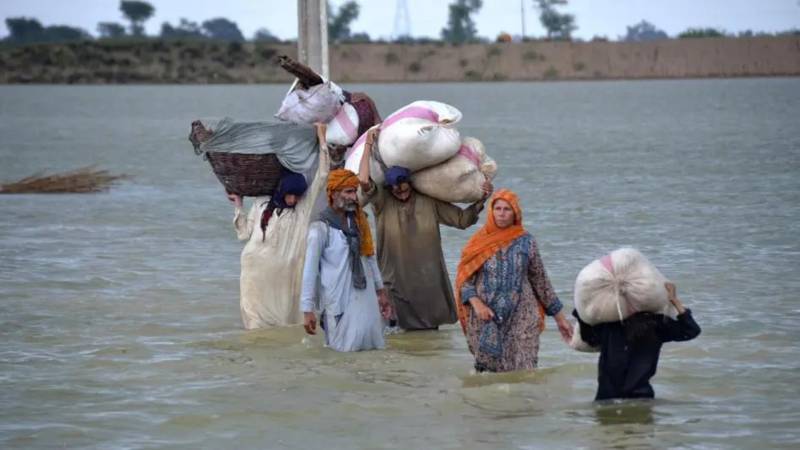
Shops and homes and unplanned constructions all along the Kukarai stream that weaves all along the city of Mingora in Babuzei tehsil (an offshoot of the Swat river) suddenly overflowed 500 metres–1000 metres on both sides of its banks. Inundation up to 13 feet of everything in its way, which meant mothers making rotis for breakfast, children on their phones waiting to go to school, elderly sleeping peacefully, or walking or waking up, labourers on their way to work, shopkeepers preparing to open up in a couple of hours for customers. Life in a second was flooded.
The flooding did not come only from the stream but from above! This was not rain from the gods but from the green mountains bled by over-logging stripping their dense forests to a mere sheen of green today. As the cloudbursts rained down bursts of water there were no protective barriers to stop the deluge of a hurricane of angry water all the way down. And as the population has multiplied at an uncontrollable rate, homes and habitats dot every square of these mountains in steps everywhere. Where is the water to go? Moreover, there are no longer thick forests to stop anything going downwards.
The water came two ways into the homes and shops in Swat: from above and from the streams. This time, yes it has happened before, in 2010, 2012, 2016, 2022 and now 2025, but this time there was also mud, and boulders and a lot of the rubbish that comes with unclean rivers, streams and mountains denuded systematically, since the state merged into the federation of Pakistan in 1969. Mother Nature was showing her displeasure, and so was the governance since 1969.
Charity and community relief cannot substitute for effective government, whose mandated duty is to protect every resident, especially the most vulnerable, in emergencies and year-round
Like so much in Pakistan, there is a layer of overt deceptive normal. As we entered Swat from Barikot, large malls and every imaginable brand-name store were on display on both sides of the roads. Packed roads with customers busying themselves. Although as traditional as they come in the land of Pukhtunkhwa, Swati women in burkhas and chadars are present in public spaces. This is a community used to good education and higher standards of living since the days of the Wali of Swat. The Taliban tried in 2006 as much as they could to bludgeon civilisational memory and ethics out of this gentle, relatively law-abiding folk—to their dismay.
Never again is the message from the Swatis.
Back to August 2025, where does one start to help when every shop and habitat along an entire riverside has been impacted? Who can help? My work is blessed by the generosity of individual Pakistanis who care, from the four corners of Pakistan and abroad.
Charity and community relief cannot substitute for effective government, whose mandated duty is to protect every resident, especially the most vulnerable, in emergencies and year-round. And in an emergency, everyone is vulnerable.
We began our relief in Bangladesh neighbourhood; the name should tell you people know constant flooding is a thing, and since it happens in Bangladesh as frequently, they named their muhalla the same. The irony is lost on them? Filthy, densely packed, mud mountains of deluge everywhere, open sewerage nullahs overflowed, waste. We entered a home slightly elevated on a hill and walked up onto the rooftop. We met the first 17 women, we provided reusable sanitary napkin kits along with zakat/donation funds of 5000 Rs per woman.
As some of you know, I only give to women and engage with women to empower the family through her. It always fascinates me (I am being polite) that when I ask for CNIC, they inevitably bring their husbands or fathers because the idea that she is the recipient or who matters is such an alien idea. I also have to observe my partners on the ground, Sarshad Rural Support Programme, who assisted me in recording and interpreting where necessary, also keep records with male head of family identity cards. That is the custom. But my norm is only women and hence the accounting, tracking and record keeping with all things Nilofer Afridi Qazi is her CNIC. I caught perplexed looks a couple of times while documentation was being recorded but Mussarat Bibi, one of the social organisers with me, quickly explained: ‘Valagha yawazy khazo taa warkawi no mog da valaghi karat taa artya laro naa da valaghi meruno taa.’ Madam only gives to women, so please, what is her CNIC number?
The Pukhtun tradition of providing shelter remains strong, so no temporary camps are set up for displaced families
Purdah is a huge challenge, and engaging with women is fine but when one wants to record on camera or video or of course, ask them to enter public spaces and begin self-help initiatives, culture is used as an obstacle. Nevertheless, Seema Bibi 22 years old with 4 children, Mariam 17 and already married, Said 45 years old, Salma, Rahat Sultana, Maleeha, Sadiqa, Shano Bibi, Basmina an Afghan refugee who has lived here since she was a toddler and has 6 surviving kids and doesn’t know how old she is, Nurjahan Bibi who has 9 children, Shama Bibi, Parveen Bibi, Lal Johar Bibi 40 years old who was unmarried, Seema Bibi, Shabnam Bibi, Sanam Bibi. I was interested in listening to their personal experiences of 15 August but also their lives.
Their husbands are rickshaw drivers, daily wage labourers, unemployed or shopkeepers; none of them live in their own homes, all rentals along the dangerously close river banks. Some of them were educated, some even up to matric but none of their husbands allowed them to work. Some had returned to their dwellings after cleaning out the mud, filth, and everything that comes with flash floods; some remained with better-off friends, relatives, or welcomed others to safer, higher ground. The Pukhtun tradition of providing shelter is very much in practice. There are no temporary camps set up for displaced families due to these cultural practices and traditions.
We moved next to the Mullah Baba neighbourhood, another extremely damaged neighbourhood along the banks of the stream. Here we met 25 women. Nargis Bibi, an elderly woman with a jobless husband living in abject poverty with no one to support them; Asmat Tara Bibi; Parveen Bibi with husbands who drive rickshaws which were destroyed; Parveen Ijaz Bibi is divorced with three children who she supports through tailoring; Mumtaz Bibi a widow with mentally challenged children; Hina Bibi, Fazelat Bibi live off their daily wage husbands’ wages; Tasleem rented home has been destroyed while her husband labours in Oman; Sobia Bibi, a little more educated from the Christian community, her husband works in the local government hospital; Roomi Bibi has 4 children of which two are challenged; Zainab Bibi has 5 children and lives off her husband’s wages as an employee in a cloth shop.
Parveen Bibi has an unemployed, unwell husband with three children to feed. Nadia is an Afghan whose card went in the waters, Dilshad has 3 children with a husband with diabetes, heart and lots of ailments. Kaint Bibi has 3 children and a husband in Saudi Arabia, trying to make ends meet while their rented accommodation is damaged; Mavesh has 2 girls, and her husband is a carpenter. Hasina is 15, thankfully unmarried still, with an unwell mother at home; Ghazala Bibi is unwell herself, clearly and living off her parents with 4 children; Shamim Bibi has 5 children and an unemployed husband. Nasreen Bibi has 9 surviving children! Rosena Bibi with 4 children and another on the way has a blind, unemployed husband!
A lot more is required at so many levels to stop this pain and suffering for so many similar stories, not only in Swat but in all the unsafe hamlets all over Pakistan
Listening to their personal experiences was heartbreaking and scary, but the underlying problems they lived with before this added crisis are even more traumatising. Why do so many Pakistanis continue to live like this?
This is unacceptable.
You cannot have a nation function in the 21st century without building strong, resilient, educated, empowered individuals, therefore communities.
If listening to so many desperate women wasn’t emotionally draining in Mingora, we travelled to Yakh Tange in Bishmand towards the well-known Malam Jabba ski resort area in the mountains (close to Buner). There is a hamlet/community here which lost lives in excruciating circumstances. Asmatara Bibi survived: in an instant, a gush of water washed her out of her home, and she landed feet away, neck-deep, straightjacketed in mud. She retells her nightmare while sobbing.
She struggled desperately trying to free herself from being buried alive by Mother Nature’s wrath. She tore herself out eventually, tearing the muscles in her arm, calves and feet. This wasn’t the worst of it; her 8-year-old daughter, Ishal and her husband, Syed Muhabat Ali, were washed away and found many hours later. In fact, later, one of the ladies told me Muhabat Ali was heard saying, ‘Is there any Muslim here who can help me?’ while his hand could be seen. By the time it was safe to reach the place he was, it was too late. It took three full days to find Ishal’s remains further down from her father. Just listening to Asmatara Bibi, I had great difficulty remaining calm. How do you recover from such an experience?
Sajida Bibi’s story, equally tragic, lost 4 children: Amen, 13 years old, Khusba, 9 years old and Aliba and Aleshaba, twins, 6 years old. She was on that fateful day away from home, visiting someone a few kilometres away. She heard there had been a landslide and some kind of disturbance with her neighbour’s home (Asmatara’s). By the time she rushed back up the mountainside, it was all too late, a pile of rubble of nothing but boulders, water in place of her home. Recalling having left her children drinking tea and lolling around early morning, she can’t think what her children went through in those last minutes when the roof collapsed by the force of landslide flooding boulders on their hearth. Her son survived.
A traumatised Zubaida, clutching her infant child and her toddler clinging on to her, could speak. Barely 20 herself she lost her husband, Attaullah in this flash flood/landslide. She was in the house and survived but her brother-in-law and her husband, in seconds, were washed away forever.
Zakia remembers listening to the sound of water; she thought it was lightning. She clutched her 12-year-old and her husband. They were surrounded by a deluge of water; they survived but her son and husband have been hospitalised with injuries from cuts from boulders and debris.
Zainab Tahir had just moved into a new home; her husband had spent 16 years earning to build their home. They have no home but are ever so grateful for having survived intact. Rubina Bibi has no home, equally grateful she survived. Fatima is in the hospital, pregnant, has dislocated her shoulder and with other fractures, and has no home to return to.
I listened to the women retell their horrors in silence.
How many Fatihas does one say?
We walked to the areas where so many lost precious lives. A clear water path of an ancient stream. I thought to myself, Why would you live here? But who can ask these questions now? Should we? A primary school full of leftover boulders as the water gushed down that dark day.
What could I offer these families? A little aid, a few dignity kits and our prayers. A lot more is required at so many levels to stop this pain and suffering for so many similar stories, not only in Swat but in all the unsafe hamlets all over Pakistan.