

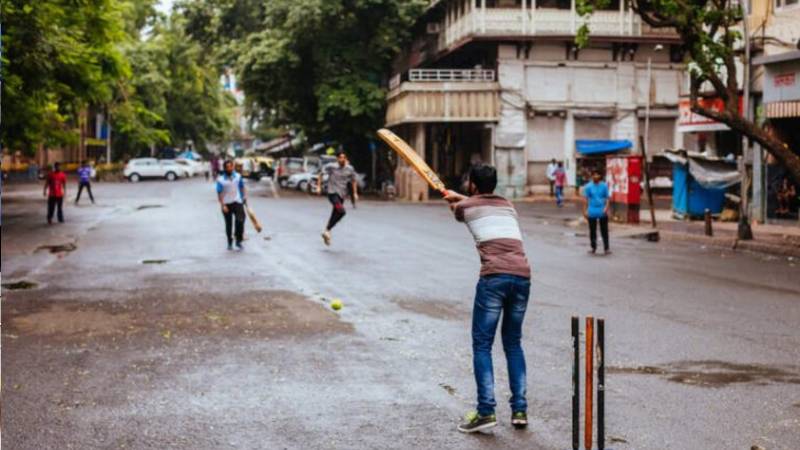
A simple childhood activity – playing outside – has become a daily challenge silently. There is a lack of spaces where children can play and grow naturally and healthily. Due to the rise of shrinking parks, increased traffic, and overcrowded streets, children no longer have safe and open places to play freely, while most are left to run between parked cars or play cricket in narrow alleys. Moreover, while the security concerns of parents due to rising street crime rates are also valid, children have no other choice but to glue their eyes to the screens at home. This leads to many problems that influence a child’s future, such as poor social skills, sedentary lifestyles, screen addiction, and reduced physical stamina.
While this is a clearly observable problem in the city, it is particularly noticeable in the densely populated areas of Lahore, like Icchra, Dharampura, Samanabad, and the inner city. Even in middle-class neighbourhoods, the problem is easily observable, where empty plots are turned into parking lots, plazas, or commercial buildings. As a result, soon we will have a generation that grows up without the physical and social development that comes with outdoor play.
Due to a lack of proper playgrounds and poor maintenance of parks, streets have become the new makeshift playgrounds. On a typical evening, a group of boys will be playing cricket or badminton in the narrow lanes, while the girls will be skipping ropes or playing hopscotch.
But these spaces are far from safe. Speeding motorcycles, rickshaws making their way through the traffic, and rising child abduction rates create a constant sense of fear among parents.
While boys still run around in the streets and alleys, girls face even greater restrictions. Parents often avoid sending their daughters outside due to various societal issues like crowding, harassment, and lack of privacy in public spaces. This only adds more to the already rising issue. As a result, many young girls are forced to stay indoors in the evenings, missing out on physical activities essential for their development.
Childhood memories that once involved going outside and playing cricket with friends in the park, cycling on quiet roads, and making and meeting new friends may turn into experiences found only in old stories
Another factor is urban expansion, which has played a major role. Many small neighbourhood parks that were once maintained by local governments or community members have been taken over for commercial purposes or simply left abandoned.
In some areas, the boundary walls have collapsed, swings are broken, grounds are covered in litter and overgrown grass, and stray dogs are lurking around. These parks become unusable, which eventually leads to abandonment.
“There is a park near my house, but it is so dirty and unsafe that I cannot let my children go there and play,” said Nadeem, a resident of Samanabad. “Stray dogs lurk there, the lights are broken, and no one goes there. What is the use of such a park?”
Residents mention that parks without proper security, lighting, and cleanliness do not serve their purpose and are bound for abandonment. Instead of being community spaces, they are nothing more than neglected corners of the neighbourhood.
The responsibility does not fall on parents alone. Local authorities and community groups need to prioritise creating safe and well-maintained spaces for children to play outdoors. More parks are needed, even if they are simple. Just a few swings, a good boundary wall, and proper lighting can make a huge difference. Urban planning is crucial in this case, and it can be low-cost and high-impact as well. Empty government plots can be converted into playgrounds, streets can be designated as “children’s playing areas” during certain hours of the day, and school playgrounds can also be opened and utilised after operational hours.
These types of simple but practical changes can make a huge difference, giving hundreds of children a place to explore and be themselves.
If the problem continues, Lahore risks raising a generation disconnected from physical play, strong community bonding, and outdoor life. Childhood memories that once involved going outside and playing cricket with friends in the park, cycling on quiet roads, and making and meeting new friends may turn into experiences found only in old stories.
Parents want more than just development, they want safe and liveable places where their children can grow safely.
For now, many children are forced to play cricket in cramped alleys, pausing every second to let a bike, rickshaw, or car pass. Their laughter, mixed with the noise of traffic and loud honking, is a reminder that even in the busiest corners of the city, children are still trying to claim whatever space they can instinctively.