

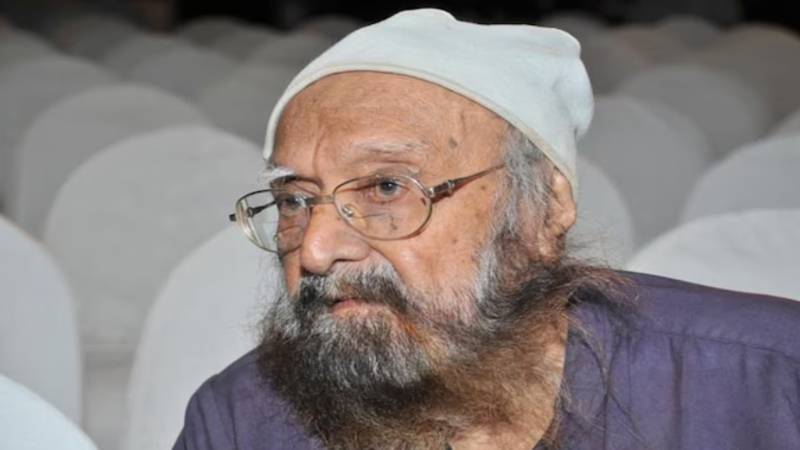
Every soil has its own allure, a fragrance that lingers in the heart and keeps calling the traveller back. The same happened to Shali. He, too, became a captive of a certain scent of earth that seeped deep into his veins. His given name was Khushhal Singh, but those at home lovingly called him Shali.
Shali was born in Haddali, a small village near the town of Khushab in Punjab. If one travels from the Lillah Interchange on the Lahore–Rawalpindi Motorway towards Khushab, Haddali lies about an hour and a quarter away. In 1915, Shali was born into a Sikh family. His parents owned a large haveli in the village, a buffalo pen, and their own well. They were counted among the wealthiest households in Haddali. Most of the village population was Muslim, with only a few Sikh homes, yet the village lived by the spirit of brotherhood. In Punjabi villages, it is customary to address even strangers as uncle, aunt, or kin of various kinds.
Shali’s grandfather and father were traders. In those days, they would load large slabs of salt and dates from Khewra onto camels and sell them in the markets of Lahore and Amritsar. On their return, they brought back spices, tea, sugar, and kerosene oil, which they sold in local markets. Later, Shali’s father and grandfather took up construction contracts and decided to move from Haddali to Delhi. But Shali’s grandmother was deeply attached to Haddali, and Shali himself was inseparable from her.
Thus, Shali’s father took his wife and another son to Delhi, leaving Shali and his grandmother in Haddali at their insistence. During this time, Shali’s father continued to visit Haddali regularly.
Shali was admitted to the village Dharma Shala school. Everything there was fine, except that the schoolchildren teased him by chanting, “Shali Shuli, the village radish.” It was then that Shali decided to change his name from Khushhal Singh to Khushwant Singh, a name similar to that of his brother, Bhagwant Singh.
Who could have known then that Shali of Haddali would one day rise to fame as Khushwant Singh, achieving prominence in law, journalism, and literature? But all that came later. For now, he was his grandmother’s beloved Shali, running freely like clouds across the open skies of Haddali.
This was Haddali in 1915. The village houses were built of stone and mud. Winters were bitterly cold, summers unbearably hot. Shali ran barefoot across the scorching sand of the village lanes. His grandmother adored him. Every day, she took him to the dharamshala. Wrapped in her dupatta were the previous night’s rotis baked in the tandoor at home. Shali would wash his wooden slate, plaster it with clay, dry it, and then, holding his grandmother’s finger, set off for school.
As Shali left Haddali, he kept turning back, looking at its sky, its trees, his haveli, and the mustard fields stretching far into the distance
Khushwant Singh remembered how they recited multiplication tables aloud in school, how teachers delivered lessons. He also remembered how his grandmother would wake before dawn, begin her day with religious rituals, and then churn yoghurt with a wooden dasher until butter floated to the surface. He recalled how, in the evenings, fires glowed in every household tandoor, and women baked rotis. The pure brown wheat of Punjab had a fragrance he never forgot. Just as, after intense summer heat, sudden rainclouds would gather and the soil would release its scent, that fragrance of Haddali’s earth stayed with him forever.
Night fell early in the village. Lamps were lit in every home at dusk. Charpoys were spread on haveli rooftops, covered with white sheets, a familiar Punjabi scene. If one has seen Gulzar’s film Mausam, one recalls the song “Dil dhoondta hai phir wahi fursat ke raat din”, with lines evoking cool summer nights spent awake on white sheets beneath the stars. How strange that Gulzar, born in the Pakistani town of Dina and later renowned in Bollywood, never forgot the mornings and evenings of his ancestral land.
Khushwant Singh always remembered the cool night breeze of Haddali, infused with the fragrance of jasmine and motia flowers planted in his courtyard. As he lay in bed, his grandmother would tell him stories until sleep overcame him. Sometimes fierce winds would whip up spirals of sand rising skywards, and in such storms, his grandmother would instruct him to crouch low and shut his eyes, which he obediently did. Even at a young age, he knew every tree in the village. Wheat, sugarcane, and tobacco were cultivated there.
After the sugarcane harvest, juice would be extracted, boiled in large cauldrons over wood fires, then dried and cut into gurr, a process Shali watched with delight. The taste of warm gurr was incomparable. Village games were grounded in the earth: gilli-danda, races, and hide-and-seek. Physical exertion was a daily routine. Many villagers joined the British army, their strong physiques shaped by a life of labour.
Life flowed joyfully until the sudden decision was made that everyone should live together in Delhi. As Shali left Haddali, he kept turning back, looking at its sky, its trees, his haveli, and the mustard fields stretching far into the distance. Had it been up to him, he would never have left. But life is a journey whose next turn is unknown.
In Delhi, he was enrolled at Modern School. His heart was not in his studies, yet he somehow passed ten grades. He completed Intermediate at St Stephen’s College and earned a BA from Government College, Lahore. Now he was known as Khushwant Singh. He travelled to Britain for legal studies, obtained an LLB from King’s College, returned to Lahore, and practised law for eight years.
The old sheesham tree of the school watched the entire scene in quiet wonder. Suddenly, it sensed a familiar fragrance in the air. Little did it know that this was the scent of the soil of the same Shali who once spent hours playing under its shade
Then came 1947: Partition. Khushwant Singh cleared the Foreign Service examination and worked in India, France, London, and Toronto. He edited major journals, achieved wealth, honour, and fame, yet late at night, amidst the dazzle, memories of his village of oil lamps returned
He imagined himself once again on a charpoy with white sheets on the haveli roof, cool village winds carrying the scent of jasmine and motia, his grandmother narrating stories until sleep gently claimed him.
Khushwant Singh held high public offices, entered politics, and became a member of the Rajya Sabha. But his true brilliance emerged when he became editor of The Illustrated Weekly of India, where he took it to unprecedented heights. He also edited the National Herald and Hindustan Times. Yet his true identity lay in his writings—novels, essays, memoirs, history, and politics—marked by wit, courage, and fearless expression. A Train to Pakistan and Delhi gained lasting fame, while A History of Sikhs and Land of Five Rivers became seminal works.
His autobiography, Truth, Love and a Little Malice, revealed intimate facets of his life. He was awarded the Padma Bhushan but returned it in protest after the Indian army’s operation at the Golden Temple in 1984.
Writing was Khushwant Singh’s passion. His son Rahul recalled that he wrote every single day. He wrote until his last breath, producing over a hundred books. The joy of writing first touched him in Haddali school, when he learned to write on a wooden slate with a reed pen. Even when later writing with fountain pens in high office, he remembered that slate, inkpot, and reed.
Though he spent only a few early years in Haddali, they shaped him entirely. He visited twice after leaving. On his second visit, travelling from Lahore after many years, his excitement was palpable. As the train slowed and Haddali station arrived, he stepped down and inhaled deeply, the same familiar scent of earth. Overcome with emotion, he bent down and kissed the soil.
Villagers gathered, asking about his travels and achievements. Yet Khushwant Singh wanted only to ask about Haddali—his haveli, his school, the elders. He wandered its lanes like a child again, carrying home countless affections.
Returning to Delhi, memories accompanied him as the sun of his life began to descend. At seventy-one, he had achieved everything, yet one dream remained: to see Haddali once more. He named his Delhi home Haddali House to keep the memory alive.
In 1986, fate granted him a visit to Pakistan. Though the official purpose differed, for Khushwant Singh it was the fulfilment of a lifelong dream. He arrived in Haddali via Lahore. The village welcomed him with garlands and a ceremony. He toured the lanes, saw his haveli, his school, the sheesham tree under whose shade he once played, and then, overwhelmed, the seventy-one-year-old Khushwant Singh wept openly.
He knew this was his final visit. He willed that he be laid to rest in Haddali. When he died in Delhi in 2014, his body was cremated. According to his will, his ashes were brought to Haddali, where, in a simple ceremony at his old school, a plaque bearing Khushwant Singh’s name was installed in the wall. The cement used for this purpose was mixed with Khushwant Singh’s ashes. Thus, along with the plaque, his ashes became part of the very walls and structure of the building.
The old sheesham tree of the school watched the entire scene in quiet wonder. Suddenly, it sensed a familiar fragrance in the air. Little did it know that this was the scent of the soil of the same Shali who once spent hours playing under its shade.