

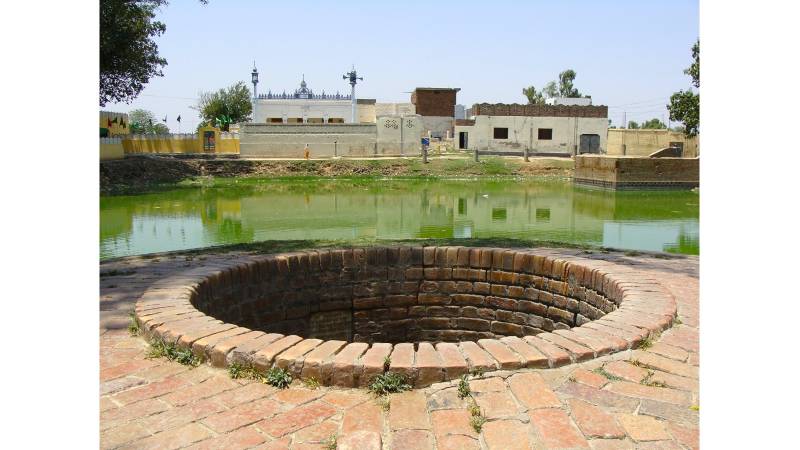
Bassali is a picturesque and historic village located in the Rawalpindi tehsil. It is situated approximately 16 km from Rawat and can be accessed via Harraka Mor from the Rawat-Chak Beli Khan Road. In the pre-partition era, it was an important marketplace in Rawalpindi. In pre-partition Bassali, Muslims, Sikhs, and Hindus lived together. After partition, both Hindus and Sikhs left for India. The remains of Sikh and Hindu havelis and choubaras reflect the glorious past of Bassali. The choubaras (mansions) of Muslims also dotted the landscape of Bassali.
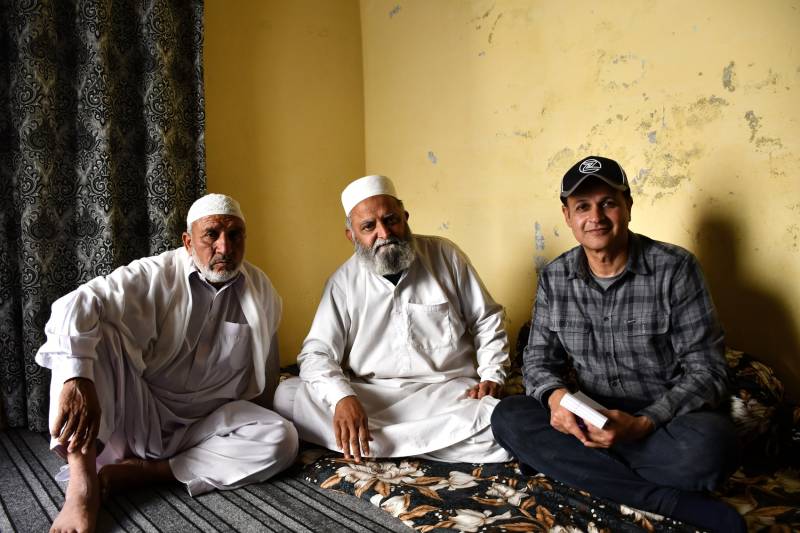
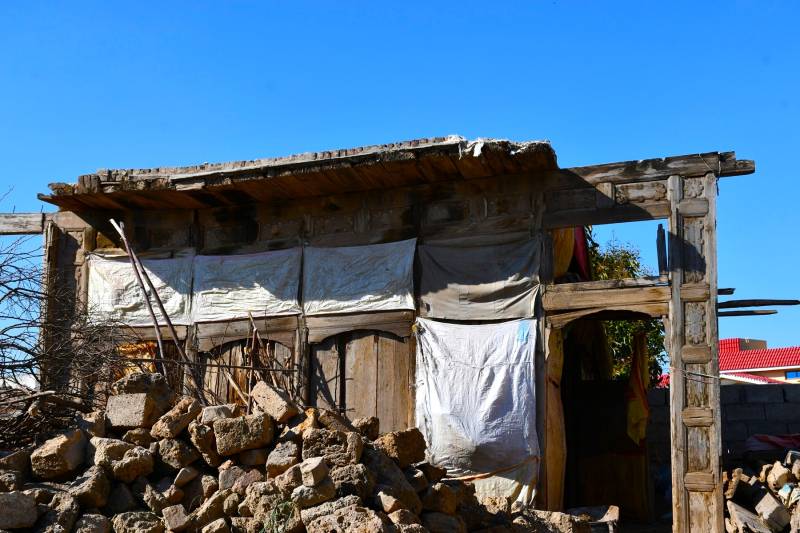
I first visited Bassali in 2006 and returned in 2007, 2009, and 2014. My most recent visit was in 2025, during which I was accompanied by Kashif Fareed Kayani, the author of Tarikh-e-Domeli, and his friend, Ibrar Hussain Mughal. In 2006, I visited several choubaras, havelis, tanks, and wells in Bassali. In my later visits, I observed several havelis crumbling, renovated, or demolished. One of the imposing havelis was Dr Zaman's in Bassali village. During my 2025 visit, it was heartbreaking to see that the haveli had been demolished, except for one room that had been converted into a cattle pen.
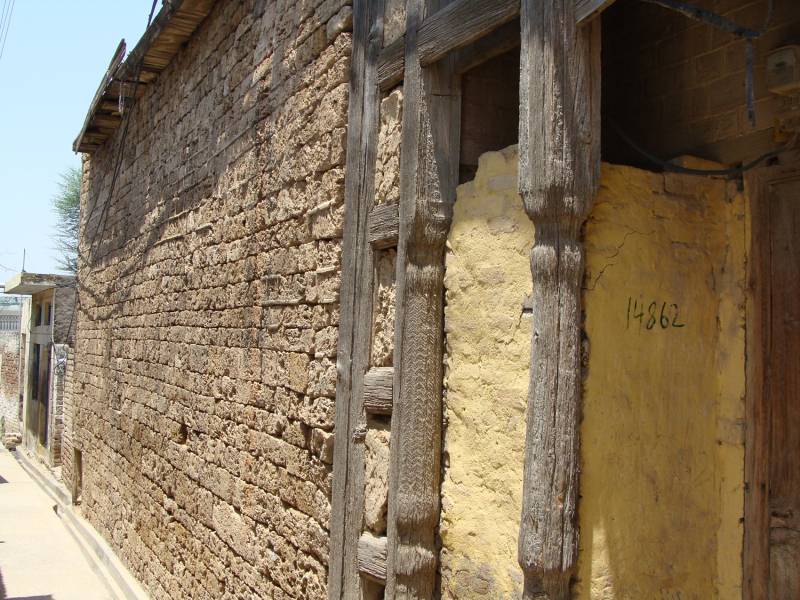
The haveli of Dr Zaman was noted for its wood carvings and outer stone walls. The haveli was noted for its main wooden entrance. A distinctive feature of the haveli was its wooden portal frame, supported by four wooden pillars. Two of the pillars were engaged within the walls, while the other two flanked the entrance, leading to the main door of the haveli. The wooden doorway displayed finely carved floral and geometric motifs that adorned the frame and door jambs, while the shutters remained plain and undecorated.
Such exquisitely carved wooden doors once embellished several Sikh and Hindu havelis in Bassali. However, many of these masterpieces have been removed and sold in antique markets over the years. The traditional wooden doors of Pothohar possessed a unique elegance and reflected the remarkable craftsmanship of local artisans. Sadly, their growing market demand has accelerated their disappearance from historic homes. There is a real fear that future generations of Pothohar may no longer witness these intricately carved doors, which are an important part of their cultural heritage, and may find them only in written descriptions and old photographs.
It was one of the few impressive mansions built in pre-partition Bassali. It had several rooms. The entrance door was flanked by raised sitting platforms where male members of the household would sit, chat, and receive guests.
The temples, the dharamshala, and the busy marketplace together speak of a time when Bassali was a vibrant and diverse community, where people of different faiths lived, traded and shared everyday life
One can observe the sitting platforms in almost every old mansion in Pothohar. I have seen imposing mansions with portals flanked by sitting platforms in various towns and villages in the Rawalpindi, Chakwal, Jhelum, and Attock districts. Some of the sitting forms can be seen in the havelis of Narali, Daultala, Sukho (most of these have now been demolished), Thatta, Nara, and many other villages and towns.
After entering the main door of Dr Zaman's haveli, one first passed through a deodhi, a covered entrance passage designed to preserve the privacy of the household. Beyond the deodhi was another door that opened into the haveli. Above the main door on the façade of the entrance was a beautiful stone-carved rosette. Such stone-carved rosettes were seen in many pre-partition havelis of local elites. The dressed stone walls of the haveli of Dr Zaman gave it a majestic look, reflecting how beautifully and laboriously it was constructed and, sadly, how it was allowed to decay, depriving Bassali of this beautiful building. Today, all are gone: the entrance door and the stone walls, except for one room that has been converted into a cattle pen. One wonders as to how this haveli, once the identity of Bassali, has now been reduced to a state of decay.
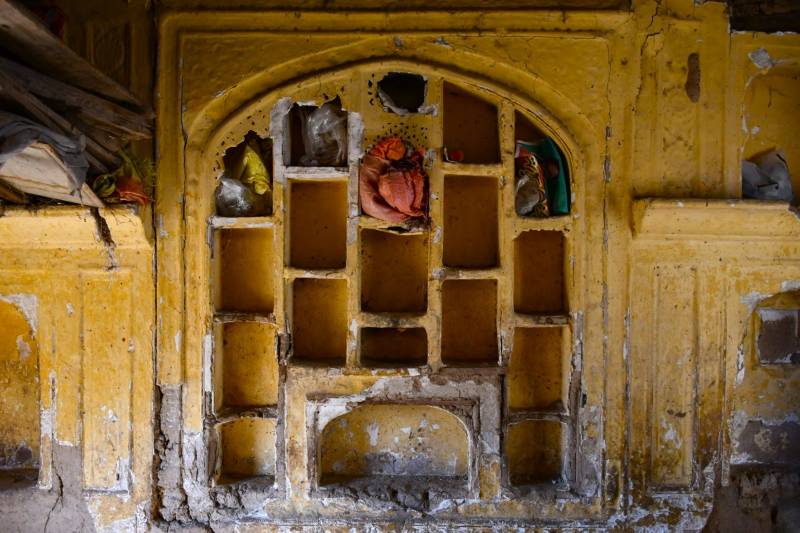
The room's façade is noted for its wooden frame, which features floral and geometric motifs. The wooden ceiling of the room is also crumbling. The crumbling room contains an arched wall niche comprising several recessed compartments once used for storage and display. Many of the havelis in Pothohar featured decorative wall alcoves with multiple niches that reflected the opulence and taste of their builders. Not everyone afforded such a luxury. Such walls with multiple niches first attracted the attention of guests, who looked at the most valuable objects displayed by the household owners. It was also an indication of wealth and lifestyle in pre-partition Pothohar.
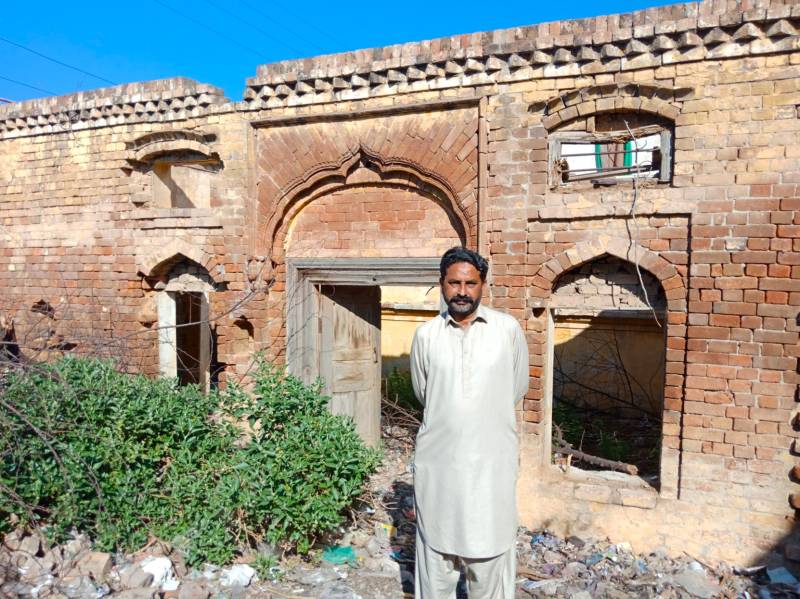
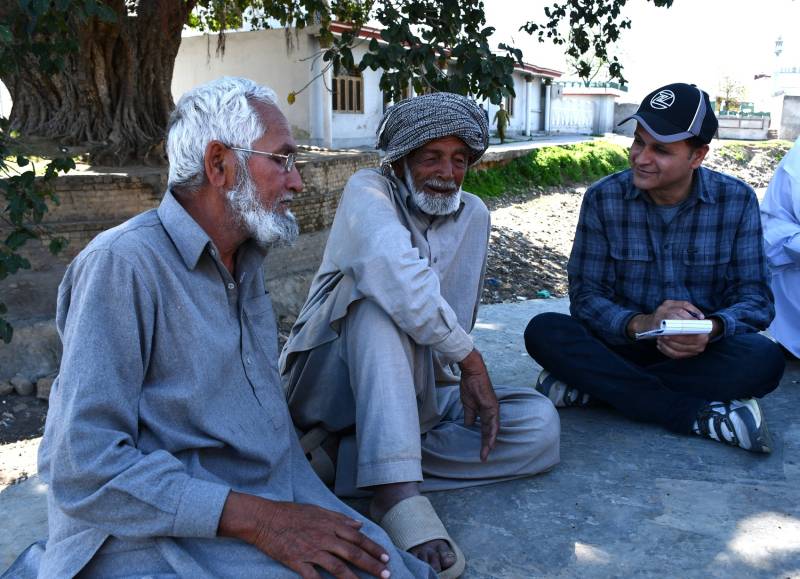
Apart from the haveli of Dr Zaman, Bassali had many impressive mansions which have either been renovated or demolished. Some of the most prominent havelis were those of Bhai Mehtab Singh, Hari Singh, Gulab Singh, Diyan Singh, and others. During my various visits to the village of Bassali, I conducted interviews with oral historians and learned about notable figures in the Sikh and Hindu communities. According to Nazeer Ahmad, the most prominent Jagirdar of Bassali village was Bhai Diyan Singh. Bhai Mehtab Singh was also a prominent elite of Bassali who had a well dug, located east of Baba Sakhi Shahnawaz Ban.
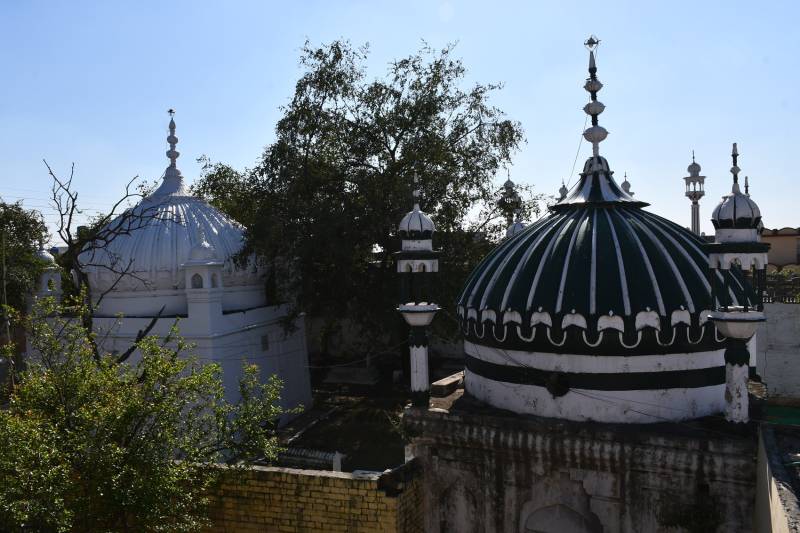
There are two wells at this ban (pond/tank), one of which has an inscription in both Gurmukhi and Urdu. According to the inscription, the well was constructed by Bhai Mehtab Singh, son of Chaudhry Ganda Singh Oberoi of Rawalpindi. This suggests that Bhai Mehtab Singh was living in Rawalpindi at the time and preferred to identify himself with the city rather than with Bassali. There is, however, another possibility that the Bhai Mehtab Singh mentioned by residents may have been a different person bearing the same name. Nevertheless, the oral historians of Bassali believe that both references point to the same individual. Their memories and narratives help connect scattered pieces of the village's past, preserving stories that might otherwise be forgotten over time.
The Oberoi and Bakhshi families of Bassali were among the most powerful and influential families in Bassali and beyond. The Bakhshis of Kauntrila in Gujar Khan and the Bakhshis of Bassali were related. The Bakhshis in various other villages and towns in Pothohar were eminent traders and landowners. From Bishandaur (now Diwan-e-Huzoori) in Jhelum to Dera Bakhshian to Kauntrila in Gujar Khan, they played an important role in bureaucracy, local politics, and the economy.
Like the Oberois of Bhaun in Chakwal, the Oberoi family of Bassali was also influential in their village and Rawalpindi.
From the interviews with Haji Abdul Waheed, Mustiaq Hussain Shah, Nazeer Ahmad, and others, I learned the names of some Sikhs in Bassali. Some of the prominent Sikhs of pre-partition Bassali included Bhai Mehtab Singh, Chaudhry Gandoa Singh, Santokh Singh, Hari Singh, Sawan Singh, Bishan Singh, Gokal Singh, Ram Singh, Gulab Singh, Diyan Singh, Jeevan Singh, and others. There were about ten ponds and tanks, most of which were constructed by Sikhs. Gulab Singh, Bhai Mehtab Singh, Hari Singh, and Bishan Singh constructed tanks which were named after them. Apart from tanks, there were more than 10 wells in Bassali. Bhai Mehtab Singh constructed another well, which was called Baghan Wala Khu or Bhai Mehtab Singh Wala Khu. Both tanks and wells were important features of Bassali village's cultural landscape. Most of the tanks and wells are still extant, though in poor condition. A few wells, particularly one constructed by Bhai Mehtab Singh at Bhai Mehtab Singh Wala Ban, now called Sakhi Shahnawaz Wala Ban, have been restored by the local community.
There was once a Sikh dharamshala near a water tank in Bassali. Today, nothing remains of it except memories. Bassali was also home to seven temples, which reflected the village's rich religious and cultural life in earlier times. The village bazaar was a lively space, with most of the shops owned by Hindu and Sikh families who played an important role in the local economy. These temples, the dharamshala, and the busy marketplace together speak of a time when Bassali was a vibrant and diverse community, where people of different faiths lived, traded, and shared everyday life.
Bassali is also home to several Muslim shrines. One of the most prominent shrines is that of Sakhi Shahnawaz, adjacent to the village ban. On his grave, his date of death is written 1621 AD. Whether it is correct or not, nothing can be said about it. One does not know much about his arrival in Bassali, and additional information is needed to establish his tentative era. One can notice a few other shrines while walking through the streets of Bassali village. One observes a shrine of Masoom Badshah, a prominent feature of the Pothohari landscape.
Masoom Badshah and Shaheed Badshah are two names that frequently appear on shrines in Pothohar. When local people no longer remember the saint's actual name or history, they often associate the shrine with either Masoom Badshah or Shaheed Badshah. Over time, these names have acquired a spiritual appeal of their own, attracting devotees and helping keep the shrine alive in local memory and popular devotion.
Symbolic shrines, mostly baithak, are sacred spaces where the saints once sat, rested, and taught disciples. In most cases, saints never visited the villages or places where the baithak was built, which later became a popular shrine. The followers make a baithak or chillagah for the saint they follow. One of the baithak is located in Bassali's bazaar, known as Damri Wali Sarkar. Pira Shah Ghazi Qalandar (d. 1742), popularly known as Damri Wali Sarkar, never visited Bassali! He is buried in Khari Sharif in Azad Kashmir's Mirpur district.
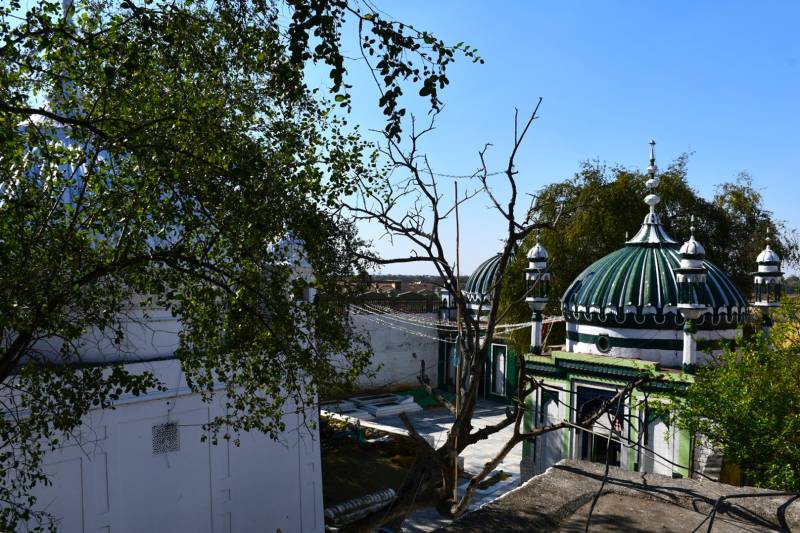
One can also see the baithak of Baba Ghulam Badshah in Bassali village. Baba Ghulam Badshah is interred in Nothia Sharif in the Kallar Syedan tehsil. Apart from these shrines, the most popular and earliest is the Syed Sakhi Abdul Sattar Shah shrine complex. The principal shrine belongs to Syed Sakhi Abdul Sattar Shah. I interviewed Syed Mulazim Hussain Shah Gilani about the history of Syed Sakhi Abdul Sattar Shah. The shrine complex includes the three domed structures of Syed Sakhi Abdul Sattar Shah, Syed Babu Hussain Shah, Syed Sakhawat Hussain Shah, as well as the hujra. Adjacent to the shrine compound is a mosque. The mosque is located outside the complex. There are a few stone-carved graves in the courtyard of Sakhi Abdul Sattar Shah. There are also a few other shrines in Bassali village, including Baba Hu Wali Sarkar, Baba Chaman Shah, Bibi Murshid, Syed Abid Shah, and others. Bassali is home to several shrines, scattered throughout the village and its surroundings.
Bassali’s historic buildings, tanks, wells, old havelis, choubaras, and Sufi shrines reflect the village's rich cultural and spiritual heritage. In view of this remarkable heritage, the concerned authorities should declare Bassali a heritage village and develop a heritage trail from Rawat to Bassali, connecting the area's historic and sacred sites for visitors. Such an initiative would not only preserve the village's unique identity but also put Bassali in the spotlight as an important cultural destination. Increased tourism would create new opportunities for local communities, support small businesses, encourage heritage conservation, and strengthen the local economy while allowing future generations to remain connected with their history and traditions.