

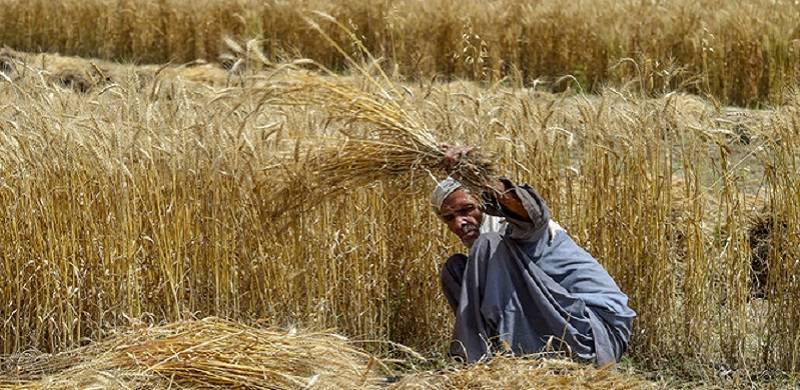
The crop production sub-sector of Pakistan's agriculture continues to face a grave crisis. During the first quarter of fiscal year 2024–25, overall agricultural growth was limited to just 1.15%, with major crops registering a sharp decline of 11.19%. This downturn was driven by significant reductions in the production of cotton (-29.6%), maize (-15.6%), rice (-1.2%), and sugarcane (-2.2%).
The government’s recent Green Pakistan Initiative, launched under the Special Investment Facilitation Council (SIFC) on February 15, 2025, aimed to revitalise agriculture through corporate farming, high-tech solutions, and foreign investment. However, within months of its rollout, the promised economic transformation and capital inflows remain elusive. An underwhelming wheat harvest has deepened the crisis for local growers and raised questions about the initiative’s long-term viability. According to the Ministry of Finance's Monthly Economic Outlook, wheat production is projected to decline by 11% in 2025, falling to 27.9 million metric tons, 3.5 million less than the previous year’s record of 31.4 million. The Pakistan Meteorological Department attributes this shortfall to prolonged dry weather, which has exacerbated water stress in rain-fed areas. Contributing further to the crisis, the government's withdrawal from wheat procurement and subsidies—moves influenced by recent IMF agreements—has left wheat growers vulnerable.
Despite demands for a minimum support price of Rs. 4,000 per 50 kg, many farmers were forced to sell at depressed rates ranging from Rs. 1,600 to Rs. 2,200 per/Maund. These developments underscore a systemic failure to protect farmers from market volatility and input cost inflation.
Crop production’s share in GDP has declined to around 7%, despite agriculture contributing 19–22% overall. Yet over 65% of the population still depends on agriculture for their livelihood. Chronic water scarcity, erratic weather, and climate change have made this dependence increasingly precarious. In contrast, the livestock sub-sector, which constitutes over 60% of agricultural value and 14.63% of national GDP, has shown steady growth (3.89% in FY2023–24) due to its relative insulation from seasonal variability.
As agricultural prices fall and farmers face mounting distress, industrial capital continues to profit, deepening the structural inequalities within Pakistan’s economy
In Charsadda, Khyber Pakhtunkhwa—a region renowned for cultivating desi (local) varieties of garlic—growers continue to face significant economic challenges despite high market demand for their produce. A typical garlic grower in the area often invests considerable time, resources, and labor into cultivating the crop, yet returns remain disproportionately low. For instance, one grower cultivating garlic on an 8-kanal plot over a period of 8 months sold the produce for a total of PKR 460,000. However, this amount barely covered the cultivation costs, including fertilisers, pesticide sprays, and manual labor. After accounting for these expenses, the net gain was approximately PKR 300,000—a modest return given the length and intensity of the investment. In light of these adverse trends, tobacco farmers in the region have also begun expressing growing concern over their economic prospects.
Anticipating similar patterns of exploitation and price suppression, local political and peasant organisations have initiated meetings and mobilisation efforts to safeguard the interests of tobacco growers. These efforts aim to challenge the disproportionate market power of large tobacco manufacturing companies, which dominate procurement in the area and often dictate unfavorable purchasing terms to small-scale producers. This example illustrates the broader economic dynamics confronting many small farmers across Pakistan’s agricultural sector.
Interestingly, while crop growers suffer, a glut in vegetable production, such as potatoes, tomatoes, and onions, has contributed to a dramatic decline in food inflation. In Karachi, for example, potatoes now sell at Rs. 200 for 5 kg, onions at Rs. 150 for 5 kg, and tomatoes at Rs. 50 per kg. This sharp decline was largely driven by a substantial decrease in food prices, with vegetable prices witnessing significant reductions. For instance, tomato prices fell by 45%, onions by 13.32%, and potatoes by 21.37% in January 2025 compared to the same period the previous year. This overproduction has sharply lowered prices and helped reduce Pakistan’s overall Consumer Price Index (CPI) inflation to 1.5% in February 2025, down from 23.1% a year earlier—the lowest in a decade.
However, the decline in inflation has not translated into relief for all. The service and industrial sectors, which account for approximately 28.11% and 58% of GDP respectively, benefit from this environment. Lower food prices reduce the cost of living, minimising pressure on employers to raise wages. This keeps labor costs low and profit margins stable, particularly for industrial capitalists. Meanwhile, rural producers receive less for their goods, further exacerbating the inequality between agriculture and industry. Karl Marx’s theory of value helps explain this contradiction: the value of a commodity is rooted in the labor required for its production. Under capitalism, reduced prices for agricultural products lower the perceived value of labor, while industrialists continue to appropriate surplus value through cheap labor and processed commodities. This entrenches class divisions and consolidates wealth among capitalists.
The capitalist sector thrives particularly on value addition, transforming raw crops into processed goods. The food processing industry contributed approximately PKR 1.4 trillion to GDP in FY2023–24, with exports of processed food reaching $2.5 billion. In the textile sector, the conversion of cotton into garments and fabric accounted for 8.5% of GDP and 60% of exports. The sugar industry also exemplifies this process: farmers sell sugarcane at low prices, often facing payment delays, while industrialists generate significant profits by producing refined sugar, ethanol, and molasses. The integration of mills with distilleries and packaging plants maximises returns for manufacturers while bypassing growers.
This dynamic highlights a deeper structural reality: capitalist dominance is rooted not only in the ownership of raw materials, machinery, or labor power, but also in control over the circuits of value creation. Processing—even through the simplest mechanical actions—transforms peasant produce into commodities. It is here, through the living labor of workers, that surplus value is extracted. Every gear turned in a factory becomes a site of exploitation, redistributing value upward to the industrial bourgeoisie.
Thus, declining inflation and a struggling crop sector are not contradictory, but mutually reinforcing phenomena under capitalist accumulation. As agricultural prices fall and farmers face mounting distress, industrial capital continues to profit, deepening the structural inequalities within Pakistan’s economy.