

The renowned Russian writer Petr Kropotkin's booklet, “An Appeal to the Young”, serves as a significant guide for youth transitioning into practical life after completing their formal education. In this booklet, Kropotkin tells a poignant story about a craftsman who, after struggling to find work for several days, faces the dire consequence of his children going hungry for four days. Frustrated and desperate, he steals two kilograms of flour from a shop. Despite his pleas that his actions stemmed from his inability to provide for his family, the shopkeeper files a complaint, and the craftsman is sentenced to six months in prison.
This narrative echoes a theme found in the Bollywood film “Pareeksha”, where a poor rickshaw puller takes his son out of a government school to enroll him in an expensive private institution. Overwhelmed by the costs of tuition and related expenses, the rickshaw puller is ultimately driven to steal, mirroring the fate of Kropotkin's craftsman.
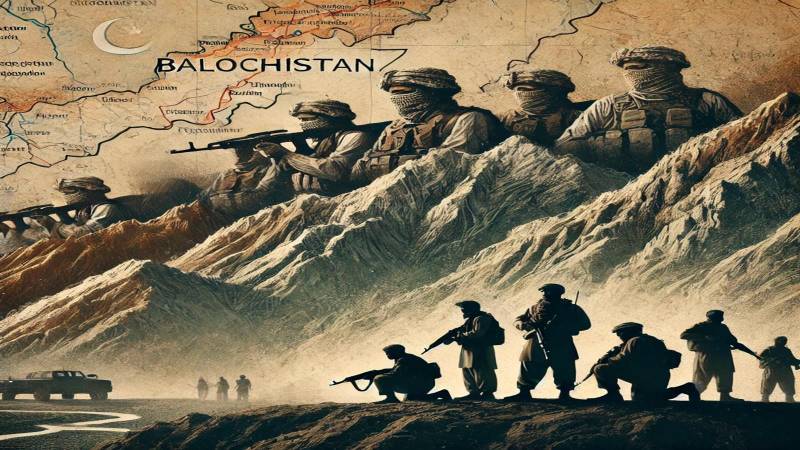
The aim of referencing Kropotkin's book and the aforementioned Bollywood film is to highlight the importance of understanding societal breakdowns. Rather than hastily analysing such situations and reaching incorrect conclusions, we should take a moment to reflect on the underlying reasons for these issues. In this regard, the turmoil currently engulfing Balochistan has a deeply troubled history that sheds light on the factors contributing to its present circumstances.
Historically, following the formation of Pakistan in 1947, the regions of Bengal, Sindh, Punjab, and the NWFP (now Khyber Pakhtunkhwa) became part of the newly established country during that same year. However, the Kalat State declared itself an independent homeland, initially receiving support from Muhammad Ali Jinnah. Soon after, though, Jinnah urged the then Khan of Kalat, Mir Ahmad Yar Khan, to accede to Pakistan. A resolution to this effect was presented in both houses of the Kalat Assembly, yet a majority of the members voted against it. Despite this opposition, Balochistan was incorporated into Pakistan in March 1948, prompting the first Baloch rebellion in the country's history, led by Prince Abdul Karim, the Khan of Kalat's brother.
During General Ayub Khan's regime, another rebellion arose, spearheaded by Nawab Nauroz Khan, in response to the arrest of the Khan of Kalat and the implementation of the One Unit scheme. Unfortunately, the injustices faced by the Baloch people continued, exacerbated by Zulfikar Bhutto's ousting of the elected government of the National Awami Party (NAP) in Balochistan and the initiation of the "Hyderabad Conspiracy Case" against NAP leadership. This further fueled resentment among the Baloch population, leading to a more organised rebellion.
After the fall of Bhutto's government, General Zia-ul-Haq sought to counter the Pakistan People's Party (PPP) by releasing NAP leaders. However, the Baloch leadership, showing political acumen, declined to be manipulated by General Zia-ul-Haq. Unfortunately, the cycle of deprivation for the Baloch people persisted, culminating in the assassination of Nawab Akbar Bugti.
This repression extends beyond militant groups to peaceful activists, including individuals like Dr. Mahrang and Sami Baloch, who have faced humiliation and arrest in Quetta and Karachi
If we examine Nawab Akbar Bugti's early political career, we can see that as a chieftain, he initially aligned himself with influential circles. A notable instance of this was when, following the ousting of the NAP government, Z. A. Bhutto appointed Bugti as the governor of Balochistan. However, Bugti chose to resign from this position after a brief tenure.
Regarding the tensions between Bugti and General Musharraf, a Karachi-based doctor who worked in Nawab Bugti's constituency accused an army officer of sexual assault, prompting Bugti to call for a thorough investigation. This fair demand was rebuffed by the military leadership, including Musharraf. The conflict that ignited from this case subsequently escalated into a larger dispute over the ownership of Balochistan's resources.
During this tumultuous period, the Muslim League (Q) government attempted to negotiate with Bugti to improve relations, while simultaneously, General Musharraf issued threats against him. Ultimately, in 2006, the Musharraf government assassinated Nawab Bugti. Following his death, a significant jirga comprising various political and social groups from Balochistan was convened, leading to a well-organised uprising. This movement was notably led by middle-class youth instead of traditional chieftains.
The situation in Balochistan has been deteriorating over the past few days, with daily reports emerging of violent incidents, including an attack on the Jaffar Express. Currently, the most pressing issue confronting Balochistan is that of missing persons, which has garnered significant international attention. In 2014, a long march was organised from Balochistan to Islamabad, led by Mama Qadeer Baloch and Karima Baloch, aimed at raising awareness among the Pakistani populace regarding this crisis. Tragically, in 2020, while residing in Canada, Karima Baloch was killed, and her family was denied access to her body, which was buried under heavy security in her home village.
Furthermore, the trend of kidnapping Baloch individuals of all ages, including the youth, continues, often resulting in the return of their mutilated remains. This alarming pattern persists to this day. Simultaneously, the Baloch rebellion is escalating quickly, with college and university students now taking up arms as part of this movement. Instances of suicide attacks carried out by Baloch youth and women have been reported, notably at Karachi University and the Chinese Consulate in Karachi, prompting vigorous and often violent responses from state authorities.
Baloch women, including Dr. Mahrang Baloch, have been actively advocating for the issue of Baloch missing persons for some time now. Each woman engaged in this peaceful struggle carries painful stories about the disappearance of fathers, brothers, and other loved ones—many of whom have been discovered with mutilated bodies, while thousands more remain missing today. Tragically, at a time when disillusioned Baloch youth are opting for guerrilla warfare, Baloch women, led by Mahrang and Sami Baloch, chose to approach Islamabad to voice their legitimate demands. However, rather than being heard and having their suffering addressed, they were met with violence. Upon their return to Balochistan, empty-handed and having endured this aggression in Islamabad, they received a huge reception from their community.
While I personally do not endorse violence in any form, the shedding of innocent Punjabi blood in Balochistan should be unequivocally condemned. Punjabi laborers cannot be held accountable for the injustices perpetrated by influential circles in Rawalpindi and Islamabad. Likewise, the life of an innocent Baloch should be valued just as much as that of an innocent Punjabi worker. However, alongside this condemnation, it is crucial for state authorities to reflect on the reasons that have compelled the Baloch people—particularly the youth—to take such extreme measures. As I noted at the beginning of this article, Peter Kropotkin’s "An Appeal to the Young" and the Bollywood film "Preeksha" provide context for understanding how and why some Baloch militants have adopted such a radical stance, and who is accountable for this situation.
Regrettably, instead of approaching this issue with the sensitivity it warrants and conducting a critical examination, those in power are intensifying their crackdown. This repression extends beyond militant groups to peaceful activists, including individuals like Dr. Mahrang and Sami Baloch, who have faced humiliation and arrest in Quetta and Karachi. For those familiar with political history, it is clear that a nation like the Baloch, which has vocally objected to injustices such as the assault of a doctor from another province, cannot simply remain silent in the face of the continual humiliation, arrests, and killings of its own citizens. This heavy-handed approach from the powerful can only serve to exacerbate tensions, a course of action they would be wise to avoid.
Reflecting on Pakistan's history, it is regrettable that those in power often resort to force rather than seeking lessons from the past. Consequently, Balochistan is currently engulfed in turmoil, while Khyber Pakhtunkhwa faces renewed terrorism. Protests have erupted across Sindh over the canal issue, and the people of Saraiki Wasaib express dissatisfaction with state policies. The conditions in Gilgit and Kashmir are also far from satisfactory. Despite these pressing issues, it is disheartening that the powerful elite remain unwilling to relinquish their grip and continue their oppressive tactics. However, they overlook a crucial point: if all marginalised nations in Pakistan unite to demand their rights and raise their voices against suppression, can the entrenched powers sustain their coercive control?