


The courage, fortitude, and resilience of any nation are tested in difficult times. The 2022 floods, which began on 15 June and lasted until mid-November, upended the lives of 33 million Pakistanis. Nearly half of those affected were children. According to the United Nations Office for the Coordination of Humanitarian Affairs, Sindh was the worst-affected province, with 4.8 million acres of land submerged, followed by 2.7 million acres in Punjab and 1.2 million acres in Balochistan.
These floods should have jolted the world’s developed nations into collective action, compelling them to confront the harsh realities of climate change. Yet, the sad truth of history is that humanity rarely learns its lessons. Instead of responding decisively, we continue repeating the same cycle of negligence and inaction.
Those familiar with rural life in Pakistan know that, for many families, their homes and small plots of farmland are their only source of wealth. Over the course of a lifetime, they build their homes, and if fortune allows, rebuild them for the next generation. It is difficult to fathom the anguish of watching one’s life savings swallowed by merciless, unrestrained floodwaters. Countless families endured this agony, and yet, when faced with the rising waters, there was almost nothing they could do to protect their belongings.
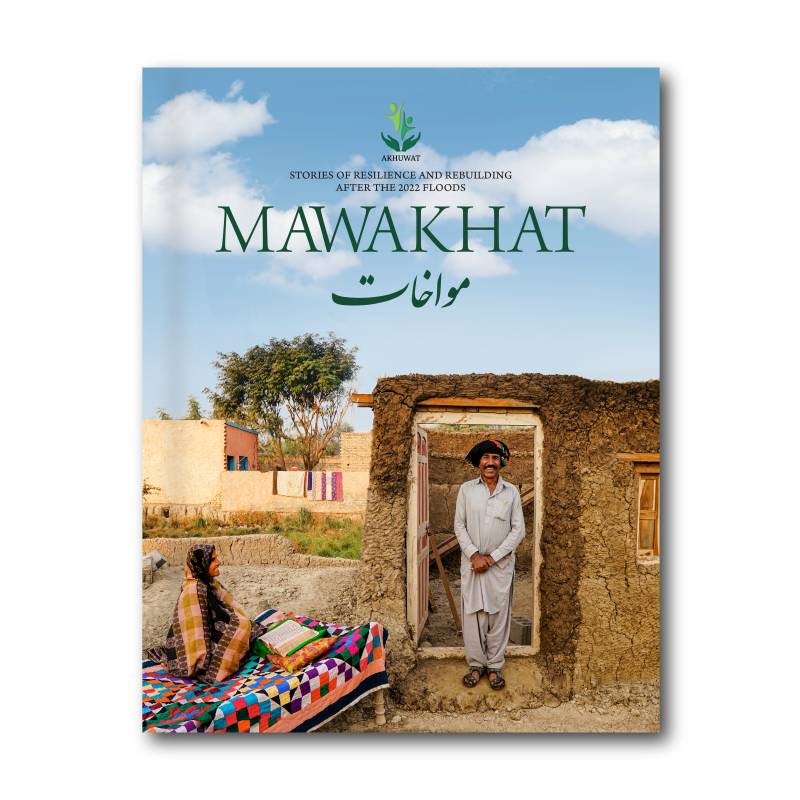
To better comprehend the hardships and struggles faced by the flood victims, one only has to turn to the powerful stories captured in the chef-d’oeuvre photobook Mawakhat. Its title, which translates into compassion and solidarity with other people, is symbolic of the message it intends to convey. It is a compilation of around one hundred stories of nonpareil hope and determination.
This book covers the flood relief and rehabilitation efforts of the Akhuwat. To help the flood-affected people rebuild their lives, Akhuwat formulated an extraordinary and exceptional two-tier recovery framework. In the first phase, immediate assistance was provided to the affected people through ration packs, cooked meals, cash donations, clothes, medical services, and much more. In the second phase, the focus shifted to helping people rebuild their homes, restart their businesses, and restore their agricultural lands. All of this was done through the distribution of interest-free loans.
To better understand the hardships faced by the flood victims, one only has to turn to the powerful stories captured in the photobook Mawakhat
During those unbearable times, Dr Amjad Saqib, the founder and chairman of Akhuwat, personally visited the affected areas. In the foreword, he recalls that he was in awe of people's determination to continue living in the face of grim adversity. Given this, Akhuwat made relentless efforts to raise awareness about what people were going through. It helped rebuild more than 6,000 homes across Pakistan, a testament to its expertise in humanitarian efforts.
These stories have been captured and edited by Faizan Ahmed, a visual storyteller and the author of Lahore by Metro. The moving pictures and their equally poignant descriptions are bound to transport readers to the areas where this tragedy was unfolding. It's not just a book, it is a mirror to the world of indefatigable determination and unparalleled perseverance of the people whose lives had been blighted by the deluge of extraordinary proportions.
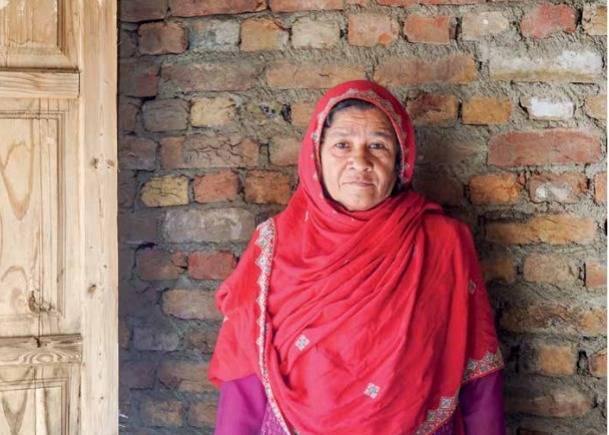
Almost every story recorded is replete with emotion and resilience, yet a few stand out, leaving a lasting imprint on the reader. One such story is of Raheela Khatoon from Sukkur, Sindh. She recalls, "Whenever there is any happy occasion, all our family comes together in our home to celebrate. But the monsoon days were far from happy. Our house did not survive the flood. I cannot tell you how worrying that time was for us. Discovering Akhuwat was a stroke of luck. With an interest-free loan from them, we built ourselves a new home. This one is a brick house and no storm can harm us here. We can now host family events like we always have in the past. Next month, we will host a milad in our new house to mark a blessed beginning for our family."
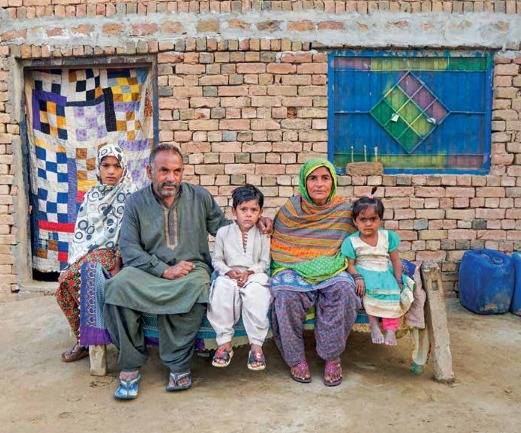
Ghaus Baksh, another flood affectee from Dera Ghazi Khan, Punjab, recounts a similar heart-wrenching experience. He narrates, “I earn my livelihood as a driver. With my limited income, it is often difficult to give my children a comfortable life. When the floods came, we had to move into a tent. However, no one complained. The children put on brave faces and helped me keep my nerves. My youngest daughter, Aqsa, especially cheered me up. She is a tough one.” He goes on, “She is only in the second grade and has already decided that she wants to be a teacher when she grows up. But even then, at a young age, she taught us courage and patience in the face of adversity.”
Even if I wrote a thousand lines on the significance of what we call a home, they too would not be enough to capture the depth of grief of all those people who saw their homes collapse and wash away before their own eyes. Having a roof of one's own in the rural areas of Pakistan is like possessing a separate world, a world which people are immensely proud of. So much so that if anyone has a home, they will not aspire for anything else in life. A home is what makes their lives complete.
The cover story of this book stirs a storm of emotions, leaving readers torn between the warmth of the survivor’s smile and the heartbreaking sight of his shattered home. The account of brave Sadiq Ali is one of utmost grit and fortitude. He reminisces, "The Rains lasted for about three months. During that time, there were days when it poured relentlessly without pause. One time, we sat under a dripping roof for four consecutive days. The mill I worked at was closed, so we had no source of income. As if that was not enough, the foundation of our house gave way. I would not wish such hardship on my worst enemy. Thank God we have now built a stronger home for our family."
The other personal accounts of Muhammad Ashiq, Badshah Khan and Muhammad Hanif are sure to fill the readers' hearts with a sense of moral obligation and immense respect. Mawakhat is a powerful testament to the indomitable spirit of our Pakistani brethren, whose struggles and perseverance shine as a beacon of hope and inspiration. Each story is a moving exploration of the human experience, prompting readers to pause, reflect and connect with the emotions within. With its evocative photography, graceful prose, and poignant narration, this book is , I must say, a worthy addition to any collection.
Mohrat Khan, a resident of Dera Ismail Khan in Khyber Pakhtunkhwa, shares his story and adds a touching note. He recalls, “So, after the floods, it was our turn to band together and rebuild our house, our large family home that has more hearts than rooms.”