

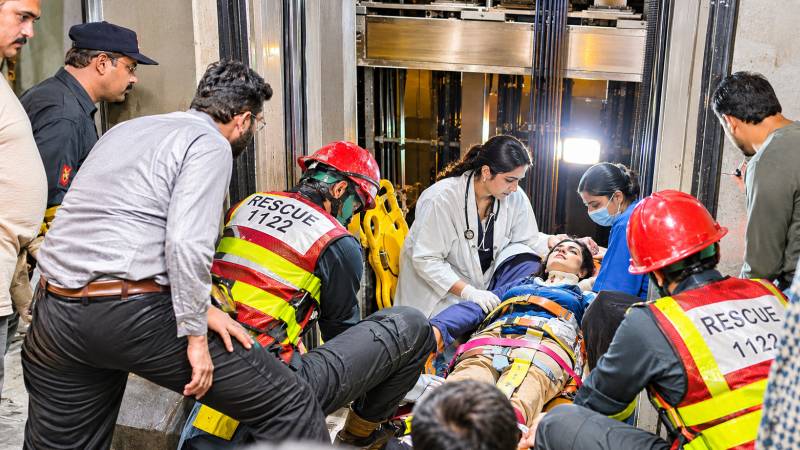
On the night of 27 September 2026, an otherwise ordinary evening in a residential community nestled between Islamabad and Rawalpindi was abruptly interrupted. As a doctor, most of my days (and nights) are spent at patients' bedsides. On a rare day off, while returning home from a walk, a loud bang broke the quiet of the night.
My residential building elevator plunged from the sixth floor, free-falling before coming to a halt below basement level. Within minutes, residents gathered around the dimly lit, damp basement in an attempt to pry open the elevator doors. Inside, we found my injured neighbour. From where I stood, I could see what appeared to be an open fracture of her tibia. As a doctor, I recognised the seriousness of the injury but with the elevator lodged below floor level, I was unable to reach her.
A critical window exists between the moment an accident occurs and the arrival of first responders on scene. The first link in that emergency chain may be you, going about your regular day. Are we, as individuals and as a community, prepared to respond when an emergency strikes? The immediate aftermath of an accident can be confusing. One bystander admitted to not knowing the emergency helpline number. In that critical time, the problem was not only the absence of professional help but also the uncertainty surrounding what to do before they arrived
The first Rescue 1122 call was made 16 minutes after the accident occurred. Guidelines emphasize seeking help without delay. However, recognising the need for aid is not analogous to knowing how to summon it. Some bystanders suggested using a bedsheet as a makeshift hammock for extrication. However, in suspected spinal trauma, unnecessary movement can cause further damage. As the doctor on scene, I advised against using such a method.
Community response cannot depend on the incidental presence of a medical professional. The WHO emphasises the value of basic prehospital training of community members, presenting a case study of a first-aid training initiative for commercial drivers in Ghana. Two years later, an assessment found that the trained commercial drivers scored a median of 7/10, compared with 3/10 among untrained drivers. In an emergency, action, or the lack thereof, can make the difference between life and death.
The first Rescue 1122 call was made 16 minutes after the accident. In those critical minutes, the uncertainty of bystanders, lack of first-aid knowledge and hesitation to intervene can shape the outcome. We cannot prevent every accident, but we can prepare communities to respond.
Back at the scene, hushed whispers circulated among bystanders. Even in a high-stakes situation, concerns about pardah and customary boundaries between unrelated men and women made some reluctant to intervene. A 2024 review found that 34 of 58 studies examining sex differences in bystander CPR reported lower rates of CPR for women than for men. Factors identified included apprehensions about touching or exposing a woman's body, fear of causing injury and misconceptions regarding women’s medical emergencies.
Although this issue is largely understudied in Pakistan, it raises an uncomfortable question: do cultural beliefs around gender delay emergency assistance to women? Modesty and medical intervention should not have to compete with each other. Community living is more than just existing in shared spaces and maintaining common facilities. Proper systems need to be established to anticipate adverse events, initiate response, provide first aid and contact the relevant authorities.
Additionally, prominently displaying emergency contact numbers, keeping first aid supplies in accessible locations and training staff members are practical measures in the right direction. Simulated emergency drills as outlined in the WHO’s simulated exercise manual could test emergency plans, identify weaknesses and strengthen the response system.
The medical principle of prevention being better than cure applies equally to emergency preparedness in residential colonies. We cannot prevent every accident. We can only prepare for the next one. The elevator accident was unusual. However, the underlying question is not. An elderly person can collapse in a park. A child can run in front of a car. A fire can break out in the kitchen. Emergencies rarely come with warning. But we can decide how to prepare for them.
By the time an ambulance arrives, the people at the scene may have already influenced what happens next. There is one question I believe everyone should ask themselves: if you were the one lying injured, are you the kind of bystander you would want by your side? At the time of writing, the injured woman has undergone multiple surgeries to her spine, pelvis, femur, tibia and fibula. One resident entered the elevator to initiate rescue. A nurse and the author were subsequently lowered into the elevator to provide first aid. She was successfully extricated approximately 44 minutes after the fall.