

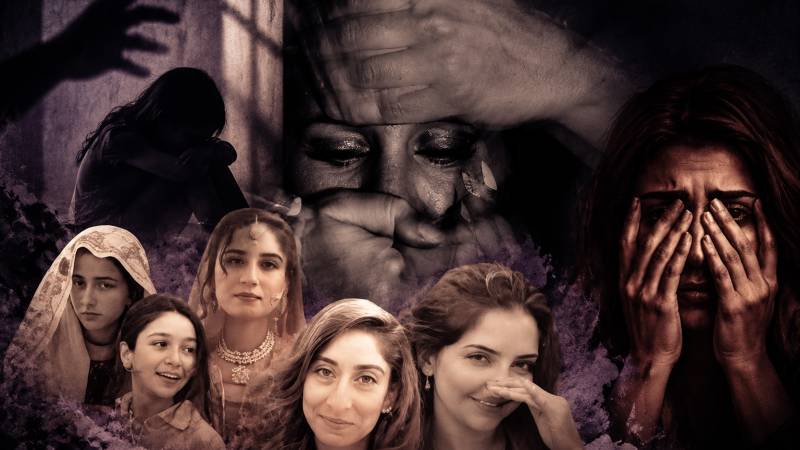
There is something deeply unsettling about the number of names that have entered Pakistan's news cycle this August. Hina Javed. Aizal. Ayat Noor. Ayesha Gilamana. Amina. Anmol. They represent different stories, involving different victims and circumstances. Yet, when read together, they leave behind a difficult and painful question: how safe are women and children in the places where they should feel safest? A home. A neighbourhood. A street. A police station. Even a digital platform. The answer, increasingly, appears uncomfortable.
In Rawalpindi, the death of 45-year-old Hina Javed inside her apartment raised serious questions about domestic violence and the circumstances surrounding her death. Police investigations led to the arrest of her husband and a domestic worker, while forensic evidence became part of the investigation. The case remains subject to due process and further judicial proceedings. But cases like this should make us ask a question that is often raised too late: were there warning signs before the violence became fatal?
Domestic violence is frequently discussed only after a woman has been killed. By then, prevention is no longer possible. The challenge is recognising threats, intimidation, coercive control and abuse as warning signs that require intervention rather than dismissing them as private family matters. Then came the death of 18-month-old Aizal in Karachi after a suspected sexual assault.
The child was reportedly taken from her home by a teenage relative under the pretext of buying her something. She was later returned in critical condition and died after being taken for medical treatment. Police arrested a teenage suspect, and the case generated widespread public anger. An infant cannot recognise danger. She cannot negotiate with a predator. She cannot report abuse. That responsibility belongs entirely to adults.
The case raises uncomfortable questions about child protection in Pakistan. How do we protect children from people they already know? How quickly are suspicions acted upon? And what mechanisms exist for families who need help before a child becomes another statistic? The disappearance and death of five-year-old Ayat Noor in Haripur has raised similar concerns.
Ayat disappeared on August 10. Her body was recovered from a well nearly two weeks later, and police subsequently arrested multiple suspects. Investigators said technological and forensic evidence helped advance the case. For her family, however, the most devastating fact remains simple: a child went missing and did not return home.
A missing-child investigation should never become an exercise in waiting for tragedy to reveal what happened. The first hours after a child disappears can be crucial. Communities need functioning reporting systems, rapid police response, effective use of CCTV and other technology, and properly coordinated child-protection mechanisms. Then there is the case of Ayesha Gilamana, a Pashto TikTok creator whose death has highlighted another form of vulnerability.
A woman becoming visible online should not make her a target. For many Pakistani women, social media is no longer merely entertainment. It can be a source of income, professional identity, education and independence. But increased visibility can also expose women to harassment, threats, blackmail and financial exploitation. The answer cannot be to tell women to disappear from public spaces. It has to be to make those spaces safer.
The challenge is recognising threats, intimidation, coercive control and abuse as warning signs that require intervention rather than treating them as private family matters.
Perhaps the most troubling cases, however, are those in which the institution expected to provide protection becomes the subject of allegations itself. The deaths of Amina and Anmol while in police custody in Lahore have prompted demands for an independent investigation. Human rights organisations have questioned aspects of the official account and called for greater scrutiny. The allegations and circumstances must be established through an impartial investigation rather than through public speculation. That distinction matters.
Demanding accountability does not mean declaring an accused person guilty before a court has reached a decision. But it does mean recognising that a death in state custody requires an exceptionally credible explanation. The same principle applies to the reported sexual assault of a woman at a Punjab police station, following which all 78 officers and staff members of the precinct were suspended.
A police station should be one of the places a survivor can go when she is afraid. If a woman cannot trust the institution responsible for recording her complaint, where is she supposed to go? These cases should not be viewed simply as a sequence of shocking headlines. They reveal different weaknesses within the same larger system.
Domestic violence can remain hidden until it becomes lethal. Children can remain vulnerable to people within their own social circles. Women who become financially or socially independent can face threats because of their visibility. And allegations involving law-enforcement institutions can undermine public confidence in the very systems designed to provide protection.
Pakistan does have laws addressing violence against women, sexual offences and child protection. But legislation alone cannot keep a woman safe. Protection requires implementation. It requires police officers who are trained to recognise domestic and sexual violence. It requires accessible reporting mechanisms. It requires forensic services capable of producing reliable evidence. It requires independent investigations when state officials are accused of wrongdoing. It requires child-protection systems capable of responding before a missing child becomes a dead child. And it requires society to stop asking women what they did to become victims.
A woman's clothes, career, social-media presence, marital status or personality do not justify violence against her. A child's behaviour does not justify abuse. Being in police custody does not remove a person's right to safety. There is also a danger in the way we consume these tragedies. For a few days, a name trends on social media. People demand justice. Statements are issued. Anger spreads. Then another case appears, and the previous victim slowly disappears from public attention. This cycle cannot be allowed to become normal.
Justice is not only what happens after a crime. Justice is also prevention. It is identifying domestic abuse before it becomes murder. It is finding a missing child before her body is found. It is protecting women who report threats. It is ensuring that police stations remain places of protection rather than fear. It is creating digital environments where women can participate without being punished for their visibility. Most importantly, it is building institutions that do not wake up only after someone has died.
The names emerging from Pakistan's August 2026 cases should not become another list we remember only because they appeared in our news feeds. They should force us to ask what could have been done earlier. Because women and children do not merely deserve justice after violence. They deserve systems strong enough to protect them before violence happens. They need protection, not hashtags.