

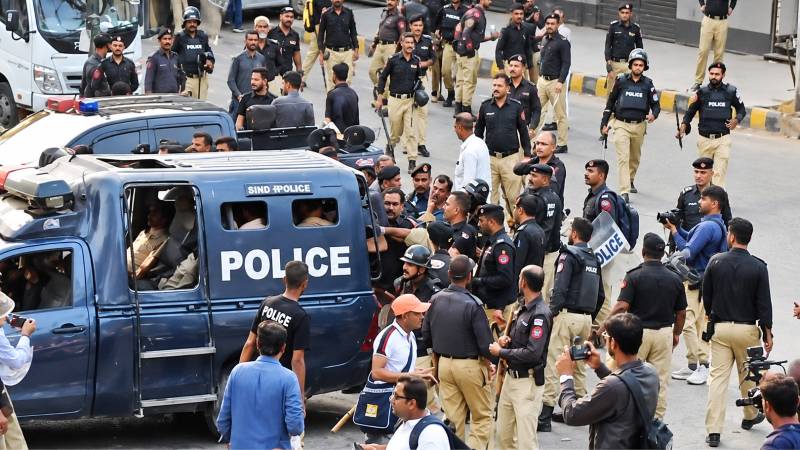
In 2016, an engineer named Waqar Bhutto was killed in what Sukkur police described as an encounter. The police version presented him as a suspect; his family rejected that account after identifying his body and demanded an inquiry. The matter eventually reached the courts, where a murder case was ordered to be registered against senior police officials. The FIR itself was reportedly disposed of within 24 hours, prompting the trial court to question how such a serious matter could be brought to an end so quickly. The importance of the Waqar Bhutto case is not confined to what ultimately happened to one man. It raises a question that remains painfully relevant: when the institution responsible for enforcing the law is itself accused of violating it, who holds the institution accountable?
A police uniform is meant to represent protection. For an ordinary citizen, however, there are moments when that uniform can represent something very different: fear. A person who goes to a police station to seek protection should not have to wonder whether he will leave as a complainant or as an accused. A family demanding answers about the death of a relative in custody should not have to fear that its protest will bring violence, intimidation or a criminal case against them.
The right to peaceful protest is not a favour granted by the police. It is a constitutional right, subject to lawful regulation. Yet we continue to see situations in which the response to protest becomes force before dialogue. In July 2026, lawyers in Larkana announced a boycott of court proceedings after police baton-charged and arrested participants of a sit-in in Khairpur demanding the recovery of missing children. Whatever the difficulties created by a protest, the answer in a constitutional society cannot automatically be the baton.
Nor can an encounter become a substitute for a trial. The police have an important and difficult duty: to investigate crime, arrest suspects and place the evidence before a competent court. They do not possess the authority to decide guilt and punishment at the roadside. The Sindh High Court recently put the principle plainly: even a person described as a habitual offender or proclaimed offender does not thereby give the police an open licence to kill him. The purpose of policing is to bring an accused before the court, not to make the court unnecessary.
This concern is not theoretical. In 2025, a departmental inquiry in Sukkur found five policemen responsible for shooting university student Nasrullah Mangrejo after he had allegedly been kept in custody for about 24 hours. His family had challenged the police version of the encounter, and the inquiry found that he had no criminal record or connection with the alleged criminal activity. In Shikarpur, another police inquiry concluded that officers had failed to produce evidence supporting their encounter narrative. More recently, a Sukkur court ordered registration of a case against nine policemen after finding an alleged encounter suspicious and unlawful.
A citizen may be poor, powerless, unpopular or even accused of a serious crime, but he does not cease to be human.
The most disturbing question is what happens when a person dies in custody. Once the State takes a citizen into custody, it assumes responsibility for his safety and dignity. Custody cannot become a legal black hole in which constitutional protections disappear. The Sindh High Court has recently warned that senior police officers may be held personally responsible when custodial deaths occur and has stressed the requirement of transparent and independent investigation.
There is another injustice that receives less attention: the unequal experience of policing. For the influential, the police station can sometimes be a place where doors open quickly, calls are answered and disputes are negotiated. For the poor, the same institution can appear distant, intimidating and unforgiving. The law does not recognise two categories of citizens, yet policing can sometimes make people feel that it does.
A poor family whose son has disappeared, a labourer whose complaint is not registered, a widow seeking justice for a custodial death, or an ordinary citizen standing peacefully in a protest has the same constitutional claim to dignity as a powerful person. The test of a police force is therefore not how it behaves when dealing with those who can influence it. The real test is how it treats the person who has nobody powerful standing behind him.
This does not mean that every police officer is abusive or that every encounter is fabricated. Sindh's police officers work under difficult conditions and many perform dangerous duties with courage. But institutional respect cannot be built by asking citizens to remain silent about misconduct. A professional police force should welcome accountability because accountability protects honest officers as much as it protects citizens.
The law already provides safeguards. What is often missing is their consistent implementation. Allegations of custodial death or staged encounters should be investigated independently, not merely by colleagues of those accused. Arrests and custody should be properly documented. Peaceful protesters should be dealt with through lawful and proportionate measures. A criminal case should never become a tool for intimidating a person who has merely demanded justice. And where an officer is found to have abused state power, disciplinary and criminal consequences should follow without regard to rank.
The police cannot ask citizens to respect the law while appearing to stand outside it. Authority becomes legitimate only when it is exercised within legal limits. The uniform gives an officer power. The Constitution tells him how that power may be used. A citizen may be poor, powerless, unpopular or even accused of a serious crime, but he does not cease to be human. He remains entitled to dignity, due process and the protection of law. The police are not the law; they are servants of the law. The strength of Sindh Police will not ultimately be measured by the number of arrests made or encounters reported. It will be measured by something more fundamental: whether an ordinary citizen can stand before a police officer without fear, speak without intimidation, protest without being beaten, and seek justice without becoming the next accused. A uniform is a symbol of authority. It must never become a licence to forget humanity.