

“Hindustan had become free. Pakistan had become independent soon after its inception but man was still a slave in both these countries—slave of prejudice … slave of religious fanaticism … slave of barbarity and inhumanity”—Saadat Hasan Manto.
Freedom comes with a heavy price. At least that is what we are beginning to realise after almost 78 years of existence. Without mincing any words, the Father of the nation, Quaid-e-Azam Muhammad Ali Jinnah said: “If we want to make this great State of Pakistan happy and prosperous, we should wholly and solely concentrate on the well-being of the people, and especially of the masses and the poor”.
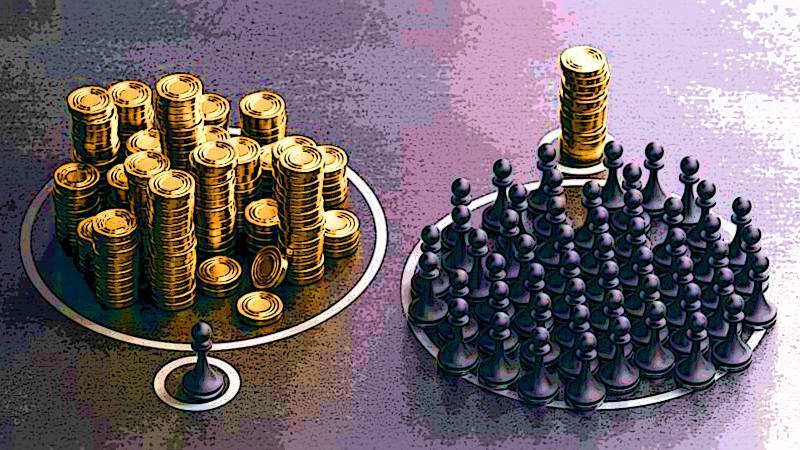
If at all, anyone is free, it is not the people of Pakistan whose liberty is now enslaved (courtesy of its ruling elite), at the hands of international lenders (the World Bank, International Monetary Fund, Asian Development Bank, China, etc.). The people are compelled to lead their lives in accordance with the anti-people policies that the government chalks out at the behest of these neo-masters.
As it happened in the majority of countries where colonialism set its tentacles, the local elite of all kinds, taking advantage of new-found opportunities wasted no time in joining hands with the colonialists. Together, they connived to establish a reign of terror for the people who were spared if they surrendered and given exemplary punishment if they dared to dissent.
Since these elites were chiefly feudal it did not take them long to get their offspring adjusted in various administrative cadres thus gaining complete hold over politics and bureaucracy. After the foreigners departed from the colonies, their ruthless legacy continued with even greater furor than before at the hands of the local gumashtas (gummy boys). In short, fair skins were replaced with brown ones.
The tragic events that took place post-partition are known to everyone and are well-documented. Here too, choices made by a handful led to massive disruption and chaos resulting in the most deplorable situations one can imagine and adversely affecting none but the common populace. Families were torn apart, locals got uprooted from regions that were their habitat for centuries, and wealth was lost in addition to honour and lives.
The constitutions of many democratic countries contain a list of items in which the fundamental rights of the people are protected but these come with certain conditions that are subservient to the will of the ruling elite
The mayhem created in the aftermath of political decisions became the destiny of those who had nothing to do nor had any say in decisions. Seeking freedom from foreign control ended up with further ensnarement, this time around at the hands of their own who were still addicted to the charms of their captors.
Freedom is a difficult word to define. It is relative in degree and characteristics depending on the context—philosophical, political, social, or personal. Essentially, freedom contemplates the ability to act, speak, think or live without any force or pressure. Similarly, freedom also envisages liberation from oppression and exploitation from people or systems created for exploiting, dominating, or marginalising others.
At its core, freedom provides people with the opportunity to live with dignity and self-respect along with responsibility and accountability. Although the constitutions of many democratic countries contain a list of items in which the fundamental rights of the people are protected but these come with certain conditions that are subservient to the will of the ruling elite.
Many writers have and still are questioning the sensibility about some crucial political measures taken many decades back. According to them, choices made then were perhaps quite irrational and without considering their ensuing devastating consequences.
In a recently published paper the authors write: “It was the negativity of thoughts of some selfish and careless politicians who could never anticipate the tremendous amount of vandalism, their actions would bring”. However, in retrospect we are always wise but the biggest impediment in amending long lost mistakes is that the wheel of time cannot be turned anti-clockwise.
The question that emerges from this discussion relates to the extent of actual freedom, we, the people of Pakistan have after freeing ourselves from the clutches of the British in 1947 and the apprehended domination of the Hindustanis. Considering the oppressive environment prevalent as of today; the state of authoritarianism in the name of people’s rule, brazen imposition of taxes without representation and without quid pro quo, a ruthless show of injustice by judicial flagbearers, continued acts of impropriety on the part of the executive; members of the aging generation feel that things were much better during the colonial era. If after decades of having gained independence, such emotions are still ripe, one is tempted to redefine freedom.
Other than the explosive population growth, decay has crept in almost all sectors of our country. Whether it may be in the realm of health, education, research, economy, profession, entertainment, law and order, industrialisation, international relations, and of course governance, there is a marked degeneration in service provision. As a result, the quality of human resources has regressed to an alarming level. With rapidly increasing mouths to feed and fast-depleting resources to generate ample economic growth, coupled with highly imprudent revenue expenditure, governments appear to be losing their grasp over management—signs of an imminent fascist rule to cover up personal deficiencies.
Foreseeing this state of affairs, the clever ones have already established themselves in regions that offer a more conducive environment for their wealth while those left behind are strategising on how to move out. Top-ranking officials of the civil and military bureaucracy for whom national interest supersedes public interest too have conveniently nestled themselves in distant lands after retirement. Many hanging behind proudly claim twin nationalities ready to fly off after sucking out the remaining blood of this nation. Those who claim to be patriotic, law-abiding, and tax-paying citizens are wondering what the future has in store for them.
Indirect forms of submission can be more devastating for the people at large because the tormentors, clad in a benevolent garb are totally disconnected from their suffering despite their claim to be sympathisers. When the focus is diverted from the public to the satisfaction of their masters’ desires, the power-hungry rulers tend to behave ruthlessly towards any form of uprising as a reaction to their nefarious acts. Are we willing to mend our ways and turn our attention to the betterment of the people or continue to play in the hands of a few, remains an answered question.