

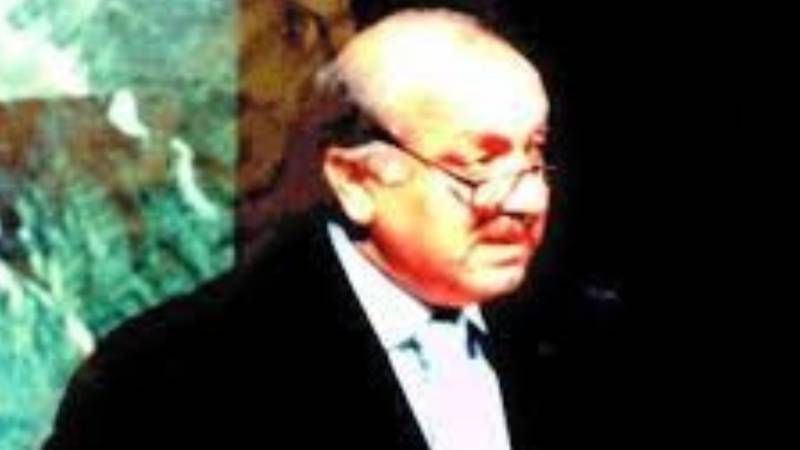
In the resplendent tapestry of Pakistan’s history, certain names do not merely linger in memory; they ascend into the rarefied realm of legend, becoming metaphors for integrity, nobility, and an unflinching devotion to service. Mr Mohammad Siddique Khan Kanju was one such luminary—a man whose life, though cruelly curtailed at forty-nine, streaked across the nation’s political and diplomatic skies like a comet, leaving a trail of brilliance that refuses to fade. He was at once statesman and son of the soil, reformer and raconteur, diplomat and doyen of humility. His assassination on 28 July 2001 was not simply the silencing of a voice; it was the extinguishing of a guiding compass, a grievous wound in the heart of a nation yearning for leaders of his calibre.
Born on 2 December 1951 in the village of Alipur Kanju, Lodhran, Mr Kanju embodied the quintessence of self-fashioned greatness. From his earliest days, he exuded an insatiable curiosity and refined intellect that propelled him far beyond provincial confines. Educated at Sadiq Public School, Bahawalpur, and later at the storied halls of Government College Lahore—where he imbibed English Literature and acquired a command of language at once poetic and persuasive—he crowned his academic journey with a Law degree from Punjab University, equipping himself with the juridical rigour and analytical acuity that became his hallmark.
His political odyssey began in the sunbaked bazaars of Kahror Pakka in 1977, where, at merely twenty-five, he addressed his first gathering. There was no pomp, no pretence—only a young man’s sincerity and an unflinching resolve to give voice to the silenced. Elected to the National Assembly in 1985, he swiftly became Parliamentary Secretary for Agriculture, championing reforms that breathed life back into Pakistan’s agrarian heartland: subsidised fertilisers for smallholder farmers, modernised irrigation systems, and USAID-backed projects that irrigated not only fields but also the parched hopes of entire communities.
As Caretaker Education Minister in 1988, he unfurled a quiet revolution in rural literacy. He overhauled moribund schools, instituted robust teacher-training programmes, and opened avenues for girls’ education in remote regions where such notions were once dismissed as fanciful. His belief in Pakistan’s future was inseparable from his conviction that “A literate child is a liberated citizen.”
Yet it was on the international stage that his gravitas became incandescent. Twice appointed Minister of State for Foreign Affairs (1991–93 and 1997–99), he navigated turbulent geopolitical crosscurrents with rare poise and perspicacity. Following Pakistan’s nuclear tests in 1998, as the world teetered on the precipice of recrimination, Mr Kanju stood at the United Nations and, with trademark eloquence, declared: “Our tests are neither a provocation nor an act of adventurism; they are a solemn, reluctant vow to secure peace through strength.” The speech earned grudging respect even from adversaries.
After surviving an assassination attempt in Afghanistan, he called not for vengeance but for dialogue—a testament to the breadth of his humanity and diplomacy
His diplomacy was never mere rhetoric; it translated into tangible results. He secured aid packages for health and education, fostered multicultural exchanges, and built alliances that reconciled Pakistan’s sovereignty with pragmatic engagement. Middle Eastern envoys remembered him as “a voice of reason and dignity.”
At home, his contributions to Lodhran were transformative and enduring. After years of advocacy, Lodhran was elevated from Tehsil to District in 1991, catalysing infrastructure development and administrative autonomy. Kanju Hall, inaugurated in 1995, became a hub of civic activity and intellectual discourse. He funded scholarships for underprivileged students, financed rural clinics, and initiated microcredit programmes empowering women entrepreneurs. To his constituents, he was less politician and more patriarch—“our own son, who never forgot us.”
What set Mr Kanju apart was not merely what he achieved but how he achieved it. In an era of political pyrotechnics, he embodied restraint. In a milieu rife with patronage, he offered principle. His personality was a rare amalgam of humility and gravitas, kindness and resolve. Even after surviving an assassination attempt in Afghanistan, he called not for vengeance but for dialogue—a testament to the breadth of his humanity and diplomacy.
And yet, on 28 July 2001, in the same Kahror Pakka bazaar where his rise had begun in 1977, four gunmen conspired to extinguish a light too luminous to dim. His death reverberated far beyond Lodhran. Then-President Pervez Musharraf called it “a national loss.” Interior Minister Moinuddin Haider decried the act as “an assault on Pakistan’s democratic soul.” Syed Yousaf Raza Gillani recalled him as “a rare politician—courteous, principled, and deeply loved by his people.”
Nawaz Sharif stated, “We lost a patriot whose dedication to Pakistan was unparalleled.” Western diplomats mourned “the rarest of men: a voice of moderation and dignity in a discordant world.” Benazir Bhutto remarked, “Pakistan has lost a prudent and farsighted politician.”
His funeral became a tidal wave of humanity; thousands poured through Lodhran’s streets, not merely to mourn but to raise a resounding anthem of gratitude—for a life whose labour was woven equally into the hearts of his family and the soul of his people.
Mr Kanju’s assassination demands more than remembrance—it demands reckoning. How many luminous lives must be extinguished before we learn to safeguard those who strive to uplift this nation? How long will we let the graves of our reformers speak in silence, only to lionise them in retrospect? Pakistan can no longer afford the luxury of posthumous praise. We must learn to honour and protect our incandescent souls while they still burn, not after they have been extinguished by the abyss of terrorism.
Though the cruel arithmetic of time denied me my Nana’s (maternal grandfather’s) embrace and the gentle weight of his counsel, I feel his presence like an unseen hand on my shoulder—steadying me, a whisper of resolve when doubt clouds the path. For his family, the loss was infinite: a son, a father, a brother, an uncle. And for me, my Nana, after whom I am named; a solemn responsibility and a profound honour—a summons to walk with dignity, temper ambition with compassion, and bind service with humility.
Though bullets stilled his body, they could not quiet his soul. Mr Kanju’s life stands as a testament: power tempered with humility, and service crowned with grace.
Here rests not just a man, but a dream set free,
A heart that burned for eternity.
Though bullets sought to still his flame,
They etched his glory in history’s name.
His fields still bloom where his footsteps lie,
And his soul stirs where hopes still fly.
— An original stanza by Muhammad Siddique Ali Pirzada
And so, his presence endures—in every act of courage, every whisper of hope, and every step towards progress. His legacy is not buried; it is sown deep into the soil he so loved, destined to bloom for generations to come. On this 28 July 2025, the 24th anniversary of his martyrdom, his memory is no relic of the past but a living torch illuminating the path to a better future.