

Blessed by the life-giving flow of the Indus River, Sindh has for centuries remained a fertile, diverse, and culturally layered region where civilisations, religions, traders, saints, and travellers have found refuge and belonging. Over time, many communities and incoming groups became deeply absorbed into its soil, language, and traditions, shaping Sindh into one of South Asia’s most enduring spaces of coexistence and cultural pluralism. Its historical identity has been defined less by exclusion and more by accommodation, tolerance, and the blending of worldviews.
Across centuries, multiple faith traditions have flourished in Sindh, including Sanatan Dharma, Buddhism, Jainism, Hinduism, Islam, Sikhism, and later various Sufi and Bhakti movements. This long spiritual continuum created a society where diverse beliefs often lived side by side in relative harmony. Even today, Islam, Hinduism, and Sikhism remain deeply embedded in Sindh’s cultural and spiritual landscape.
Within this broad religious environment, Sindhi Hindus, particularly from communities such as Waniya, Lohana, and Diwan, developed a strong tradition of establishing spiritual centres and sacred seats known as Gaddis or Darbars. These institutions were founded by spiritually inclined individuals who gradually withdrew from commercial life and material pursuits, dedicating themselves to devotion, music, meditation, service, and religious learning. Through discipline, compassion, and moral authority, they became respected figures and established enduring spiritual lineages across generations.
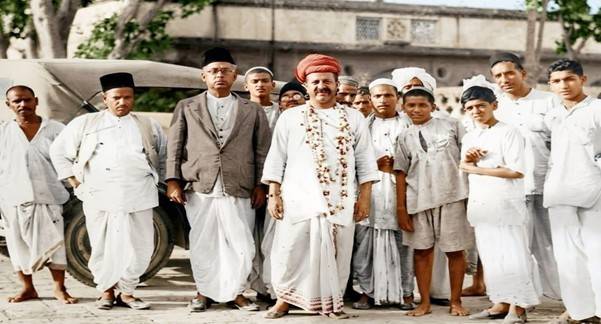
Over the last few centuries, several prominent Darbars and Ashrams emerged across Sindh, including Samadha Ashram, Shadani Darbar, Aasooda Ram Darbar, Shahpur Thala Darbar, Halani Darbar, Swami Sangat Darbar, Nenuram Darbar, Mata Temples, and many other samadhis and spiritual centres. These institutions preserved Sindh’s pluralistic traditions and reinforced its cultural identity. Among them, the spiritual seat founded by Sain Satram Das gradually rose as one of the most influential centres of Upper Sindh.
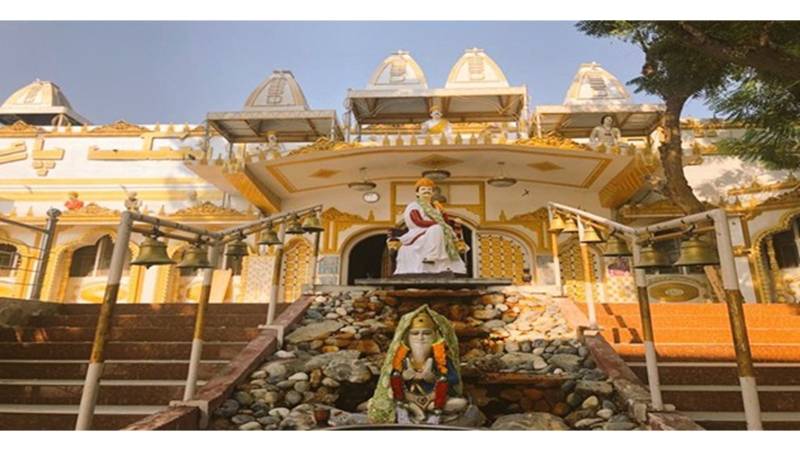
This institution is now widely known as SSD Dham, while its principal shrine, Raharki Darbar Sahib, is located near Daharki along the historic National Highway (N-5), close to the Indus River.
The Evolution of the Gaddi System
Historically, the Hindu Gaddi system was not strictly hereditary. After the passing of a spiritual leader, succession was often entrusted to the most capable, devoted, and respected disciple. Leadership was viewed as a responsibility grounded in humility, service, discipline, and sacrifice rather than inheritance. Over time, however, as religious institutions accumulated land, offerings, and social influence, succession patterns gradually shifted toward hereditary systems, similar to several regional spiritual traditions.
SSD Dham also evolved within this broader transition, though with a distinctive feature. Succession did not remain confined strictly to sons but also extended through the maternal line. In the absence of surviving direct male heirs of Sain Sitaram Das, custodianship moved through his daughter’s lineage, whose descendants continued the spiritual and administrative responsibilities.
Beyond ritual and devotion, these Darbars functioned as living social institutions. They provided free community kitchens (langar), shelter for travellers, spaces for devotional music and bhajans, informal education, and welfare support. Many also reflected a synthesis of Bhakti traditions, Sindhi Sufi thought, and Udasi influences, creating a shared spiritual culture where diverse saints, Gurus, and folk traditions coexisted.
Over time, however, the nature of spiritual leadership has also transformed. Earlier custodians were often associated with simplicity, sacrifice, and public service, while in more recent decades, leadership is sometimes perceived through the lens of prestige, influence, and resource management. Within this spectrum, figures like Kanwar Bharat are remembered for service-oriented leadership, while later custodians are often viewed more in terms of institutional authority and stewardship.
Ideologically as well, a shift is visible. Earlier spiritual leaders frequently emphasised moral discipline, truth, and social reform, even when uncomfortable. In contrast, many contemporary institutions are increasingly seen as relying on ceremony, tradition, and continuity of influence.
Today, SSD Dham stands as both a major religious institution and a symbol of Sindh’s layered Hindu spiritual heritage, carrying within it a long history of devotion, continuity, transformation, and evolving social roles.
Lineage of Gaddi Nashins
- Sain Kotaram Sahib initiated the spiritual lineage around 1840 through devotional singing and spiritual dance traditions.
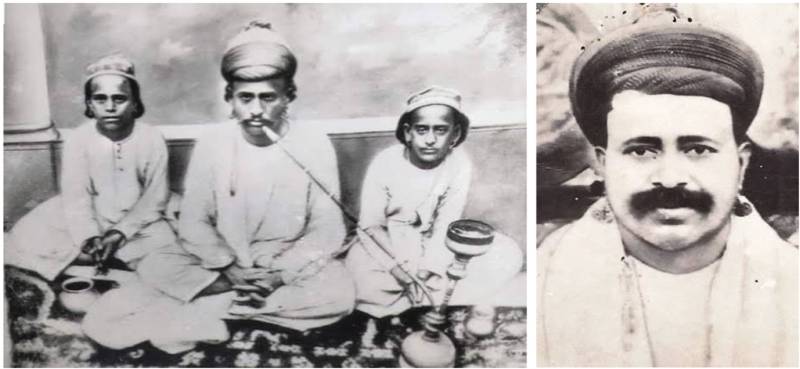
- Shahanshah Sain Sitaram Das served as the second Gaddi Nashin (1880–1910).
- Bhagat Kanwar Ram served as the third Gaddi Nashin (1910–1939), honoured for exceptional devotion and martyrdom.
- Sain Chandni Ram (grandson through daughter of Sain Sitaram Das) served as the fourth Gaddi Nashin (until 1961).
- Sain Bhagwan Das, brother of Sain Chandni Ram, served as the fifth Gaddi Nashin (1961–1981).
- Sain Kanya Lal, younger brother in the same family line, served as the sixth Gaddi Nashin (1981–1990).
- Sain Saadh Ram, son of Sain Bhagwan Das, served as the seventh Gaddi Nashin (1990–the 22nd of May 2026).
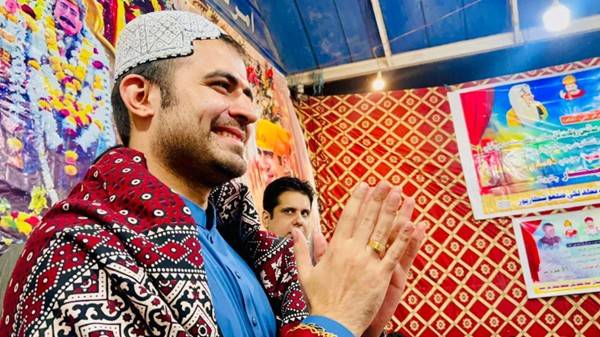
- Shahzada Sain Rohit Lal, son of Sain Saadh Ram, was appointed as the eighth Gaddi Nashin on the 23rd of May 2026, continuing the spiritual and administrative responsibilities of SSD Dham.
A Global Grief on the Passing of Sain Saadh Ram
As news spread of the passing of Sain Saadh Ram, the seventh Gaddi Nashin of SSD Dham Raharki and one of the most widely respected spiritual figures among Sindhi Hindus worldwide, a profound silence settled across communities around the globe. A deep wave of grief moved through homes, temples, and devotional gatherings from Upper Sindh to India, Dubai, Hong Kong, the United Kingdom, the United States, and many other regions. Satsang circles that once echoed with bhajans and devotional hymns fell quiet, as if the atmosphere itself paused in reverence.
His satsangs were not formal or distant sermons, but living, interactive conversations that connected spiritual understanding with everyday human experiences, family relationships, and moral responsibility
Members of the Sindhi Muslim community, along with political parties, social organisations, and public figures, also expressed heartfelt condolences and solidarity with millions of grieving devotees. For many followers, his passing was not simply the loss of a spiritual leader, but the end of an emotional and spiritual continuity that had shaped their lives for decades.
Sain Sahib had been suffering from a serious liver condition for some time. Nearly eight years earlier, he had undergone a kidney transplant, and in the final year of his life, his health gradually declined as liver complications worsened and his body’s ability to produce white blood cells weakened. Three days before his passing, he was airlifted to Singapore in critical condition for advanced treatment. Despite intensive medical care, he passed away peacefully on the 19th of May 2026 at 4:30 a.m. in a hospital in Singapore.
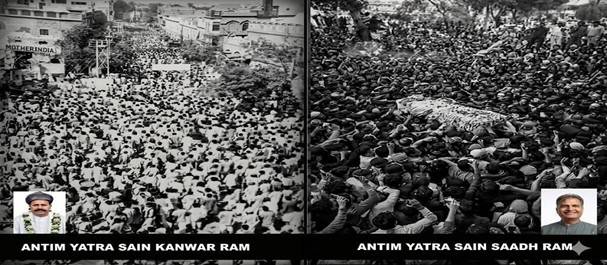
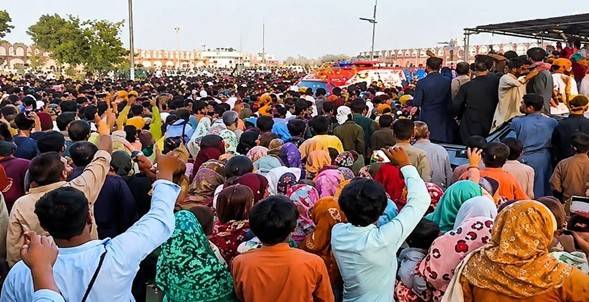
His mortal remains were transported to Karachi on the 20th of May 2026 via Emirates Airline and then flown by chartered aircraft to Sukkur. From there, the body was taken by ambulance to Raharki Darbar Sahib, where thousands of devotees gathered throughout the night to pay their final respects. On the 21st of May 2026, his last rites and cremation ceremonies were performed in an atmosphere marked by deep sorrow, devotion, and spiritual reverence.
Following the cremation, on the 23rd of May 2026, a portion of his sacred ashes was preserved in a square memorial shrine known as a Devori, regarded in Sindhi Hindu tradition as a sacred symbol of remembrance and continuity. The remaining ashes were respectfully immersed in the holy waters of the River Indus by his son, Shahzada Sain Rohit Lal, in the presence of devotees, in accordance with long-standing spiritual customs.
The National Assembly observed a moment of silence during its session on the 20th of May 2026, while the Sindh Assembly paid tribute to the late spiritual leader on the 22nd of May 2026. Condolences and messages of respect were also expressed by Bilawal Bhutto Zardari, the Chief Minister of Sindh, federal and provincial ministers, lawmakers, and various public figures, all acknowledging his spiritual presence and his contribution to Sindh’s pluralistic and interfaith traditions.
His departure marked the close of an era, yet for millions of followers, such figures never truly fade. They continue to live through their teachings, compassion, and the countless lives they have touched. He is survived by his wife, three daughters, one son, and a vast community of devotees across Pakistan and the world who regarded him not only as a spiritual guide, but also as a source of comfort, hope, and emotional strength.
Early Life and Spiritual Ascension of Sain Saadh Ram
Sain Saadh Ram was born on the 25th of October 1963 to Sain Bhagwan Das and Mata Shanti Bai, daughter of Lonio Mal of Jarwar village. His entry into life was accompanied by deep personal tragedy, as his mother passed away just six days after his birth. This early loss left a lasting emotional imprint on him. He was initially raised with care in the home of his maternal grandparents and later brought to Raharki, where he grew up in a deeply devotional, disciplined, and spiritually grounded environment. From his father’s second marriage, the family later expanded with one brother and one sister.
This early upbringing played a decisive role in shaping his personality and worldview. Unlike many traditional spiritual custodians, Sain Saadh Ram combined religious devotion with formal education, intellectual engagement, and administrative awareness. He completed his matriculation in Raharki, intermediate studies in Shikarpur, and earned a Bachelor of Commerce degree from Sukkur. He later pursued master’s studies and obtained a law degree from Khairpur. After completing his education, he entered government service and was appointed Assistant Commissioner in Shikarpur in 1990.
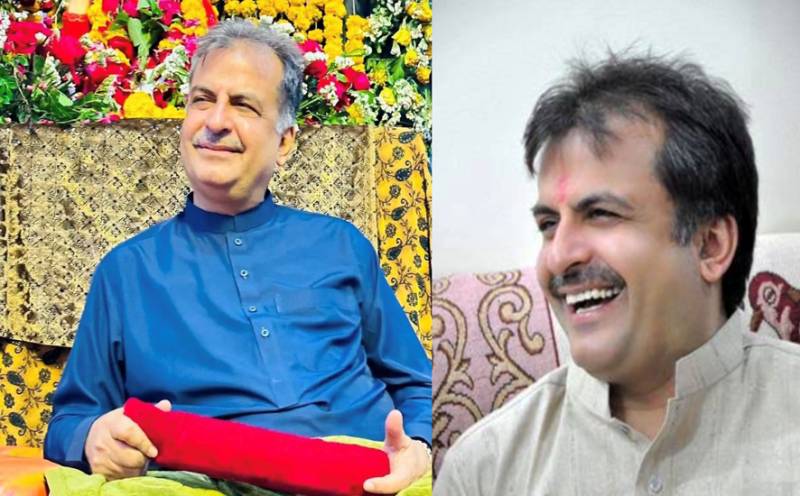
However, his life soon took a decisive spiritual turn. Following the passing of Sain Kanya Lal on the 5th of June 1990, he was ceremonially appointed as the seventh Gaddi Nashin of SSD Dham at the age of 27. Shortly thereafter, he resigned from government service and devoted himself fully to the spiritual, social, and administrative responsibilities of the shrine. His unique combination of education, administrative experience, discipline, and devotion gave his leadership a practical yet deeply reflective character.
Born with the name Janardhan, he was later renamed Saadh Ram by the shrine authorities. In 1985, he married Janta Bai, daughter of Dewan Padlo Mal from a respected family of Kashmore. He is survived by his three daughters and one son, Shahzada Sain Rohit Lal.
After assuming spiritual leadership in 1990, Sain Saadh Ram carried forward the legacy of SSD Dham, a tradition rooted in devotion, Simran, humanity, service, meditation, and interfaith harmony. Under his leadership, the shrine remained one of the most prominent spiritual centres for Sindhi Hindus in Pakistan and abroad.
His Service: From a Spiritual Shrine to a Global Humanitarian Dham
Under the leadership of Sain Saadh Ram for 36 years, SSD Dham underwent a clear transformation from a traditional spiritual centre into a more structured, expanded, and institutionally developed complex, where spirituality gradually merged with organised service, hospitality, and social welfare.
A key dimension of this transformation was physical and institutional expansion. The Dham evolved into a large, well-planned campus with improved infrastructure, designated functional spaces, and systematic arrangements for visitors and devotees. Over time, it developed into a highly organised environment where cleanliness, order, and visitor comfort were given consistent priority. Accommodation, meals, and gatherings were managed through coordinated systems designed to serve large numbers of pilgrims efficiently.
The institution also developed a distinctive culture of hospitality. Devotees were served in an organised manner with tea, milk tea, snacks, and meals, creating an atmosphere of care, dignity, and ease, especially for those arriving from distant regions. This structured hospitality contributed significantly to the Dham’s reputation as a welcoming and accessible spiritual destination.
A notable feature of his leadership was strong engagement with youth. Young people were not only welcomed but actively involved in long spiritual dialogues and personal discussions. He regularly listened to their concerns, offered guidance, and addressed emotional, social, and ethical challenges. This consistent engagement created a deep sense of connection between the younger generation and the Dham, turning it into a space of mentorship as well as devotion.
The Dham also emerged as an important centre for cultural preservation and revival. Sindhi language, poetry, devotional music, and spiritual assemblies remained central to its identity. Weekly gatherings every Thursday, along with special observances after new moon days, blended devotion with cultural expression, helping sustain Sindhi spiritual traditions in a contemporary context. Performances by devotional artists further strengthened its cultural and spiritual influence.
In the field of social welfare, SSD Dham expanded into a wide range of humanitarian activities, including free food distribution, medical camps, eye care initiatives, health awareness programmes, educational support, scholarships, professional coaching for students, marriage assistance for underprivileged families, housing support, and spiritual counselling. These services were sustained through contributions from business communities and devotees, enabling a continuous flow of assistance to those in need.
Another important development during this phase was the growing institutional coordination of services. Welfare programmes, visitor management, events, and daily operations became increasingly systematised, reflecting a shift from informal arrangements toward a more structured organisational framework.
At the same time, the Dham gradually adopted modern administrative tools and communication practices to manage its expanding activities. Improved planning systems, logistical coordination, and structured event management helped streamline operations and accommodate a steadily growing number of devotees from within Pakistan and abroad.
Overall, under Sain Saadh Ram Sahib, SSD Dham evolved into a multi-dimensional institution where spirituality, humanitarian service, youth engagement, cultural preservation, hospitality, and modern organisational practices came together within a unified framework, reflecting a balanced blend of tradition and contemporary institutional development.
Social Responsibility and the Need for Inclusive Welfare
Critics argue that Sain Saadh Ram’s influence remained largely centred around comparatively affluent and upper-caste Hindu circles, drawing parallels with spiritual figures whose following is often stronger among economically stable communities. They point out that although SSD Dham developed into one of the more resource-rich Hindu spiritual institutions in Sindh, its structured welfare outreach did not always translate into proportionate, community-wide impact for lower-caste Hindu populations, which make up a significant majority of Hindus in the province.
At the same time, supporters and observers offer a different perspective based on lived interactions. They maintain that his approach was essentially individual-centred rather than class-based, and that anyone who personally approached him received assistance without discrimination. In everyday experiences shared by followers, his service was viewed as open and inclusive in direct engagement. For instance, in Gambat, a branch of SSD Dham is reportedly managed by a well-educated and disciplined administrator, Mr Babu Parkash, where observers have noted no visible caste-based discrimination in its functioning.
In Sindh, where an estimated four million Hindus reside, nearly three million are believed to belong to lower-caste communities that often depend on daily wages and informal labour for survival. Within this social reality, many voices suggest that historically significant and well-established spiritual institutions could play a more structured and proactive role in supporting long-term welfare, education, and economic uplift of these communities. There remains a widely felt need for stronger, more systematic interventions to address persistent issues of poverty and lack of opportunity.
While Sain Saadh Ram was widely regarded as someone who extended personal help to individuals regardless of caste or background upon direct approach, critics argue that such charitable acts were not consistently translated into a broader institutional strategy for the sustained empowerment of marginalised groups. As a result, many vulnerable communities continue to face challenges related to food security, healthcare access, housing, education, and dignified employment.
In contrast, reform-oriented figures such as Seth Khushi Ram are often cited as examples of a more structured social vision. Despite belonging to an upper-caste background himself, he is remembered for channelling his resources and influence toward education and empowerment of oppressed communities, helping produce generations of doctors, engineers, civil servants, and professionals. In this view, the measure of a spiritual or social institution is not only devotion and ritual practice, but also its capacity to systematically uplift the most vulnerable segments of society without distinction.
Philosophy and the Eternal Continuation of SSD Dham
The philosophy of Sain Saadh Ram was rooted in simplicity, humility, and universal compassion. He consistently upheld “Sacho Satram” as a guiding expression of truth, love, and devotion. His teachings placed service above status, unity above division, remembrance of the Divine above ritual display, simplicity above excess, and peaceful coexistence above all differences of faith. For him, spirituality was not an escape from life, but a way of living it with awareness, responsibility, and kindness.
Those who came into his presence often described him as calm, gentle, and deeply approachable. His satsangs were not formal or distant sermons, but living, interactive conversations that connected spiritual understanding with everyday human experiences, family relationships, and moral responsibility. Through this style, he brought devotion closer to daily life, making spirituality accessible, grounded, and relatable.
The passing of Sain Saadh Ram Sahib has left a profound emotional void within Sindhi Hindu communities worldwide, particularly among devotees associated with Raharki Sahib. For many, he symbolised continuity of Sindh’s pluralistic spiritual heritage, preservation of minority identity, protection of Sindhi language and devotional traditions, and a living bridge between historical Sindh and its global diaspora. His life reflected the cultural harmony of Sindh, where Hindu and Muslim spiritual traditions have long shared values of love, music, service, and humanity.
After dedicating 36 years of life to the message of peace, compassion, and devotion, he passed away on the 19th of May 2026 in Singapore, entering what followers describe as eternal tranquillity. His physical samadhi is expected to be established at Devori Sahib, a sacred space where spiritual custodians are remembered across generations. Believers hold that such enlightened souls do not truly depart; rather, they continue to live through their teachings, compassion, and the lives they touch.
In the final phase of this transition, the SSD Dham and family committee formally announced Shahzada Sain Rohit Lal as the 8th Gaddi Nashin. The decision followed traditional deliberations after the completion of final rites, ensuring continuity of the spiritual lineage.
The newly appointed 32-year-old Shahzada Sain Rohit Lal was born on the 11th of November 1994 in Raharki and holds a degree in Business from Iqra University, Karachi. He was recently married into the family of Darshan Lal from Kashmore on the 19th of February 2026. Alongside his appointment, the family of cousins descending from the 6th Gaddi Nashin, Sain Kanya Lal, was entrusted with key administrative responsibilities for the management and organisation of SSD Dham. Among them, Sain Rochak Lal, son of Vikram Raja, continues to play an active role in overseeing the administrative affairs of the Dham.
The concluding ceremonies drew devotees from across regions, who departed with deep reverence, prayers for peace, unity, and prosperity for Pakistan and the wider world, and a shared sense of spiritual continuity.
In this moment of transition, SSD Dham once again affirmed its enduring identity as more than a shrine. It remains a living tradition of mysticism, social welfare, cultural preservation, interfaith harmony, and Sindh’s centuries-old pluralistic spirit. As one chapter closes and another begins, the legacy continues not as memory alone, but as an evolving path of service, devotion, and collective hope.