

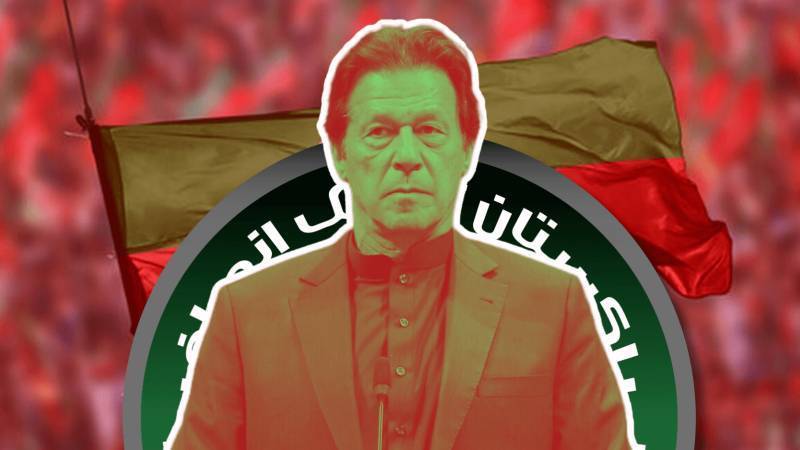
The biggest domestic news of the past week was a development related to former Prime Minister Imran Khan.
A three-member bench of the Islamabad High Court, led by its new Chief Justice had passed a directive permitting visitors twice a week to meet the former prime minister, who is currently detained at Rawalpindi’s Adiala Jail. The PTI Secretary-General was made the coordinator for these visits and he would pass on the names to the jail administration which would in turn facilitate the visits – which were to be on two separate days of the week.
The court agreed to a request by the jail authorities not to let the former prime minister interact with the media and the reason given was that this was the standard operating procedure for all previous meetings but that it was never followed by Mr Khan. Of course, the actual reason for not letting the former prime minister speak to the media or meet them is obvious – that his unrelenting criticism of the government as well as the military tends to embarrass those who are the subject of such criticism.
Meetings were allowed on March 25 and it later transpired that one of the names given by Salman Akram Raja, that of Azam Swati, was not allowed to meet Mr Khan while one person who wasn’t on the list of visitors submitted by Mr Raja to the jail authorities, was made to meet him. This individual was Babar Awan, who in the past had been Mr Khan’s lawyer and an advisor of his when he was Prime Minister.
The temptation for both the government and the military will be to continue with the status quo and keep Imran Khan in jail for as long as possible
Of course, these are daily or weekly developments and tend to distract the public spotlight and attention from the larger picture. And that relates to the fact that since his incarceration almost two years ago, Imran Khan has been slowly but steadily pushed out of public and media discourse, and even on social media this is evident – though in that the government has been assisted by the draconian use of the reinforced PECA (Prevention of Electronic Crime Act) Act as well as the ban on X/Twitter (which is now into its 14th month).
The other questions remain – what is the government planning to do with the PTI? Does it still think that it can have a PTI that doesn’t have Imran Khan in it? Does it think that it can keep Imran Khan detained indefinitely on a conviction that much of the country sees as trumped up and engineered? And if it decides that the time has come for him to be released, what does it think will happen after that? Has it planned for that eventuality, given that it will likely go against the government and the military and will also serve to reignite the party, which currently seems to be in the doldrums.
So, as things currently stand, the temptation for both the government and the military will be to continue with the status quo and keep Imran Khan in jail for as long as possible. They will feel emboldened, if not proven right, by the recent good news on the IMF front, where Pakistan has not only gained approval for access to $1 billion from the existing loan facility. Their thinking will be that if he's released he will go back to the container mode and protests will happen if he's leading them this is not going to be good for the economy, which seems to have stabilised with inflation at its lowest in years, and GDP growth forecast at 3% for 2025 -- after a contraction of 0.2% in 2023.
As for the PTI and Imran Khan, it can be safely said that for now, there isn't a PTI without Imran Khan - which is precisely why he remains in jail. But the party leadership which isn't outside also needs to plan for the future and perhaps impress the practicality and pragmatism of such plans on the party founder, when they meet and interact with him. If they want to meet their singular goal, of getting Imran Khan released, it is very unlikely that the powers that be will agree to this unless there is an understanding that there will not be a way back to container politics and protests and that the party and its founder will have to be forward-looking and look to the next election.