

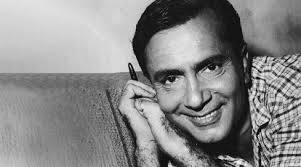
There are streets in our cities that carry the scent of memory. They hum with the echo of departed footsteps, whispering stories to those who pause long enough to listen. For Rawalpindi, one such street lies quietly tucked along Alam Khan Road, known in local parlance as Parindon wali Sarak, the Street of Birds. It was here, in a house crowned with jharoka-style windows and a door that still bore the word Welcome in faded white, that the celebrated actor and writer Balraj Sahni spent his formative years.
I remember those student days at Gordon College, Rawalpindi, when we would step out of the rear gate onto College Road, a bustling strip teeming with life, flavours, and stories. Zam Zam Hotel, Lahori samosas, and the kebabs at Sattar's stall were staples of our youthful wanderings. Yet, further along, it was the stately house on Bird Street that held us in quiet reverence. We’d stop, gaze up at its ornate façade, and reflect on the legacy of the man who once lived there, a man whose performances breathed the pulse of the ordinary, whose pen and presence shaped the contours of post-independence Indian cinema.
Born in 1913, Balraj was only four when his father, a cloth merchant, commissioned that home, entrusting its construction to master craftsman Chaacha Karim Bakhsh. It was not just a house, it was an imprint of Rawalpindi’s architectural elegance and the intimacy of Pothohar’s kinship culture, where every elder was a chaacha or a maamu, every woman a maasi or baji.
In 1921, when Balraj was eight, fear gripped the city, news of the plague had arrived. His mother spotted a rat in the house and insisted they retreat to their ancestral town of Bhera, where the Mohalla Sahnian still stands. Though life in Bhera felt dull compared to Rawalpindi, it was there that Balraj encountered cinema for the first time, a bioscope show, half-price for schoolchildren, narrated live as the silent film unfolded.
Moments, like these colourful birds, soar across the sky and vanish into the distance, never to return
His fascination with storytelling deepened in school, particularly when Rupert of Hentzau, an English novel in his syllabus, appeared as the first film screened at the newly inaugurated Rose Cinema in Rawalpindi. His principal convinced his father to let him attend, a serendipitous moment that perhaps stirred something within.
From Rawalpindi, Balraj moved to Lahore, earning an M.A. in English from Government College. There, his passion for literature matured, and the stage beckoned. After graduation, he returned briefly to assist in the family business but soon realised his destiny lay elsewhere. He married and joined Shantiniketan, the visionary educational institution founded by Tagore. Later, he immersed himself in Gandhi’s movement.
When the Second World War erupted, Balraj was offered a position at the BBC. In 1940, he moved to London and served for four years in the Hindi Service. It was there he grew influenced by Marxist thought. Upon returning to India, he became part of the Indian People's Theatre Association (IPTA), a cultural movement deeply rooted in progressive, people-centric narratives.
His first significant film, Dharti Ke Lal, was released in 1946. But it was in Do Bigha Zameen (1953) that Balraj's genius touched its zenith. Playing a rickshaw puller, he embodied the desperation and dignity of India's marginalised with haunting poignancy. He acted in nearly 135 films, among them Hulchul (1951), Kabuliwala (1961), Bhabhi Ki Churiyan (1961), and Garam Hawa (1973), the last released after his death.
The Partition of 1947 tore Balraj from his roots. Like millions of others, he migrated, leaving behind the streets, homes, and memories of Rawalpindi. But in the glittering chaos of Bombay’s film world, the earthy fragrance of Pothohar never left him. He longed to return, not just in memory, but in presence.
That moment came in 1962, when Balraj visited Pakistan. He revisited his alma mater in Lahore, wandered through the quiet alleys of Bhera, and finally boarded a bus for Rawalpindi. As familiar names rolled by—Kharian, Jhelum, Gujar Khan—he sat by the window, soaking in the landscape of his childhood. In his travelogue, he wrote:
“My eyes longed for the land of Pothohar. I couldn’t believe I was truly seeing its hills and settlements. Was this reality or a dream? In school, our geography master had taught us that such a landscape is called a ‘plateau’—a hard word then, but so dear now, for it fits my homeland perfectly.”
In Rawalpindi, Balraj returned to his favourite haunts—Mall Road, Saddar, Company Bagh, Topi Rakh, College Road—and finally to that house on Bird Street. There it stood, still echoing with the whispers of his childhood. On the main door, in fading white, remained the word Welcome, painted by his own hand. It brought tears to his eyes.
For a moment, it felt as if time had rewound. He stood once more at the same threshold where his father used to greet him after long journeys: “Oye Balraj, you’ve come back?” But this time, silence greeted him.
He looked up at the sky. A few birds soared high, disappearing behind clouds. He thought: Moments, like these colourful birds, soar across the sky, and vanish into the distance, never to return.