

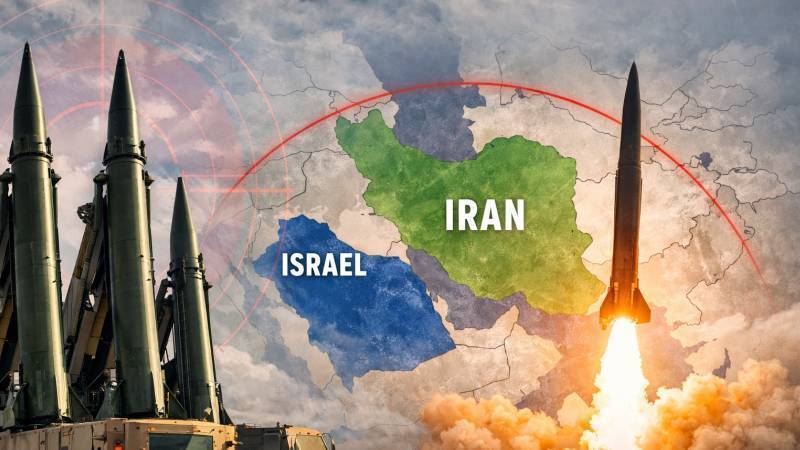
Two governments sit across a table. Both understand that a deal leaves both sides better off. Neither moves first. This is not stupidity. It is the Prisoner’s Dilemma, a structure first formalised at RAND in 1950, and it describes the US–Iran nuclear talks with uncomfortable precision. Each side, acting rationally to protect itself against betrayal, guarantees the worst outcome for both.
The situation is concrete. Washington wants Iran to roll back uranium enrichment, now at 60 per cent purity, close to weapons grade. Tehran wants sanctions lifted. The American position: scale back first, then relief follows. The Iranian position: lift sanctions first, then we comply. Each demands the other blink. Neither blinks. The talks have stalled, resumed, and stalled again across two American administrations. The structure has not changed because the structure is the problem, not the personalities occupying it.
The distrust is earned. Iran watched the United States sign the JCPOA in 2015 and abandon it three years later under a new president. From Tehran’s view, American commitments last one election cycle. The United States watched Iran exploit the deal’s ambiguities, maintain ballistic missile work outside the agreement’s scope, and accelerate enrichment the moment pressure eased. From Washington’s view, Iranian compliance is tactical, not principled. Both readings contain truth. Both readings prevent agreement. The dilemma does not require irrational distrust. It requires only that the distrust be mutual.
Game theory clarifies the mechanics. If both sides cooperate, both gain: Iran receives economic relief, and the US receives non-proliferation assurance. If both defect, both lose: sanctions persist, enrichment continues, military risk rises. But if one cooperates while the other defects, the co-operator is exposed.
The US lifts sanctions, and Iran keeps enriching. Or Iran freezes its programme, and the US adds new conditions. The co-operator looks foolish. The defector gains leverage. Rational actors, facing this payoff matrix, defect. They defect, knowing cooperation is better. They defect because the cost of being the fool exceeds the benefit of mutual gain.
Cooperation is punished by domestic audiences who view concessions as weakness
History confirms the pattern. The Cold War arms race followed identical logic. Both superpowers understood that disarmament left both safer. Both understood that unilateral disarmament was suicide. The arsenals grew to over 60,000 warheads by 1986. The logic was impeccable, and the outcome was grotesque.
Only when verification mechanisms, on-site inspections, and graduated reductions made cheating detectable did the dilemma begin to crack. The solution was not trust. Reagan and Gorbachev did not trust each other. The solution was structured: arrangements where defection became visible and costly.
Climate diplomacy reproduces the same trap at the planetary scale. No country benefits from cutting emissions alone. The US will not decarbonise while China builds coal plants. China will not abandon coal while India industrialises on fossil energy. India will not constrain development while the West enjoys the infrastructure it has built for its own emissions. Every position is rational. Every position, aggregated, accelerates warming. The Paris Agreement tried to escape through voluntary pledges rather than binding targets. Countries promised what they were willing to give, not what the climate required. The gap between the two is where the dilemma lives.
The Israeli–Palestinian conflict follows a grimmer version. Both populations would benefit from stable peace. Both have reason to believe the other will not honour commitments. Oslo was signed in 1993. Settlement construction continued. Israel withdrew from Gaza in 2005. Rockets followed. Each side points to the other’s defection as justification for its own. The cycle is self-reinforcing. Cooperation is punished by domestic audiences who view concessions as weakness. Defection is rewarded by political actors who profit from the conflict’s continuation.
Robert Axelrod’s tournament experiments in the 1980s showed a way out. When the game is repeated, when players know they will face each other again, cooperation becomes viable because defection today invites retaliation tomorrow. The winning strategy was Tit for Tat: cooperate first, then mirror the other player’s last move. Simple. Retaliatory. Forgiving. It worked because repetition created consequences. But diplomacy complicates the analogy. Governments change. The president who signed the JCPOA is not the one who tore it up. Iteration requires continuity of players. Elections destroy that continuity. A treaty signed by one administration and repudiated by the next is not an iterated game. It is a series of one-shot encounters pretending to be a relationship.
Practical solutions exist. Third-party verification makes defection detectable regardless of who holds office. Phased implementation replaces the single leap with small reciprocal steps. Escrow mechanisms, where sanctions relief sits in a third-party account and releases against verified benchmarks, reduce the risk of one side being exposed. None of these requires trust. They require only that both sides prefer monitored cooperation to unmonitored standoff. The bar is low. Meeting it has proved remarkably hard.
The international system will keep producing these situations. Sovereign states operating without a supranational enforcer must rely on self-help. Self-help, pursued rationally, produces the mutual defection that the dilemma predicts. The question is not whether the dilemma recurs. It will. The question is whether the diplomatic tools available in each case are sufficient to shift the payoff structure so that cooperation becomes the rational choice. In the US–Iran case, those tools exist. Whether the political will to use them exists is a different question, and political will, unlike game theory, does not lend itself to neat modelling.