

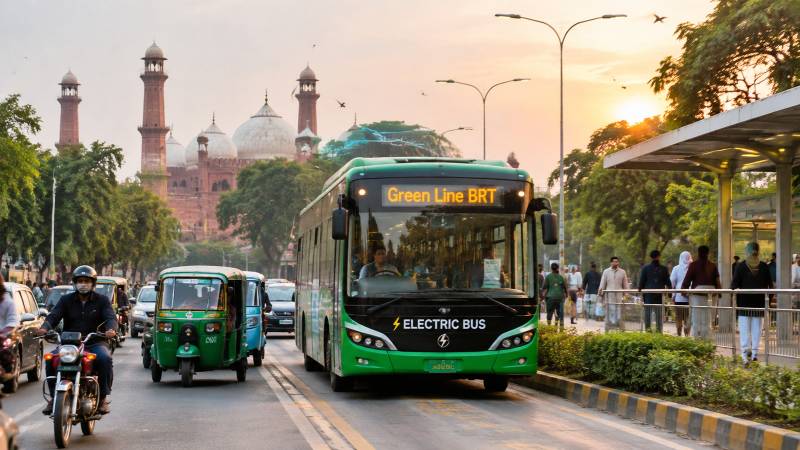
There are few things in modern life that we take for granted as much as getting from one place to another. A bus that takes a clerk to work, a truck that carries wheat from farms to mills, a rickshaw that drops a child at school or a ship that delivers medicines across oceans are all part of a vast system that most people notice only when it fails. Every year on November 26, the United Nations invites the world to reflect on this system through World Sustainable Transport Day. The observance highlights how the way we move people and goods shapes economies, public health and the climate.
Transport is the bloodstream of development. Without it, farmers cannot reach markets, workers cannot reach jobs, patients cannot access hospitals and international trade cannot function. Yet modern transport comes at a considerable cost, including air pollution, road fatalities and greenhouse gas emissions. The challenge is not to move less, but to move better.
This year's observance carries particular significance as it falls within the first year of the UN Decade of Sustainable Transport (2026–2035). The initiative recognises transport as an essential driver of economic growth and connectivity while emphasising the urgent need for cleaner, safer and more efficient systems. The stakes are considerable: transport accounts for approximately one-fifth of global carbon dioxide emissions, while road crashes claimed an estimated 1.16 million lives in 2025. World Sustainable Transport Day was established by the United Nations General Assembly on May 16, 2023, following a proposal by Turkmenistan. The resolution was adopted by consensus with 67 co-sponsoring countries and received strong support from the International Road Transport Union (IRU), which had originally proposed the observance.
November 26 commemorates the opening of the first UN Global Sustainable Transport Conference in Ashgabat, Turkmenistan, in 2016. A second conference followed in Beijing in 2021. The annual observance encourages governments, civil society, businesses and international organisations to promote awareness through public and educational activities. The UN defines sustainable transport broadly, covering the infrastructure and services required to move people and goods, including roads, ports, public transport and pedestrian facilities. Its importance extends beyond environmental protection to wider development objectives, including poverty reduction, public health and social inclusion.
The environmental cost of transport is particularly significant. The sector produces around one-fifth of global carbon dioxide emissions and close to a quarter of emissions from energy use. Road vehicles, including cars, buses, motorcycles and trucks, account for approximately three-quarters of transport emissions. Aviation contributes around 11.6 per cent, while international shipping accounts for approximately 10.6 per cent. Rail, despite carrying substantial numbers of passengers and freight, produces only about one per cent.
In 2022, transport generated nearly eight billion tonnes of carbon dioxide. The problem is expected to grow as demand increases. The UN estimates that the movement of people and goods could more than double by 2050. Without significant changes in transport systems and energy sources, emissions will continue to rise. The human cost is equally concerning. According to the World Health Organization, road crashes killed approximately 1.16 million people in 2025, averaging more than 3,000 deaths every day. Although the global road death rate declined by 21 per cent between 2011 and 2025, more than a billion additional motor vehicles entered the world's roads during the same period.
The burden is disproportionately borne by vulnerable road users. Motorcyclists account for close to a third of road fatalities, while pedestrians, cyclists and motorcyclists collectively represent more than half of those killed. Road crashes are also the leading cause of death among children and young people aged five to 29. More than 90 per cent of these fatalities occur in low- and middle-income countries, where road safety infrastructure and enforcement often remain inadequate. The economic consequences are substantial, with crashes costing most countries around three per cent of their gross domestic product.
Individual travel choices also matter. According to UN estimates, switching from private cars to public transport can reduce an individual's annual carbon emissions by up to 2.2 tonnes. Living without a car can save as much as 3.6 tonnes annually, while switching to an electric vehicle can reduce emissions by around two tonnes. Considering that the average person's annual carbon footprint is approximately 5.9 tonnes, transport decisions can have a significant environmental impact.
The UN launched its Decade of Sustainable Transport at its headquarters in New York on December 10, 2025. The initiative brought together governments, international organisations, businesses, civil society representatives and young people. Its central outcome was an Implementation Plan prepared by the UN Department of Economic and Social Affairs (DESA), in collaboration with regional commissions and following consultations with member states and other stakeholders. Although not legally binding, the plan provides a common framework for improving transport systems over the next decade.
It identifies six priority areas: expanding access to sustainable transport; developing low- or zero-carbon and climate-resilient systems; improving logistics efficiency; designing urban mobility around people; strengthening transport safety and security; and harnessing science, technology and innovation. The broader objective is to align transport policies, investment, technology and data with all 17 Sustainable Development Goals. The launch also generated 83 voluntary commitments from participating stakeholders, representing investments worth billions of dollars.
The adoption of electric buses, motorcycles, rickshaws and other low-emission transport technologies can significantly improve air quality and reduce carbon emissions. For countries such as Pakistan, electrification also offers economic benefits by reducing dependence on imported petroleum products and strengthening national energy security.
Transport has also acquired greater prominence in international climate diplomacy. At COP30 in Belém, Brazil, in November 2025, a group of countries endorsed a ministerial declaration known as the Global Transport Effort. It established two targets for 2035: reducing transport energy demand by 25 per cent and increasing the share of renewable energy and sustainable biofuels in transport to 33 per cent.
For the first time, transport also had a dedicated pavilion at a UN climate summit, co-organised by Brazil and the SLOCAT Partnership. Meanwhile, the global vehicle market is undergoing a significant transformation. More than 20 million electric cars were sold worldwide in 2025, representing approximately one in four new car sales. The International Energy Agency expects electric vehicles to account for around 29 per cent of new car sales in 2026, with their share exceeding 60 per cent in China. Electric trucks are also gaining ground, reaching nine per cent of truck sales in 2025.
Road safety remains another international priority. In July 2026, the UN General Assembly adopted a declaration reaffirming the objective of halving road deaths and serious injuries by 2030, compared with 2021 levels. For Pakistan, sustainable transport is not simply an international climate debate. It is directly connected to the air people breathe, the affordability of mobility and the country's dependence on imported fuel. Estimates of transport's contribution to Pakistan's emissions vary. Senator Sherry Rehman has put the figure at approximately 31 per cent, equivalent to 52.9 million tonnes of carbon dioxide annually. Research by the Pakistan Institute of Development Economics suggests that transport may account for more than 43 per cent of emissions nationally, rising to as much as 80 per cent in densely populated urban areas. Regardless of the precise figure, transport remains one of the country's major sources of pollution.
Lahore provides perhaps the clearest example. Every winter, severe smog disrupts daily life, closes schools and increases pressure on hospitals. According to the Punjab Urban Unit's emissions inventory, transport accounts for 83 per cent of the city's emissions, significantly exceeding the contributions of industry, agriculture and waste burning. The city's vehicle population increased from 2.39 million in 2011 to 6.29 million in 2021. Of these, approximately 4.8 million were motorcycles. Many are old, poorly maintained or operate inefficiently. Senator Rehman has also warned that air pollution contributes to approximately 128,000 deaths in Pakistan every year. The government has begun addressing the problem through its National Electric Vehicle Policy 2025–30, launched in June 2025. The policy aims to make electric vehicles account for 30 per cent of new vehicle sales by 2030, increasing to 90 per cent by 2040 and 100 per cent by 2060.
For the 2025–26 financial year, the government allocated Rs9 billion in subsidies to support 116,053 electric motorcycles and 3,171 electric rickshaws. A quarter of the subsidies were reserved for women. The policy also envisages establishing 40 charging stations along motorways, approximately 105 kilometres apart. Although the numbers remain modest, adoption is increasing. Electric vehicles on Pakistan's roads grew from just 567 in 2021 to more than 80,000 by June 2025, most of them two- and three-wheelers. Public transport initiatives offer another avenue for improvement. Karachi's Green Line Bus Rapid Transit system carries approximately 80,000 passengers daily. Since December 2025, commuters have also been able to use the Orange and Green lines through a single-fare arrangement.
The Sindh government has ordered 500 electric buses for the Red Line, which remains under construction, and plans to introduce another 1,000 electric buses across the province. Lahore's Orange Line Metro Train and Peshawar's Bus Rapid Transit system demonstrate that modern mass transit can work in Pakistani cities. However, the shortage of public transport remains enormous. Karachi alone is estimated to require approximately 25,000 buses to adequately serve its population. Expanding reliable, affordable public transport must therefore become a central component of urban planning rather than an occasional infrastructure initiative. The UN Decade of Sustainable Transport emphasises that there is no single solution. Governments must pursue several interconnected priorities, combining environmental sustainability with economic development, social inclusion and public safety.
First, cities need efficient and accessible public transport. Buses and trains can move significantly more people while consuming less fuel and occupying less road space than equivalent numbers of private vehicles. Investment in affordable mass transit, pedestrian walkways and dedicated cycling infrastructure can reduce congestion, emissions and urban pollution. It also ensures that people who cannot afford private vehicles have access to employment, education and healthcare.
Second, road safety must become a central policy priority. Enforcing helmet laws, controlling vehicle speeds, improving road design, developing safer pedestrian crossings and ensuring that vehicles meet basic safety standards can prevent thousands of deaths and serious injuries. This is particularly important in countries such as Pakistan, where motorcyclists and pedestrians remain highly vulnerable.
Third, governments must accelerate the transition towards cleaner vehicles and fuels. Electric buses, motorcycles, rickshaws and other low-emission vehicles can improve urban air quality while reducing carbon emissions, particularly when powered by renewable electricity. For Pakistan, electrification also offers an economic advantage by reducing dependence on imported petroleum products and strengthening energy security.
Fourth, cities must be designed around people rather than vehicles. Better urban planning can bring homes, workplaces, schools, hospitals and markets closer together, reducing the need for long daily journeys. Integrated transport networks can further improve connectivity and make cities more accessible.
Finally, sustainable transport requires investment, technological innovation and reliable data. Governments must be able to measure emissions, assess transport demand and evaluate the effectiveness of their policies. Evidence-based planning can help direct resources towards projects that deliver measurable improvements in efficiency, safety and environmental sustainability.
World Sustainable Transport Day is only one day in the year, and a single observance cannot transform the way the world moves. However, it offers an opportunity to reconsider the decisions that shape transport systems. The investments governments make in roads, public transport, vehicle standards, fuel policies and urban planning over the next decade will determine whether transport continues to choke cities and accelerate climate change or helps create healthier, more sustainable communities. The objective is not simply to move people and goods more efficiently. It is to build stronger economies, safer roads, cleaner environments and healthier societies. The road to a sustainable future begins with changing the way we travel today.