

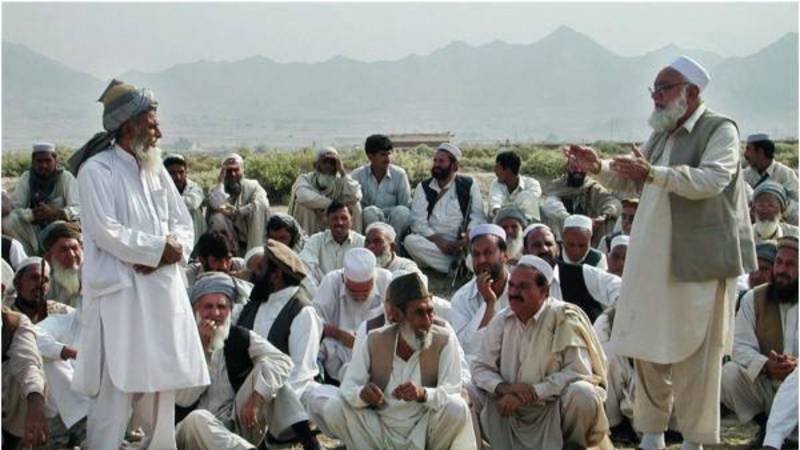
Despite being governed by a constitution and a formal Penal Code, Pakistan continues to bear witness to brutal incidents that starkly defy its legal framework. While conventional murders and crimes are generally handled within the bounds of the justice system, a more insidious trend threatens the very soul of the nation: extrajudicial killings sanctioned by tribal councils or jirgas. These informal gatherings of local elders, often seen as custodians of tradition and community honour, operate beyond the reach of the law and moral justification. Their rulings, delivered in the name of custom, frequently endorse violence and injustice. In a civilised society, such shadow institutions should have no legitimacy.
The problem is neither new nor uniquely Pakistani. Many countries struggle to balance formal law enforcement with local traditions and informal justice systems. However, in Pakistan, the challenge is compounded by deep-rooted patriarchy, tribal loyalties, and a fragile security landscape—particularly in provinces like Balochistan, which are plagued by separatist movements and sporadic terrorism. These complex dynamics not only enable but also embolden extrajudicial actors who believe they are above the law.
The case of a recent honour killing in Balochistan, where the perpetrators filmed and disseminated their violence on social media, is both tragic and terrifying. The mere fact that such acts are recorded and shared publicly reveals a disturbing shift in attitude: these individuals feel no fear, no shame, and certainly no accountability. There is a perverse pride in flouting the law, and it reflects how diminished the state’s authority has become in these areas. Even when arrests are made, justice is often elusive, and convictions rare. The main accused is brought to court without handcuffs and appears to be given a protocol, despite being in police remand. In contrast, when ordinary people are brought to court in police custody, their condition is usually dire, if not entirely dilapidated. This stark disparity reveals how influential people receive preferential treatment.
Law enforcement agencies must be trained and resourced to intervene swiftly when such councils convene to decide human fates outside the courtroom
What’s more distressing is the silence that surrounds these crimes. Many never make it to the media. They remain hidden in the folds of tradition, where fear and misplaced loyalty deter victims' families from seeking justice. The role of jirgas in perpetuating these atrocities is particularly problematic. While they might be seen by some as custodians of culture, their endorsements of punishment—often cruel, public, and irrevocable—run counter to the values enshrined in Pakistan’s constitution. Allowing such parallel systems of authority to persist undermines the state's ability to protect its citizens and deliver equitable justice.
If Pakistan is to move forward as a just and inclusive society, it must confront the menace of unlawful jirga rulings head-on. Legal institutions must be fortified not just in urban centres but across rural heartlands where state presence is weak. Law enforcement agencies must be trained and resourced to intervene swiftly when such councils convene to decide human fates outside the courtroom. Moreover, the government must invest in public education to delegitimise these extralegal bodies in the minds of the people.
Civil society and the media also have a role to play. Coverage of extrajudicial acts must be rigorous and unrelenting, bringing national and international attention to every case that surfaces. Social media platforms, too, must be held accountable for hosting content that glorifies violence. Pakistan cannot afford to normalise brutality under the guise of tradition.
There must be a moral reckoning. A society that allows justice to be dictated by fear, custom, or patriarchal pride cannot lay claim to progress. It must rise to uphold human dignity through the rule of law, ensuring that every citizen—regardless of gender, tribe, or class—has access to justice that is fair, impartial, and humane.