

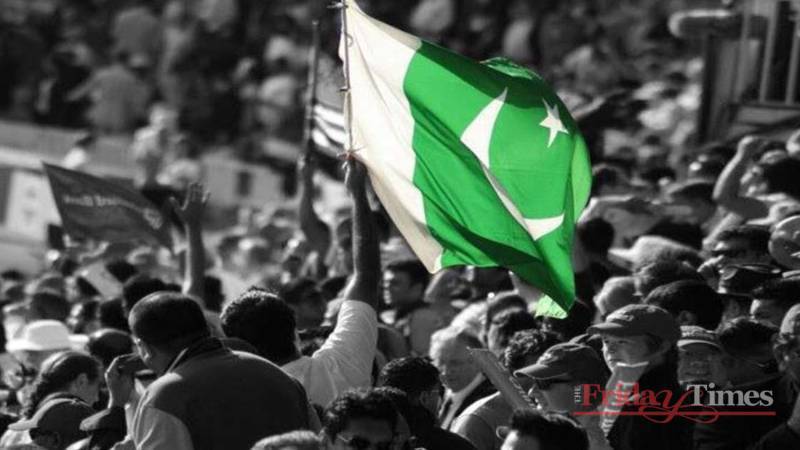
From crisis to crisis since its inception as an independent state on August 14, 1947, Pakistan is now grappling with a four-pronged predicament: economic malaise, political instability, extremism and terrorism, and the permeation of corruption and nepotism in state and societal structures. Two additional challenges impact the foreign policy arena: security pressures from India and Afghanistan, and the paradoxical nature of simultaneously dealing with the United States and China.
When the state is unable to cope with the four domestic predicaments and the two foreign policy challenges, the outcome is the accentuation of pessimism and gloom in society. The economic predicament is the most critical challenge Pakistan is facing today.
With foreign exchange reserves of hardly 14.5 billion dollars in the State Bank, ranking 42nd in the global economy, an economic growth rate of barely 3.5 percent, exports stagnant at 30 billion dollars, and dependence on bailout packages from the IMF, World Bank, and friendly countries like Saudi Arabia, the UAE, and China, Pakistan’s economy is in dire straits. When the poverty level is around 40 percent and the middle class is shrinking, those responsible for managing Pakistan’s economy have failed to find a plausible path to ensure economic vibrancy. Unless the economy of a country is on a strong footing, it cannot sustain political stability or a viable foreign policy.
It is dismaying that in the last fifty years, Pakistan’s economy, despite expanding in terms of GDP, lags behind countries that were once far behind Pakistan in economic indicators. South Korea, China, Malaysia, India, and the Gulf states were not comparable with Pakistan economically, but have since advanced in terms of foreign exchange reserves, GDP, economic growth rates, and per capita income. Pakistan, despite opportunities, is unable to overcome its economic predicament, which affects the lives of 240 million people. There is no shortcut to resolving Pakistan’s economic challenges because they stem from a mindset, prevalent in both state and society, which is currently lacking in hard work, intelligence, integrity, efficiency, ownership, and commitment.
The aforementioned countries that achieved economic miracles succeeded because their leadership pursued policies of self-reliance instead of depending on foreign loans and aid. Pakistan has a long way to go in order to transform its aid-driven economy into one based on self-reliance and modernised infrastructure. Without focusing on increasing exports to 100 billion dollars within three years and raising foreign exchange reserves to 50 billion dollars in two years, Pakistan’s economy cannot take off. Furthermore, creating a favourable climate for foreign investment and controlling corruption will also help boost the economy.
Ethnic and religious extremism, including sectarian violence, gains momentum when the state fails to provide the necessities of life
Without political stability, a sound justice system, and the establishment of an inclusive political culture, Pakistan cannot address the issue of political schism. By singling out one political party and imprisoning its founder, Imran Khan, based on political vendetta, one cannot expect stability and peace in the country. Ironically, no lessons have been learned by those who wield power with regard to political pluralism and inclusiveness. Non-political forces, since the early 1950s, have repeatedly overthrown constitutional governments or controlled the state from behind the scenes. Unless Pakistan is able to ensure a viable democratic political culture, there is no possibility of a vibrant economy or international respectability.
Pakistan’s predicament is also rooted in intolerance, extremism, the radicalisation of youth, and terrorism. When 25 million children are out of school, unemployment is at its peak, and 40 percent of the population lives in poverty, extremism becomes difficult to control. Ethnic and religious extremism, including sectarian violence, gains momentum when the state fails to provide necessities of life such as safe drinking water, free and quality education up to high school for all, modern infrastructure, affordable and dignified public transport, and housing for the poor and middle class. The link between economic deprivation and extremism is clear. Ultra-religious parties and groups like the banned Tehreek-e-Labbaik Pakistan use religion to advance vested interests. When the state looks the other way or, in some cases, uses such groups to serve its own purposes, the outcome is a deepening of religious and sectarian violence.
Corruption and nepotism play a major role in derailing public sector institutions such as Pakistan International Airlines, Pakistan Railways, and Pakistan Steel Mills, which collectively cause losses of several hundred billion rupees each year. Without upholding merit and efficiency in work ethics, Pakistan can neither achieve economic growth nor political stability, good governance, or the rule of law. The failure of the judiciary, parliament, and executive to ensure economic vibrancy, political stability, the eradication of extremism, and a successful foreign policy must be taken seriously.
The four-pronged predicament must be examined from three angles. The first concerns leadership that is hard-working, honest, intelligent, and committed leader to the policy of self-reliance, so that the damage caused to the state, society, and economy can be repaired. Elites must learn lessons from successful economic governance models. Until the early 1970s, Pakistan stood strong in terms of economy, governance, and the rule of law, but things began to decline when merit was compromised and religion was used for personal and political interests by successive military and quasi-military regimes. There is also a serious question mark over Pakistan’s justice system, which has failed to provide justice to its citizens.
Pakistan will remain a fragile state until its elites focus on inclusive political culture, economic vibrancy, good governance, and the rule of law
Pakistan will remain a fragile state until its elites focus on inclusive political culture, economic vibrancy, good governance, and the rule of law. How can a country earn international respect when it is associated with corruption, extremism, and terrorism? When Pakistan’s passport ranks among the lowest, and when corruption indices and human security indicators are abysmal, one cannot expect progress in the economy, politics, governance, or the rule of law.
Second, military officers must adhere to their oath to remain loyal to the Constitution and refrain from political involvement. The founding father, Quaid-e-Azam Mohammad Ali Jinnah, strongly believed in civilian supremacy. However, after his death, the military and bureaucracy capitalised on political weaknesses and usurped power. Since then, the military has ruled directly or indirectly. Without constitutional civilian supremacy and a professionally-focused military, Pakistan cannot gain political stability or economic strength.
When all general elections, including the one held in December 1970, have lacked fairness, it is unrealistic to expect political stability or inclusive democracy. The February 2024 general elections are remembered for allegations that the Pakistan Tehreek-e-Insaf, which had reportedly won a two-thirds majority, was deprived of victory through fraudulent means. The attempt to control the judiciary and media is dangerous. Pakistan can only overcome its multiple predicaments by ensuring an inclusive political culture. Without political stability, there can be no economic revival or effective foreign policy. It is also essential to adopt zero tolerance for corruption and nepotism because, without merit, no public institution can succeed. Furthermore, the culture of greed and hypocrisy must be eliminated.
Pakistan is at a crossroads. If, after 78 years, it is still unable to stabilise itself as a nation-state, then the fault lies in both state and societal structures. Unless there is a collective realisation of the need to address the root causes of Pakistan’s predicament, there is little hope of achieving economic progress, political stability, eradication of corruption and extremism, good governance, a sound justice system, and the rule of law. If the situation were not dire for ordinary people, then half a million educated Pakistanis would not have left the country in the last three years.