

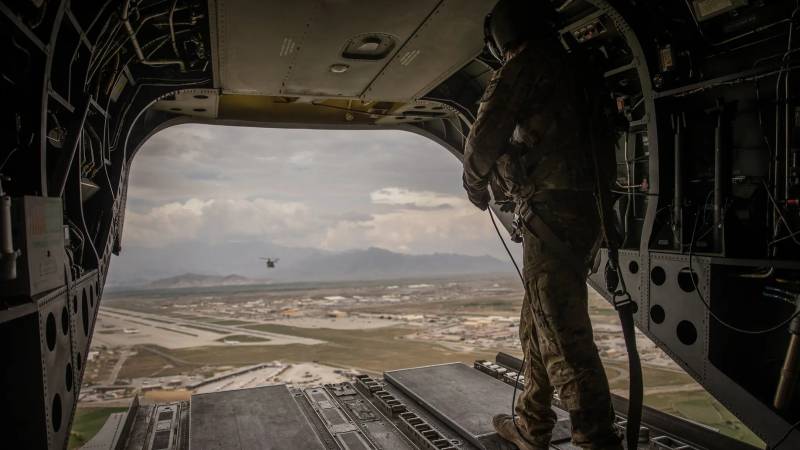
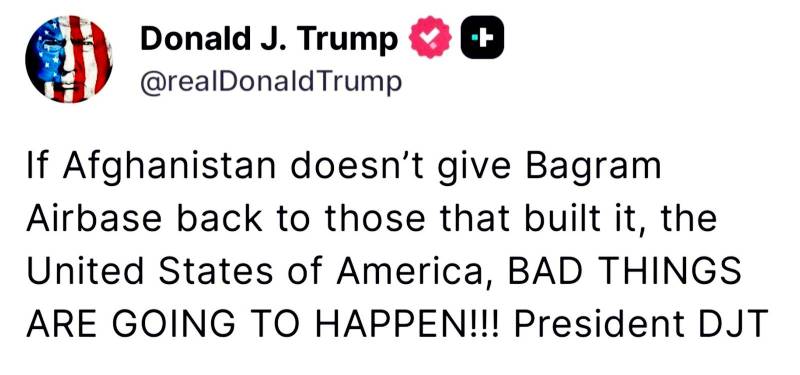
President Donald Trump’s public push to “take back” Bagram Air Base has dragged Afghanistan, and by extension Pakistan, into a new round of coercive signalling. Crucially, the pitch is no longer about counterterrorism; it is explicitly about geography against China. That reframing alone ensures any U.S. search for access, ISR, or standoff posturing will lean hard on Pakistani airspace and enabling networks, even if Kabul keeps the gates shut. The post-9/11 playbook of “with us or against us” does not apply to today’s Pakistan. We are a rising middle power embedded in a multipolar web, balancing ties with Washington, Beijing, Riyadh, Ankara, Moscow, and Tehran. Our answer should be clear, confident, and codified.
This isn’t 2001
In 2001, Pakistan faced binary coercion and a unipolar moment. In 2025, we face a fragmented system where issue-based alignments are normal and interdependence dilutes the threat of isolation. Saying “no” to any Bagram-linked basing, staging, ISR, or combat overflight is not a defensive crouch; it is a sovereign policy anchored in economic security, strategic de-entanglement, and regional stability. The Taliban can refuse a U.S. return to Bagram and still leave pressure on us. If anything, their refusal displaces that pressure onto our air corridors, intel hooks, and logistics seams. That is where we must pre-empt.
Remember Badaber – Permissions Metastasise
Pakistan has lived with the risks of being a listening post. The U-2 programme from Peshawar in 1960 turned our territory into a target, triggered great-power threats, and left political scars that lasted a decade. The structural lesson is simple: once you enable collection or strike profiles, you inherit the targeting, the coercion, and the precedents. Temporary permissions become semi-permanent footprints; corridors become covers. That is precisely what our doctrine must foreclose.
The Israel connection
There is also a larger regional angle that we ignore at our peril. American bases rarely remain “American only.” Israel has long been integrated into U.S. military networks, serving as a forward platform for operations well beyond the Middle East. If Washington regains access to Bagram, it is not difficult to imagine Israeli technology, intelligence, or even personnel plugged into that presence.
Why does that matter for Pakistan? Because India and Israel already enjoy a deep security partnership, from drones and missile defence to real-time intelligence sharing. Any Israeli access to a future U.S. footprint in Afghanistan would effectively tilt the balance further in New Delhi’s favour, placing Pakistani infrastructure, CPEC corridors, and even nuclear assets under far more intense surveillance. This is not speculation; it is how alliances work in practice. A U.S. return to Afghanistan could quickly morph into an India-Israel advantage right on Pakistan’s border.
Every new U.S. footprint in Afghanistan risks becoming a shared U.S.-Israel platform that flows directly into India’s hands, magnifying the pressure on Pakistan’s security architecture
This danger has only grown sharper after the May 2025 crisis, where Pakistan displayed both capability and composure by shooting down Indian jets and sustaining its defences over four tense days. That episode exposed the limits of India’s military edge and underscored for New Delhi the need to lean even more heavily on Israel for advanced drones, missile defence, real-time intelligence, and battlefield technology to close the gap. In effect, every new U.S. footprint in Afghanistan risks becoming a shared U.S.-Israel platform that flows directly into India’s hands, magnifying the pressure on Pakistan’s security architecture.
A doctrine of Airspace Sovereignty & Strategic Non-Entanglement
Three Nos are going to help Pakistan draw clear lines of engagement, if and when such a demand is made:
- No basing, lily pads, ISR sites, or “temporary” deployments on Pakistani soil linked to any Bagram-related operations.
- No combat or ISR overflight for missions into Afghanistan, especially any profile capable of collection against Chinese territory or along CPEC nodes (GB, Wakhan approaches, Gwadar/Kashgar logistics).
- No executive freelancing: parliamentary authorisation should be sought for any air corridor, intel-sharing, or logistics arrangement with strategic implications.
Three Yeses will help Pakistan establish the rules of engagement, if and when such a demand is made:
- Yes to UN-flagged humanitarian flights only, pre-cleared, with transparent flight plans and payload verification.
- Yes to deconfliction channels: a dedicated China-Pakistan air and space NOTAM hotline to avoid misreads along the GB-Wakhan belt; a quiet Kabul channel to pre-empt incidents near the frontier; and a Washington backchannel that communicates our doctrine early rather than late.
- Yes to International Civil Aviation Organization (ICAO)-consistent transparency: publish an Airspace Use Notice that codifies prohibited profiles (altitudes, routes, sensor loads) and emergency procedures for wayward aircraft or unmanned systems.
These are operating rules that will reduce miscalculation. Pakistan has already shown during the May 2025 crisis with India that it can close airspace to protect strategic stability; it should now formalise when and how it will do so, and for what triggers.
Every foreign profile flown over our territory adds another layer of miscalculation risk, because our defences, our neighbours, and our rivals all react to what they see, not to what we intend
Form a Parliamentary CNI committee
Pakistan should think about codifying CPEC assets and corridors as Critical National Infrastructure (CNI) for airspace decisions. Any external request that materially raises risk to CPEC nodes, by enabling ISR mapping of routes, dual-use port logistics, or power corridors, should automatically trigger denial and a review by a ‘parliamentary CNI committee.’ This moves the debate from ad-hoc politics to risk governance and aligns external policy with domestic economic security.
Deeper Risk: Accidents and Algorithms
Escalation in South Asia’s airspace is no longer linear; it is brittle, fast-moving, and prone to cascade. The risks are no longer confined to deliberate choices by leaders; they now include technical glitches, algorithmic misfires, and data manipulation. We have already seen how close miscalculation can sail us to the brink. India’s launch of a BrahMos missile into Pakistan in 2022 could have triggered a major conflict had Islamabad chosen to interpret it as a deliberate attack. A spoofed GPS feed, a hacked drone link, or a malfunctioning air-defence algorithm can create similar crises in minutes.
The problem is compounded by the very systems designed to accelerate decision-making. Standoff ISR platforms, loitering armed drones, and automated air-defence nodes compress the time available for verification. An unverified radar blip or a spoofed data stream can trigger rapid-reaction playbooks that move faster than political leaders can intervene. In such an environment, even a small mistake risks spiralling into a chain of retaliation.
If Pakistani skies become a highway for someone else’s signals intelligence or standoff strike architecture, we inherit that brittleness. Every foreign profile flown over our territory adds another layer of miscalculation risk, because our defences, our neighbours, and our rivals all react to what they see, not to what we intend. Once algorithms are in the loop, intent matters less than perception.
This is why doctrine must be written with brittleness in mind. It is not enough to simply say “no foreign basing.” We must codify rules that anticipate errors: interception procedures for wayward drones, immediate deconfliction hotlines with China and Iran, and published NOTAMs that signal which profiles are prohibited outright. The emphasis should be on reducing ambiguity, because ambiguity in a hyper-automated battlespace does not deter; it destabilises.
The true danger is not just deliberate entanglement, but inadvertent escalation sparked by accidents and algorithms. That is why Pakistan’s red lines must be clear, enforceable, and transparent, to prevent our skies from becoming the trigger point for someone else’s war.
Talk Early, Draw Bright Lines, and Publish Them
Privately, Islamabad should say to Washington what it will say publicly later: no basing, no combat/ISR overflights, humanitarian only. Offer transparent, ICAO-consistent processes for UN flights and establish an incident hotline that can be tested quarterly. With Beijing, quietly reaffirm non-use of Pakistani airspace for any activity targeting China and activate a real-time NOTAM/space-situational deconfliction node. With Kabul, build a joint incident protocol for drones and missiles that hiccup near the frontier, a plausible scenario in any future crisis. None of this is anti-American; it is pro-stability.
Fears over “What if Pakistan refuses?”
A refusal should not be seen as the closing of a door. Pakistan should clearly say, we will not reprise Badaber. We will not be a corridor or a cover. We will coordinate humanitarian corridors, deconflict with neighbours, and keep our skies and our economy out of other people’s great-power gambits. It reflects what Pakistan is in 2025: a multipolar middle power with options, leverage, and responsibilities. The sooner we articulate that in law, in NOTAMs, and in quiet channels, the less likely it becomes that someone else’s rhetoric writes our reality.
For Pakistan, foresight is not optional. It is the difference between being a pawn and being a player. Those who call caution alarmist will be the first to call in panic when miscalculation strikes. Strategic maturity means we prepare now, before choices are forced on us.