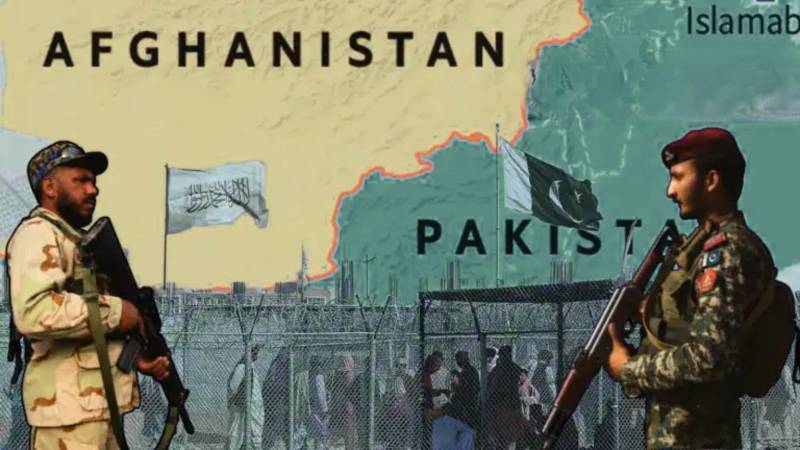
Afghan Taliban Brought To Reckoning By Pakistan’s Righteous Fury
Pakistan’s Operation Ghazab-lil-Haq marks a major shift in Afghan policy, raising risks of prolonged conflict, regional instability, and security fallout
In the shadow of the American-Israeli onslaught against Iran, the Pakistani military continued to unforgivingly pummel terrorist sanctuaries and facilities across Afghanistan, while the ‘battle-tested’ Afghan Taliban only seemed proficient at whipping up propaganda lies and the fog of war as their operational inferiorities stand exposed
The launch of Operation Ghazab-lil-Haq on February 27, 2026 marks one of the most consequential inflection points in Pakistan-Afghanistan relations since the Taliban’s return to power in 2021. Far from being an isolated escalation, the operation represents the culmination of years of deteriorating trust, cross-border militancy, failed diplomacy, and a belatedly growing realisation within Pakistan’s security establishment that the Afghan Taliban regime were not just unreliable, but had become aggressively and unapologetically hostile against Pakistan.
Pakistan’s military campaign would best be understood as a coercive and punitive counterterrorism response shaped by accumulated grievances, rather than as an unprovoked act of aggression. At the same time, international narratives – particularly those relying heavily on Taliban-sourced claims – require careful scrutiny.
For decades, Pakistan’s Afghan policy was premised on the flawed doctrine of “strategic depth”: a belief that a friendly regime in Kabul would provide security against external threats and prevent encirclement of Pakistan by India in the east and a hostile Afghanistan in the west. This logic underpinned Islamabad’s long-standing covert support for Afghan Taliban factions, even as it faced sustained accusations from Western governments of playing a “double game” during the post-2001 Global War on Terror unleashed by the United States.
However, post-2021 realities – including the fact that the U.S. removed the Taliban regime in 2001, and conducted a two-decade-long counterterrorism operation in Afghanistan, only to hand power back to the Taliban – have fundamentally inverted this paradigm, as had been foretold in the suppressed fringes of strategic debates on Afghanistan at the time. As Pakistan dealt with internal political turmoil, the quantum and tempo of terror attacks steadily rose. Over the past year, any retaliation from Pakistani forces against terror hideouts and sanctuaries in Afghan was responded to by the “interim Afghan government” of the Taliban: not by curbing the terror groups that freely operate on Afghan soil, but by hostile military actions against Pakistani security forces across the Pakistan-Afghanistan border, also known to historians and strategic analysts as the Durand Line. It is this internationally recognised border that the Afghan Taliban called “an imaginary line”, which could potentially become a relic of the past once Pakistan is done with the ongoing phase of its kinetic operations against terrorist groups and their protectors in Afghanistan.
Operation Ghazab-lil-Haq was launched after repeated cross-border attacks by Afghan Taliban forces on Pakistani positions in February 2026, including the use of drones and coordinated assaults on border posts. This was not an isolated incident, but part of a broader pattern in which militant groups – including and especially the Tehreek-e-Taliban Pakistan (TTP), along with the Hafiz Gul Bahadur (HGB) faction and Baloch insurgent factions – continued to operate from Afghan soil with impunity if not active support and encouragement from senior Taliban militant commanders. And ultimately, it was a grave strategic miscalculation by anti-Pakistan factions within the Afghan Taliban, especially those investing absolute faith in the fallacy that it was they and they alone who defeated two superpowers over the past five decades. Of course, the Afghan Taliban’s newfound bonhomie with India also did not provide it with any real favours in the tactical or strategic domains.
For decades, Pakistan’s Afghan policy was premised on the flawed doctrine of ‘strategic depth’
International reporting corroborates this structural shift. A recent Guardian analysis notes that Pakistan’s relentless campaign is driven by “rising terrorist attacks… stemming from safe havens in Afghanistan”, underscoring Islamabad’s frustration with the Taliban’s failure to curb anti-Pakistan militancy. The contradiction is stark: a regime once cultivated as a strategic asset has, in Pakistani eyes, become the main source of insecurity spilling over across state boundaries. But this outcome is not so surprising at all; many, including this scribe, saw it coming well before the Afghan Taliban were at the gates of Kabul in 2021.
The proximate triggers for Operation Ghazab-lil-Haq lie in a sequence of escalating incidents in early 2026: cross-border firing on Pakistani military posts, Taliban drone incursions into Pakistani territory, a surge in militant attacks inside Pakistan, culminating in the February 6 suicide bombing killing at least 31 Muslim worshippers at Imambargah Khadijah al-Kubra in the Tarlai area of Islamabad during Friday prayers. The bomber was an ISIS terrorist who was trained in and launched from Afghanistan. Within 48 hours of the suicide bombing, Pakistan apprehended an Afghan national who was accused to be the mastermind of the attack.
After Pakistan launched “intelligence-based selective” airstrikes against terrorist sanctuaries – in Bihsud and Khogyani districts of Nangarhar province, Barmal and Urgun districts of Paktika province, and other locations in Khost province – from February 21 to 23, Afghan Taliban fighters attempted to attack Pakistani border positions using rockets, mortars and quadcopters, prompting a swift retaliatory response involving Pakistani drones and heavy weaponry. This escalation reached a critical threshold when Taliban-linked drone activity reportedly targeted civilian areas in the Pak-Afghan border region; the Taliban regime’s spokesman Zabihullah Mujahid boasted that their drones actually reached Islamabad, which is between 225 and nearly 400 kilometers from the border. In reality, from February 25 onwards, the Afghan Taliban border forces commenced attacks across 15 sectors and 27 locations, triggering a calibrated and decisive Pakistani response that effectively repulsed the Taliban assault, and resulted in over 270 Afghan Taliban killed, over 400 injured, and more than 70 Afghan border posts destroyed within the first 24 hours of hostilities. Simultaneously, the Pakistan Air Force launched fresh airstrikes targeting 22 locations across Afghanistan, including Kabul, Kandahar, Paktia, Nangarhar, Khost, and Paktika provinces.
Pakistan’s leadership framed the Afghan Taliban’s actions as a decisive breach of bilateral trust, which was already hanging by a thread after the October 2025 ceasefire agreed in Doha. As reported by the Associated Press, Islamabad declared that Afghan Taliban actions had crossed a “red line”, necessitating a forceful military response. The language used by Pakistan’s defence minister Khawaja Asif is also significant: by declaring that Pakistan was in an “open war” with the Taliban, Pakistan’s narrative as well as kinetic posture reflects a total shift from reactive counterterrorism to deterrence restoration through punitive force – as well as an about-turn or volte-face from its clearly redundant policy of “strategic patience”.
Operation Ghazab-lil-Haq rapidly expanded beyond localised clashes in the border regions into a multi-theatre military campaign with more coordinated air and ground vectors, indicating that the Pakistani military had been planning for a sustained campaign against the Taliban in anticipation of the failure of the October 2025 ceasefire. Routine battle damage assessments tweeted by federal information minister Ataullah Tarar report substantial gains for Pakistan: as of 4pm Pakistan time on March 15, at least 600 Afghan Taliban fighters had been killed; nearly a thousand more had been injured; over 250 checkposts were destroyed while another 44 were captured after fierce battles and apparently destroyed thereafter; more than 200 battle tanks, armoured vehicles and artillery pieces used by the Taliban had been put out of commission while Pakistani military forces continued pummelling Taliban ground troops with artillery barrages; and more than 70 terror support infrastructure sites in Afghanistan had been “effectively” targeted by the Pakistan Air Force across the capital city of Kabul, as well as in multiple locations across Kandahar, Nangarhar, and Paktia provinces.
This is no longer a counterinsurgency spillover: Operation Ghazab-lil-Haq is a low-intensity interstate conflict with serious escalation potential
International news coverage has confirmed the scale of Pakistan’s escalation. The Washington Post and the Guardian described the situation as actually having evolved into “open war”, while the Financial Times reported extensive Pakistani strikes on Taliban strongholds, alongside retaliatory drone attacks by Afghan forces. A report in the Arab News notes that Pakistan adopted a “hard line” after conducting strikes inside Afghanistan, with the Taliban vowing a military response: indicating a transition into reciprocal interstate confrontation, not unilateral action. Türkiye’s Anadolu Agency reports continued Pakistani military operations against TTP militants amid the escalation, highlighting the ongoing internal security pressure linked to cross-border sanctuaries that Pakistan continues to grapple with. This is no longer a counterinsurgency spillover: it is a low-intensity interstate conflict with serious escalation potential.
A central axis of the information war surrounding Operation Ghazab-lil-Haq concerns civilian casualties. International news media outlets have highlighted allegations – often with little fact-checking due to limited ground presence of reliable international media sources in Taliban-run Afghanistan – of strikes hitting civilian infrastructure, reports of casualties in residential areas, and claims of attacks on facilities such as a Kabul drug rehabilitation centre. For instance, Reuters reported that civilian casualties occurred in Kabul and Nangarhar, citing Taliban and UN sources. Similarly, other reports describe significant fatalities linked to strikes on urban targets such as hospitals; while the casualty figures are cited to be large, they have yet to be independently verified or proven to be true by ground realities.
While these news reports are important, they must be appropriately contextualised. Much of the initial reporting relies on Taliban spokespersons, or on UNAMA statements which are issued under extremely restrictive conditions. As broader conflict reporting confirms, independent verification inside Taliban-controlled Afghanistan remains extremely limited, with crippling restrictions on media coverage and information dissemination in place since 2021. Independent assessments and satellite imagery suggest that many strikes did in fact target military-related sites, complicating if not outright invalidating the claims made by the Taliban (and Indian media outlets) of indiscriminate targeting.
Information control by the Taliban in Afghanistan is no secret: Taliban authorities restrict media coverage, discouraged publication of strike details, and even manage public narratives around casualties. This does not negate civilian harm, but it underscores the need for analytical caution in interpreting early casualty claims, particularly when they originate from a party to the conflict that is known to renege on its promises and refuse to integrate with modern global society and conform to the norms and ethics that are not only enshrined in Islamic values, but also define us as the human race today.
Pakistan maintains that its strikes are intelligence-driven and precision-targeted towards militant camps, logistics hubs, and command centres; and that civilian casualties are either minimal or the result of militant embedding. This framing is consistent across Pakistani mainstream news media and official statements, which describe the operation as a defensive necessity following the Afghan Taliban’s “large-scale offensive operations” which Pakistan terms “unprovoked” aggression.
Three weeks into Operation Ghazab-lil-Haq, Pakistan’s punitive military action against Afghan targets – whether they are the Taliban, or terror groups that operate against Pakistan – can be viewed through three interrelated dynamics: the failure of Pakistan’s overly patient good-faith diplomacy (courtesy of the Afghan Taliban’s untrustworthiness and perfidy); the rising internal security costs faced by Pakistan since 2021; and most importantly, that continued restraint (especially post-May 2025) risked the significant erosion of Pakistan’s conventional and sub-conventional deterrence. Operation Ghazab-lil-Haq thus serves as a coercive signalling mechanism, intended to impose direct (and potentially disproportionate) costs on the Taliban, compel behavioural change (however unlikely), and reassert deterrence through punishment.
A signal that Pakistan’s punitive kinetic policy against the Afghan Taliban may be working is reflected in the Eid message issued by Taliban supremo Mullah Hibatullah Akhundzada: it contained no mention of Pakistani airstrikes or incursions on Afghan territory, yet urged the Afghan people to “decisively” support the Taliban defence and security forces and “strive to protect the Islamic system just as you sacrificed to establish it”.
For Pakistan, Operation Ghazab-lil-Haq is a defensive necessity, not an offensive war of choice
Despite its tactical successes, the operation carries significant risks: while the potential conflagration into sustained interstate conflict appears to have been stymied for now, reciprocal strikes and drone attacks would continue even if there is another titular ceasefire between Pakistan and the Taliban, because the latter do not have a unified and disciplined command structure. Afghanistan as well as Pakistan’s tribal districts would continue to suffer displacement and face the danger of increased civilian casualties.
And there are structural constraints that prevent a cessation of hostilities as well. The Afghan Taliban are clearly unwilling – and perhaps even unable – to sever ties with TTP. The symbiotic relationships between the Afghan and Pakistani Taliban are now out in the open: both entities have not only fought together on the Afghan battlefield, but also have close ethnic, linguistic, tribal and family ties with each other. The cultural code of Pashtunwali also binds these Taliban ‘cousins’ to each other, in addition to preventing if not prohibiting the Afghan Taliban from surrendering any TTP members or leaders to the Pakistani state. And given its own political and socioeconomic constraints, Pakistan cannot sustain indefinite cross-border operations without broader regional consequences: any victory without sustained and lasting peace will just be defeat in disguise.
Operation Ghazab-lil-Haq represents a decisive shift in Pakistan’s Afghan policy: from strategic tolerance to overt coercion. The objective evidence suggests that the operation was triggered by sustained cross-border threats, continued infiltration of terrorist elements deep into Pakistani territory for hostile terrorist activities, and the obvious failure of the Afghan Taliban to act against anti-Pakistan militants in an effective, transparent and satisfactory manner. For Pakistan, the campaign is a defensive necessity, not an offensive war of choice.
International narratives, while highlighting legitimate humanitarian concerns, often rely on contested or partially verifiable sources. At its core, the ongoing Pakistan-Afghanistan conflict reflects a fundamental contradiction: Pakistan seeks a compliant Taliban regime that suppresses hostile actors, whereas the Taliban seek autonomy while maintaining ideological and operational ties with anti-Pakistan militant groups. This incongruity – rooted in decades of proxy warfare and strategic miscalculations – cannot be resolved through airstrikes alone.
Operation Ghazab-lil-Haq may restore deterrence in the short term. But without a durable political settlement – one that incorporates the true and unadulterated will of the Afghan people, and also delegitimises and disempowers extremist elements and narratives that have festered in the region for decades – it risks becoming yet another chapter in the long and bloody history of conflict along the Pak-Afghan frontier.
Shemrez is a researcher and academic specialising in public policy, economic security, and the political economy of terrorism, extremism and identity. He holds a Ph.D. in public policy and public administration from the School of Government of the University of International Business and Economics (UIBE) in Beijing.