

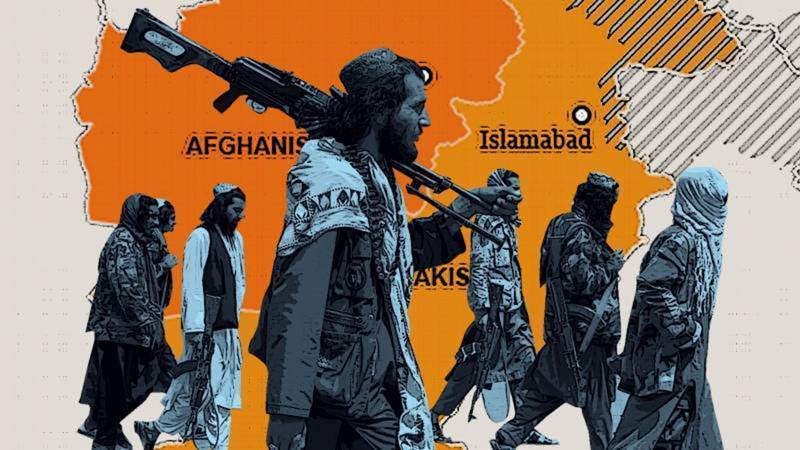
For those who have traditionally bent backwards to please the Taliban in Kabul, it must be noted that Pakistan tried its best in the past to convince the Taliban, during their previous regime, to accept the Durand Line as a permanent border. However, the group’s top leadership had been reluctant to agree, their lame argument being: “Between the Ummah, there could be no borders.” Perhaps the Taliban should apply the same logic to Tajikistan, Turkmenistan, Uzbekistan, and Iran.
Building the fence does not mean that Pakistan is not open to dialogue. On the contrary, it is an assertion of its desire for peaceful coexistence as a neighbour, exercising sovereignty, securing national interest, and fully cognisant of security, which is equally important for both sides.
The ghost of the Durand Line will continue haunting Pakistan–Afghanistan relations unless and until it is addressed boldly and honestly, while keeping in consideration international treaties and obligations, without disregarding the deep distrust and sensitivities on both sides. Otherwise, it will keep the Pashtūnistān cauldron aboil, with an open invitation to non-state actors within Afghanistan and external powers to interfere, continuing to consume our energies and revisiting the issue in one form or another, irrespective of regime change in Afghanistan. A leftover from the Raj must be laid to rest by both countries, and especially by Afghanistan, which is intrinsically mired with a warped sense of superiority yet aeons behind the region in the human development index and GDP.
It is a red flag for Afghanistan, which has not recognised the Durand Line as its eastern border (since Pakistan’s partition from the British Raj in 1947) and must stop daydreaming about its bogus territorial claims on areas stretching from the Afghan–Pakistan border to the Indus River.
What does Afghanistan have to offer its people in 2025? This was well elucidated by Arwin Rahi in Diplomat (2014) and in Express Tribune with his powerful argument: “Many Afghans still dream, Pashtuns in particular, that one day they might reclaim the territories their forefathers lost between the Durand Line and the Indus River. That, of course, is unrealistic: the country lacks the political, economic, and military means to pursue any such claim. At any rate, the 30 million Pakistani Pashtuns would appear to have little motivation to join the 15 million Afghan Pashtuns. For more than half a century, Pashtuns have played significant roles in civilian and military life in Pakistan. Why leave that for a barely functioning Afghanistan?”
The idea of a confederation in this age may not make much sense; nonetheless, it proves the historical sincerity of Pakistan for an amicable resolution of the issues prevailing between Pakistan and Afghanistan at that time
Rahi aptly caps the situation vis-à-vis the Durand Line: “It is obvious that Afghan rulers, from royal to communist and from religious fundamentalist to the so-called liberal, have all kept the Durand Line saga alive for domestic reasons. Unfortunately, the Afghan rulers have not realised (or purposefully ignored) that by exploiting the sentiments of ordinary Afghans, by turning the Durand Line non-issue into an emotional issue, they are creating permanent divisions between the people of two Muslim and brotherly countries. The same Afghan rulers who kept relations with Pakistan tense over the Durand Line have also created unbridgeable divisions between Pashtuns and non-Pashtuns along ethnic and linguistic lines within Afghanistan.” Can Afghanistan afford these implosive policies anymore?
To better appreciate the sincerity of Pakistan in resolving relations with Afghanistan, one must revisit history with a specific focus on the overtures made for confederation between the two countries in 1954. Recently declassified CIA documents point out that, in 1954, the Afghan government, being threatened by the Soviet Union's economic encirclement, approached the USA to have a merger with Pakistan.
This is also corroborated by an article in the New York Times from April 1954 titled “Pakistan and Afghanistan said to Plan Confederation” by John Callahan. This was the first time the word “confederation” was mentioned in the context of Pakistan and Afghanistan, though for very different reasons of threat from the USSR, as emphasised in the article: “One of the most important reasons for Pakistan’s welcoming confederation is to strengthen her defence of Khyber Pass, the most practicable approach from the Soviet Union’s eastern republics.”
To diffuse bilateral tensions once and for all, in the mid-1950s, the respective leaderships of Afghanistan and Pakistan were contemplating the creation of a confederation. The project had the blessings of President Iskandar Mirza of Pakistan and the Afghan Royal family. General Ayub Khan, however, after assuming power, immediately and immaturely trashed the scheme. It was only after the 1965 war that General Ayub realised the importance of Afghanistan as Pakistan’s neighbour.
The idea of confederation is further corroborated by Aslam Khattak in his book A Pathan Odyssey: “Prime Minister Malik Firoz Khan Noon & President Iskandar Mirza both agreed with the plans, also agreeing to take King Zahir Shah ‘as the constitutional Head of State’, proclaiming that ‘after all, for some time after independence, we had a Christian Queen (Elizabeth II).’” Similarly, in Neither A Hawk nor A Dove, Khurshid Mahmud Kasuri says: “The United States supported the idea as well, to bring Afghanistan under its sphere of influence, and offered to expand Karachi Port and extend Pakistan Railways network from Torkham to Kabul via Jalalabad and Chaman to Kandahar.”
Looking at the way regional dynamics and geopolitics have evolved since then, the idea of a confederation in this age may not make much sense; nonetheless, it proves the historical sincerity of Pakistan for an amicable resolution of the issues prevailing between Pakistan and Afghanistan at that time.
It will indeed be a watershed moment when we have true people-to-people and culture-to-culture connectivity between Kabul, Islamabad, and Tehran, extending all the way westwards to Turkey and eastwards to Central Asia, with visa-free regimes. China certainly can play a role as the quintessential keystone in this regional connectivity of civilisations, and hopefully, at a desirable time, our relations with India will be re-established on the twin plains of geo-economics and geo-harmony.
Equally important is internal connectivity and the equation of ethnicities within Pakistan, and such measures under a forward-looking policy would positively address the concerns of veteran Pashtun nationalists like Afrasiyab Khattak and the young Turks of indigenous Pashtun nationalist movements. While their speeches and criticism of the Pakistani establishment are spirited, it is also a fact that the nationalist leadership have openly declared their loyalty to Pakistan and want their demands to be addressed and resolved under the Constitution.
Let us not push Pashtun nationalists hard against the wall, so that they are forced to join hands with the Taliban on the issue of the Durand Line
According to former senator Nabi Bangash, “Terrorists and militants fought their battle from the mountains with guns and bombs. They don’t come into the cities to hold protest demonstrations for their rights and demands.” Bangash, who believes peaceful struggle for constitutional demands is the right of all Pakistanis, says that to end their sense of alienation, this young and emerging leadership from FATA and the rest of the Pashtun areas need to be heard by the State.
The Pashtun Tahafuz Movement (PTM) and National Democratic Movement (NDM) and their leadership are the products of the arduous and wretched conditions since independence that Pashtuns faced in their native areas for decades under colonial-era laws (repealed Frontier Crimes Regulations); they witnessed barbarism and terrorism in its worst shapes as al-Qaeda, the Taliban, and a host of other militant groups came to settle in their villages and towns; and as a result, they experienced displacement from their native lands, destruction, and humiliation. Although the PTM leadership can be harsh in its statements, they are very much reconcilable. Cornering them further may increase their sense of alienation. A sincere effort to listen to their grievances and demands will help bring them into the fold.
The other option is to ignore the fault lines and be ready for consequences. In an earlier article, I had forewarned that India, even after its exit from Afghanistan, had not given up and that in the foreseeable future it will re-enter with the blessings of the Taliban and revive its on-ground projects in more than thirty provinces across Afghanistan, which are also used to keep an eye on Pakistan and serve as facilitation posts for dissidents and insurrectionaries. It was a small window of opportunity that was missed, and with the re-entry of Indians enjoying the full blessings of the Taliban, the task of building bridges with the disgruntled Pakistani Pashtuns has become even more challenging for Pakistan.
Let us not push Pashtun nationalists hard against the wall, so that they are forced to join hands with the Taliban on the issue of the Durand Line. It is no secret that the TTP all along had secret understandings with the TTA, sharing ambitious objectives beyond the Durand Line with territorial control and regional implementation of Taliban-style Shariah law.
Foresight tells us that Pakistan’s Establishment’s best bet against the TTP, Taliban, and ISKP in a very rapidly changing world, with new and unexpected equations emerging frequently, is to forge an alliance with the PTM/NDM and strengthen itself internally.
Pakistan’s Security Establishment would be delusional to think it can reform and use the TTP as a bulwark against ISKP expansion, and to harbour the grandiose hope that a three-pronged strategy with TTP and TTA can be worked out against ISKP; it would be the biggest folly and lethally disastrous, as neither the Taliban nor the TTP waste time on policies they are all footmen subscribing fully to tactical strategies and staying away from distracting cerebral discourse.
In a 2022 paper, Pakistan’s former Foreign Secretary Aizaz Ahmad Chaudhry described Pakistan–Afghanistan relations as symbiotic. He furthered his argument with an ambitious judgment call: “It would be useful to recognise that Afghanistan and Pakistan are bound together in a symbiotic relationship. This means that what ails one country affects the other, and what benefits one has an automatic salutary effect on the other.”
Nothing could be further from reality, and to call it symbiotic is tantamount to intellectual dishonesty by denying the historical events of the past 76 years of a dysfunctional relationship. Of course, to correct it, one has to first accept the ground reality and then work diligently on fixing it. The security establishment’s toxic fascination with strategic depth destroyed not only our global outlook but also intrinsically damaged our society as well.