

Hypertension has long been notorious as a "silent killer". Around one in three individuals in Pakistan may be hypertensive, and nearly half may be unaware of it. Even among those who are, many do not have their condition optimally controlled.
Hypertension is typically defined as a systolic blood pressure above 130 mm Hg and/or a diastolic pressure above 80 mm Hg, according to the American Heart Association. The European Society of Hypertension still uses 140/90 mm Hg as the threshold, but there is increasing consensus that optimal blood pressure should be under 120/70 mm Hg.
There is a direct correlation between uncontrolled hypertension and the risk of stroke, including both brain haemorrhage and infarction, as well as coronary heart disease and congestive heart failure. It is also a major determinant of chronic kidney disease and its progression towards dialysis or transplantation.
Hypertension may be "essential"—that is, with no identifiable cause—often linked to family history, genetic predisposition, environmental factors, and stress. It may also be secondary, usually due to kidney disease or renovascular conditions. Other causes include endocrine disorders such as hyperadrenalism, pheochromocytoma, or hyperthyroidism.
Adherence to a healthy lifestyle alongside appropriate medication, aiming to maintain blood pressure below 130/80 mm Hg in most individuals
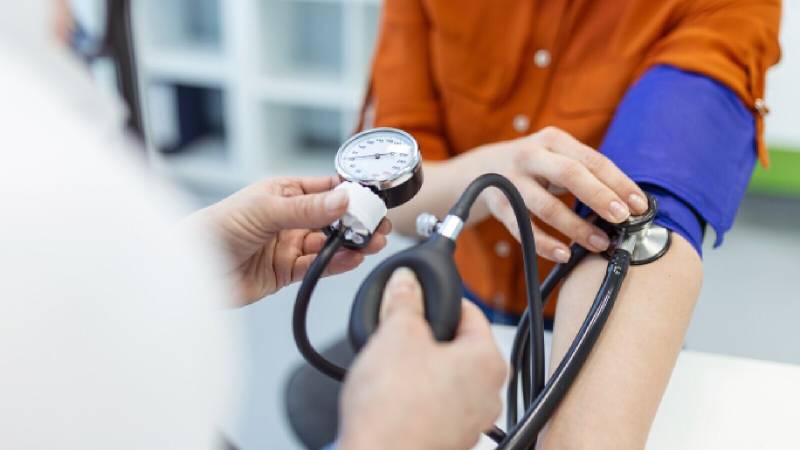
Accurate measurement of blood pressure can be done using validated automated devices, 24-hour ambulatory monitoring, or standardised, unobserved, automated monitoring. Mercury-based devices are now less commonly used, with cuff-based and increasingly cuffless devices becoming more prevalent.
Before any standard reading, the individual should be relaxed, should not have exercised, or consumed tea or coffee for at least 30 minutes. The arm should be supported on a side table with the cuff placed about an inch above the elbow, at heart level. Both arms should be checked initially, and future readings should be taken from the arm with the higher reading. Two to three readings should be taken, five minutes apart, in both the morning and evening at the outset.
Hypertension-mediated end organ damage should be screened for through a comprehensive physical examination, including assessment of the fundus of the eyes, cardiovascular examination, and screening for carotid and renal artery bruits, along with peripheral pulses. Investigations such as an ECG or echocardiogram, urinalysis for proteinuria, complete blood count, electrolytes, blood urea nitrogen, serum creatinine, fasting glucose, and lipid profile are recommended at the time of diagnosis. A renal ultrasound is also useful for evaluating kidney disease.
Several lifestyle modifications are initially advised—such as reducing salt intake, increasing consumption of fruits and vegetables rich in potassium, weight loss, regular exercise, and smoking cessation. These may lead to an average reduction of 8 to 10 mm Hg in mean arterial pressure.
The next step is usually pharmacological management, especially in cases of hypertensive urgency or emergency—where neurological, cardiovascular, renal, or haematological complications are noted in emergency departments, often with blood pressures exceeding 180/110 mm Hg.
We now have several classes of antihypertensive agents available as single or combination pills, including polypill formulations. These include thiazide-type diuretics, ACE inhibitors or ARBs, calcium channel blockers, beta blockers, and vasodilators, used in various combinations tailored to individual patient risk profiles.
Adherence to a healthy lifestyle alongside appropriate medication, aiming to maintain blood pressure below 130/80 mm Hg in most individuals—and below 120/70 mm Hg for diabetics or those with kidney disease or a history of cardiovascular events—preserves both longevity and quality of life.
It is strongly recommended that individuals take their blood pressure seriously to avoid adverse cerebrovascular, cardiovascular, and renal outcomes. With this public health message, it is our sincere hope that hypertension need not remain a "silent killer", but rather a manageable health condition, addressed early and controlled effectively.