

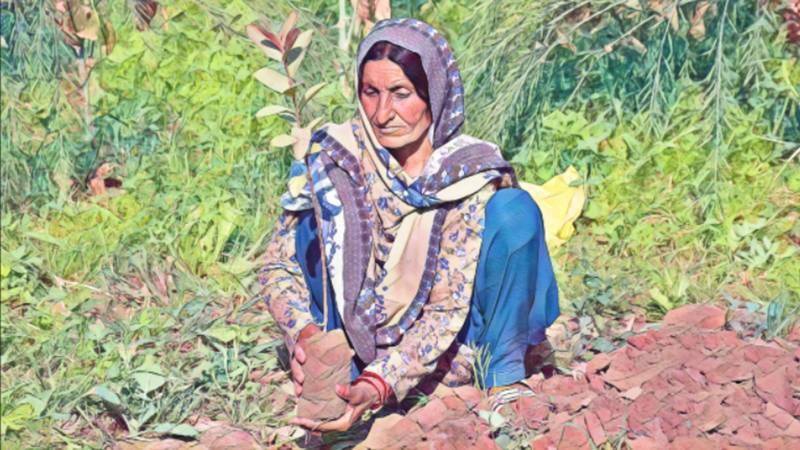
Women play a crucial role in Pakistan's agricultural sector, comprising approximately 74% of the female labor force engaged in agriculture nationwide. In Punjab, the labor force participation rate for women aged 15-64 is 36.3%, with higher participation in rural areas at 43.4%. In Dera Ghazi Khan, a district within Punjab, women are integral to agricultural activities, managing tasks from sowing to harvesting. A 2018 United Nations report highlights the growing number of women in Pakistan's agricultural sector, emphasising their critical contributions to agriculture and the economy. Despite their contributions, which generate an estimated 683 billion rupees annually, many of these women are classified as contributing family workers, whose labor is often unpaid and undervalued. This underscores broader patterns of systemic gender inequality within the sector. Women also work longer hours, with 56 out of 100 working over 50 hours a week, compared to 22 out of 100 men, yet they earn significantly less, reflecting a persistent gender wage gap.
Women farmers in these regions engage heavily in rice and oil seed production. The sowing of maize and rice, the picking of potatoes and cotton, and the harvesting of wheat are all done by women. Most of the livestock activities are also incomplete without the assistance of women. They carry out various livestock farming practices such as caring for and grazing animals, cleaning animals and their sheds, taking care of sick animals, fodder collection, feeding, water serving, milking, manure collection, and preparation of dung cakes.
However, climate change has put women farmers at significant risk. Floods, droughts, and erratic rainfall have reduced crop yields, leading to financial instability and food shortages for their families. Women must now manage both household finances and ensure there is enough food. Furthermore, modern technologies are replacing women’s labor. While services train men farm workers how to operate machinery, they do not train women. This gap would push women farmers out of the job market.
Parveen, a farmer woman, takes us through her journey towards the central plains of the Indus River. She introduces us to "basti bhai" (بستی بھائی), a village of Dera Ghazi Khan deeply affected by last year's flood and heavy rains, is now no more on the ground as constant bank erosion by mighty Indus River has finally swallowed the entire village in August 2023. She paints a vivid picture of devastation, describing how 250 homes were washed away, leaving innocent children, women, and men in a state of despair. The fertile lands that once provided sustenance have been rendered barren, leaving the inhabitants with dwindling resources. Those who had the means to leave the village sought refuge in the cities, while those left behind continued to withstand the worst of this environmental crisis.
According to the Federal Bureau of Statistics, women in agriculture face significantly higher risks of diseases and injuries, with 84 out of 100 women affected compared to 34.5% of men
We listen to the voice of the elderly woman, "Maa ji" of basti bhai, who shared how their lives have drastically changed compared to the previous year after the flood. They used to be happy and prosperous, but everything has now changed. They are now struggling even to manage the necessities of life, such as food and shelter. The joy of witnessing their children's weddings has been replaced by a grim struggle for survival.
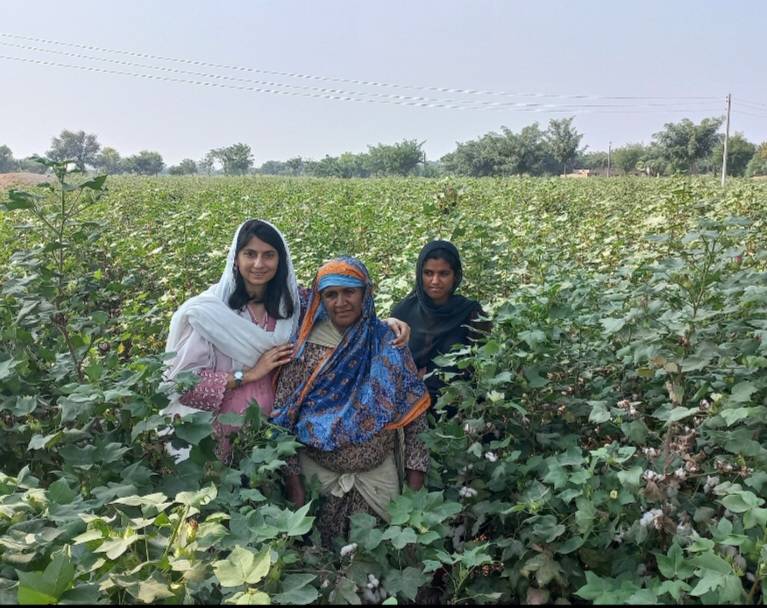
Parveen helped us to visit the other side of basti bhai, where a female farmer provided insights into the challenges faced by women. The female farmer discussed her experience in the field under severe sun exposure and the health risks she encounters, including skin burning, and allergies. “Many of us work tirelessly even during our periods and pregnancies, knowing the risks it brings to our health. The physical strain increases the chances of miscarriages and other serious health problems. Yet, we often have no choice but to keep going. These struggles are a part of our daily lives, She said.”
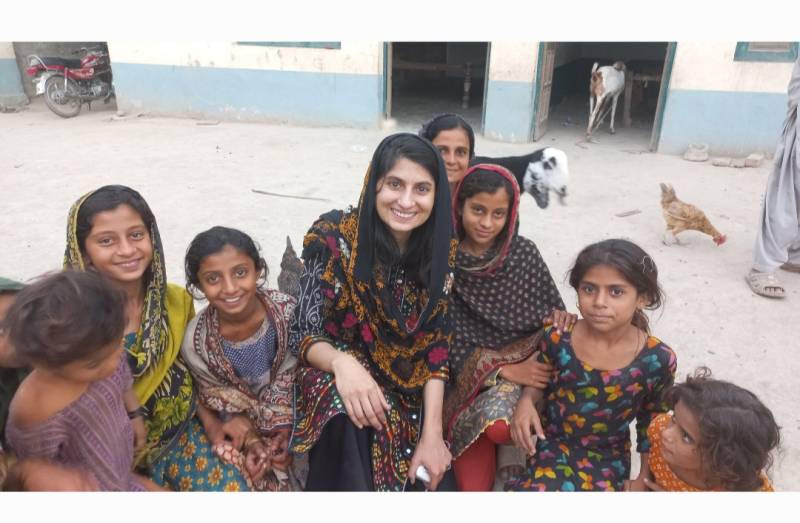
The physical and mental health of these women are always at risk. Increased labor demands due to climate-induced agricultural stressors have led to occupational hazards and mental health issues. A report on women's health in South Asia indicates that climate change exacerbates both communicable and non-communicable diseases among female farmers, further hindering their productivity and well-being. According to the Federal Bureau of Statistics, women in agriculture face significantly higher risks of diseases and injuries, with 84 out of 100 women affected compared to 34.5% of men. Additionally, these women often lack access to resources, education, and support, which makes it harder for them to adapt to these environmental changes. Their struggle highlights the urgent need for targeted interventions to support them in the face of climate change.
To address these challenges, initiatives promoting regenerative agriculture have been introduced in Pakistan. For instance, the Regenerative Production Landscape Collaborative (RPLC), spearheaded by WWF-Pakistan, works directly with cotton farmers in Punjab and Balochistan. This project encourages sustainable farming practices that improve soil health, enhance biodiversity, and increase crop resilience to climate change. By adopting such methods, farmers can achieve better yields and more stable incomes, mitigating some of the adverse effects of climate variability.
Implementing regenerative agriculture practices offers a sustainable solution to the challenges posed by climate change. By focusing on soil health and ecosystem balance, these methods not only improve agricultural productivity but also contribute to environmental conservation. Such approaches can be adapted to various contexts, providing broader benefits to farming communities facing similar climate-related adversities.
Restoration of degraded land is a critical process to combat environmental degradation, improve biodiversity, and enhance livelihoods for communities reliant on natural resources. Globally, land restoration initiatives aim to reverse damage caused by deforestation, overgrazing, and unsustainable agricultural practices. In Pakistan, where the majority of the land is arid or semi-arid, restoration is key to improving agricultural productivity, mitigating climate change, and securing water resources.
According to studies, reforestation in riparian zones can reduce sedimentation by 50%, improving river flow and reducing flood damage
In the Indus River basin, restoration efforts focus on reforesting riparian areas, which historically hosted dense forests. These riparian forests act as natural barriers against floods, prevent soil erosion, and provide habitats for biodiversity, including migratory birds. One prominent local initiative is Ecoist’s work on restoring riparian forests along the Indus River. With the help of local activists and farmers, Basham Zen, Ecoist's founder, has introduced several interventions such as replanting native species i.e., Acacia and Shisham to reduce sedimentation, and create habitats for wildlife, including migratory birds. This restoration not only protects the environment but also reduces government spending on outdated flood control systems, showcasing the economic and ecological benefits of reforestation. Experts highlight the importance of such initiatives, emphasising that planting native trees can stabilise riverbanks and improve water retention in the soil. According to studies, reforestation in riparian zones can reduce sedimentation by 50%, improving river flow and reducing flood damage.
In Dera Ghazi Khan, Ecoist has also launched a "Soil Regeneration" campaign to promote sustainable farming practices like vermiculture and vermicomposting. Vermicompost, often termed "black gold," is an organic fertiliser produced by the breakdown of organic matter through earthworms. This process enriches the soil with essential nutrients, improves soil health, reduces the need for chemical fertilisers, and enhances water retention, making lands more resilient to climate change. Local female farmers engaged in these initiatives report better crop yields and reduced workloads, highlighting how sustainable practices can empower vulnerable communities.
Similarly, the Sustainable Land Management Program (SLMP) by the Ministry of Climate Change, in partnership with UNDP focuses on soil conservation and agroforestry to combat desertification and improve agricultural sustainability. These efforts have helped farmers increase soil fertility and adapt to climate extremes. This will also help reduce gender disparities by empowering women farmers with the knowledge and resources to improve productivity, enhance economic independence, and address inequalities in agriculture.
Women play a vital role in Pakistan's agriculture, yet they face systemic gender inequalities, wage disparities, and health risks, especially in regions like Dera Ghazi Khan, where climate change has further exacerbated their struggles. Despite their immense contributions, their labor remains undervalued, and they are often excluded from technological advancements in farming. However, initiatives such as regenerative agriculture, riparian reforestation, and sustainable land management are providing hope by promoting eco-friendly farming, improving soil health, and empowering female farmers with knowledge and resources. By integrating these sustainable practices, Pakistan can strengthen its agricultural resilience, ensure economic stability for women farmers, and create a more equitable and climate-adaptive farming system.