

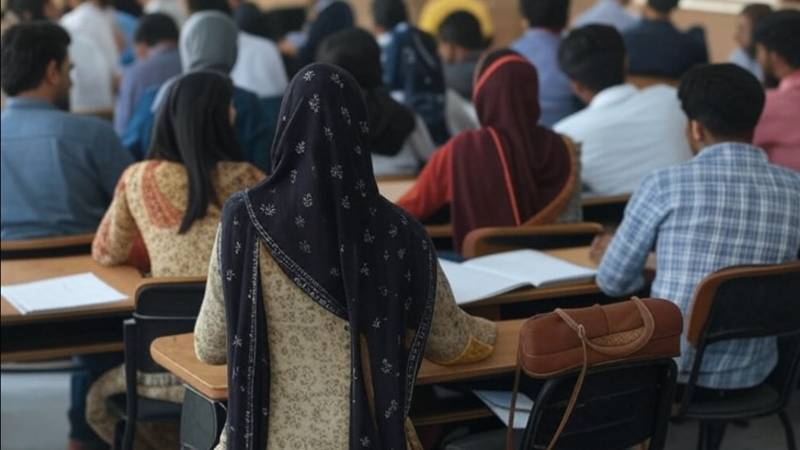
The argument over merging universities in South Punjab is not merely an administrative debate. It is a question about who deserves access to knowledge, dignity, and the right to shape their own future. Behind the polished language of “reforms” and “efficiency” lies a familiar pattern: centralise power, weaken public institutions, and quietly ask ordinary citizens to accept less in the name of so-called good governance.
The universities in South Punjab, we are told, offer similar degree programmes and are located only a few kilometres apart. By that logic, why stop there? Why not merge the dozens of universities in Lahore into one giant institution as well? Consider this: engineering programmes exist across several public universities in Lahore despite the presence of specialised institutions like the University of Engineering and Technology Lahore and Punjab Tianjin University of Technology. No one questions their existence because, in Upper Punjab, education is treated as an investment in progress. In South Punjab, however, education is too often viewed as an unnecessary luxury.
The message for Multan, Bahawalpur, Dera Ghazi Khan, Rahim Yar Khan, Rajanpur, Lodhran, and Khanewal is subtle, yet undeniably cruel. You may vote, pay taxes, and serve Upper Punjab, but you are not trusted to manage your own institutions. When local people run universities, it is labelled as incompetence, while blue-eyed bureaucrats centralise authority and weaken systems, it is celebrated as administrative brilliance.
For decades, power has steadily flowed upwards into the air-conditioned corridors of Lahore, while local governments and regional institutions have been stripped of authority. The result is a fragile educational system now being asked to survive yet another “reform”. Merging universities will not strengthen higher education in South Punjab; it will weaken an already overstretched structure and further reduce access for students from marginalised sharecropper, working-class, and rural families.
Across Punjab, public institutions have gradually been pushed towards so-called economic sustainability, outsourcing, and privatisation. Schools, hospitals, technical colleges, and agricultural services are increasingly treated not as public responsibilities but as business opportunities. The formula has become painfully familiar: first weaken a public institution, then declare it inefficient, and finally hand it over to private interests under the banner of reform.
Recently, across Punjab, government schools with adequate infrastructure have already been outsourced to naïve and incompetent individuals. Public colleges were hastily upgraded into universities without strengthening the foundations beneath them, damaging intermediate and undergraduate education in the process. Enrolment in government colleges declined due to limited resources, while private institutions flourished. It was less reform and more a slow dismantling of the public system.
Education is not a privilege limited to a specific region or class; it is a fundamental right for every citizen of Pakistan
The consequences fall hardest on the poor, lower-middle, and working classes. Technical and commerce colleges, already limited in number, have been pushed closer to privatisation, narrowing opportunities for social mobility. A society that once hoped to produce engineers, scientists, innovators, and skilled technicians now risks producing generations trapped in debt, insecurity, and underemployment. The dream of education is quietly being replaced by the reality of survival.
Likewise, in healthcare, the BHUs (Basic Health Units) in villages and towns that once handled local populations were neglected or outsourced, forcing patients towards overcrowded tehsil and district hospitals, where even standing space has become a luxury. Tomorrow, the same model may arrive in higher education with even greater coercion. If low enrolment and a shortage of teachers justify outsourcing schools, and similarly, a shortage of doctors justifies the privatisation of hospitals, then by the same absurd logic, a shortage of soldiers could justify outsourcing national defence, bureaucracy, or even parliament.
Agriculture tells a similar story, as rumours are surfacing in Multan that 15 acres of land from a well-established cotton research institute will be acquired for a Gymkhana, which is apparently more important for the elite than cotton research for the entire region. Public seed institutions were weakened until farmers became dependent on corporate suppliers. Fertiliser policies favoured powerful industrial groups while cultivators struggled with counterfeit products, rising costs, and collapsing crop prices. Wheat support mechanisms disappeared, yet policymakers seemed surprised when farmers abandoned wheat cultivation. Restrictions on inter-district and inter-provincial trade further cornered growers, leaving them with fewer choices and shrinking incomes.
Social media outreach for provincial offices across all departments has increasingly become a performance indicator. Billions were spent on publicity campaigns, grand announcements, and image-building exercises while schools deteriorated, hospitals overflowed, and universities struggled for survival. Punjab’s progress often looked impressive in advertisements, but ordinary citizens rarely experienced that prosperity in their daily lives, especially in South Punjab.
Meanwhile, the burden of the system falls disproportionately on the common man. Indirect taxes continue to rise, public services continue to decline, and austerity is imposed not upon the privileged but upon ordinary families. Budgets celebrated as “surplus” were often achieved by cutting development spending, reducing educational investment, and squeezing workers, farmers, and students even harder. The recent US-Iran escalation triggered unprecedented inflation, which seems to be the final nail in the coffin for ordinary citizens.
Equally troubling is the silence from the intellectual class that unavoidably surrounds these structural failures. Crises elsewhere rightly receive national attention, but Punjab’s own educational, health, and social decline is too often normalised. Millions of children remain out of school, clean drinking water remains unavailable in many areas, and public institutions continue to erode, yet these issues rarely dominate national debate with the urgency they deserve.
The proposed merger of universities in South Punjab is therefore not an isolated policy decision. It reflects a broader philosophy that sees public institutions as burdens instead of lifelines, and ordinary citizens as passive recipients rather than active participants in governance. It is the mindset that measures human development through spreadsheets while ignoring the human cost behind the numbers.
Why is student enrolment low in these universities even though nearly 45 per cent of Punjab's population resides in the southern region? The real question, however, is conveniently being ignored. The answer lies not in geography, but in chronic governance failures. For decades, universities in the region have suffered from inadequate resources, weak infrastructure, poor industrial linkages, limited employment opportunities, political interference, and salary structures too low to attract highly qualified faculty. Unsurprisingly, students gravitate towards institutions in Lahore and other major cities where facilities, research culture, and career prospects are comparatively stronger.
The case of Muhammad Nawaz Sharif University of Engineering and Technology is the tip of the iceberg in this scenario. Even though it was established back in 2008, the university still lacks basic resources, including a fully developed permanent campus. Therefore, classes are scheduled in two borrowed corridors of Technology College Multan even after two decades. There has been no development on the allotted land, laboratories remain inadequately functional, and insufficient funds continue to hinder the recruitment of competent faculty. Such institutions are expected to compete nationally while being denied the resources necessary for academic excellence.
Conclusively, merging universities will not address the structural issues at hand. While it may reduce the numbers on paper, it will not enhance infrastructure or restore confidence in the state. A region that comprises nearly half of Punjab’s population deserves better, specifically increased investment and institutional enhancement rather than bureaucratic downsizing masquerading as reform. Education is not a privilege limited to a specific region or class; it is a fundamental right for every citizen of Pakistan.