

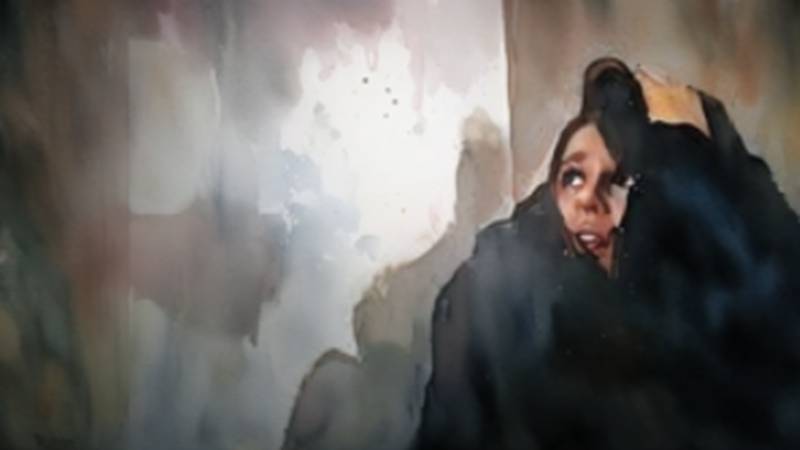
In Pakistan, the female body is not a person—it is a battleground. And far too often, the law, the culture, and society at large conspire not to protect it, but to condemn it. Here, being a woman means being held responsible—for your assault, for your harassment, and, in many cases, for your own death. It means living under a constant presumption of guilt: for what you wore, where you walked, when you spoke, or simply for being visible.
This is not accidental. It is the result of a deliberate, systemic failure: a legal, cultural, and moral abdication that places the burden of male violence on female behaviour. The logic is as flawed as it is cruel, and yet it persists: if a woman is attacked, she must have invited it. If a man assaults, he must have been provoked. This mindset is not an anomaly—it is institutional.
Take, for instance, the Lahore-Sialkot motorway rape case in 2020. A woman driving with her children late at night was gang-raped after her car broke down. The nation should have been united in outrage and support. Instead, a senior police official, the then-CCPO of Lahore, saw fit to publicly question her decision to travel alone. With a straight face, he blamed the victim for choosing the “wrong route” and for being out “too late.” In what kind of moral universe is the navigational judgment of a mother with children weighed more harshly than the predation of rapists?
This wasn’t just tone-deafness. It was emblematic of how state actors repeatedly shift the gaze away from perpetrators and toward victims, as if justice depends not on punishing crime, but on proving female innocence.
This same pattern played out in the case of Qandeel Baloch, the social media star who was murdered in 2016 by her own brother in an “honour killing.” Qandeel was not liked by many; she was brash, provocative, and unapologetically in control of her public image. But it wasn’t her aesthetics that killed her—it was our collective inability to tolerate a woman who dared to assert her autonomy. Her death was met not with unequivocal condemnation but with whispers of justification: “She brought it on herself.” That is the chorus of victim blaming in Pakistan—a chorus that rarely misses its cue.
Noor Mukadam’s case in 2021 was even more horrifying. Tortured and beheaded by Zahir Jaffer, Noor was a well-educated, well-connected young woman—the daughter of a former diplomat. Her murder was not ambiguous. It was premeditated and caught on security cameras. And yet, the public discourse turned not on the killer’s monstrosity, but on the victim’s “choices.” Why did she visit him? Why didn’t she leave sooner? Why did she trust him? These are not questions of justice—they are evasions. They are attempts to reduce the crime to the woman’s conduct, to obfuscate the only truth that matters: a man murdered her in cold blood.
This is not accidental. It is the result of a deliberate, systemic failure: a legal, cultural, and moral abdication that places the burden of male violence on female behaviour
And it does not end with women. In 2018, the rape and murder of 7-year-old Zainab Ansari in Kasur shook the nation. Yet even in the face of such unspeakable brutality, some questioned her parents: Why wasn’t she being watched? Why was she out? The implication is as grotesque as it is familiar: even a child’s violation must somehow be rooted in a failure to conform to imagined standards of protection. As if rapists are summoned by carelessness, and not enabled by a society that rarely punishes them.
The most recent example—Sana Yousaf, a 17-year-old TikTok creator shot dead in 2025 by a man she had rejected—was another tragic iteration of this grim narrative. She had said “no.” Repeatedly. Publicly. And for that, she was murdered in her own home. Her killer was not unknown to her, nor was his obsession a secret. And yet, when she died, the country turned its scrutiny not on the man who pulled the trigger, but on the girl he killed. People dissected her content, her clothes, her confidence—as if these were mitigating circumstances in her own murder. This is not just cruel. It is pathologically unjust.
These cases are not isolated. They reveal a deeply embedded cultural pathology: a belief that a woman’s dignity is conditional, her safety negotiable, her suffering suspect. This belief system is reinforced daily—through police apathy, judicial delays, media sensationalism, and religious posturing. The institutions that should protect women instead interrogate them. The systems that ought to prosecute predators instead parse the morality of the prey.
The obsession with izzat, or “honour,” ensures that women are not seen as autonomous human beings, but as vessels of male reputation. A daughter’s obedience, a sister’s silence, a wife’s submission—all are deemed markers of male prestige. In this architecture of power, women who resist are not just outliers—they are threats. And what does society do with threats? It neutralises them.
The media does little to disrupt this order. On the contrary, it reinforces it. Crime shows dramatise female deaths with voyeuristic flair. Dramas romanticise abusive men and punish outspoken women. News anchors moralise on women’s choices while minimising male violence. Even in schools, girls are policed for their attire while boys are rarely taught about consent or boundaries. The message is consistent and loud: control women, excuse men. The legal system, meanwhile, operates like a fortress of inertia. Rape trials drag on endlessly. Survivors are made to prove not only that they were violated, but that they were “worthy” victims. Judges demand character certificates. Police officers conduct interrogations dripping with innuendo. The law says one thing; its application says something else entirely—that justice for women is conditional, uncertain, and deeply politicised.
None of this is incidental. It is a well-oiled machinery of misogyny, powered by cowardice and disguised as tradition. And until we confront it—not just rhetorically, but legally, culturally, and institutionally—we will remain complicit in every assault, every killing, and every silencing.
We must reject the premise that women are the cause of their own suffering. The problem is not that women walk at night. The problem is that men feel entitled to their bodies. The problem is not that women speak freely. The problem is that society feels entitled to shut them up. The problem is not women. It has never been.
From Zainab to Sana, from Qandeel to Noor—each name is a verdict. A verdict on our failure as a society, a state, and a people. These women are not footnotes in a moral cautionary tale. They are indictments of a nation’s conscience. Victim blaming is not just unjust—it is an act of violence in itself. It doesn’t merely enable the next crime; it justifies it in advance. It tells men that if they kill a woman, we will ask what she did to deserve it. It tells survivors that if they speak, they will be punished again—this time in public view.
Let this not be another plea that disappears into the noise. Let it be a declaration. A declaration that we should no longer accept a culture that punishes women for surviving. That we will no longer remain silent while the machinery of blame runs uninterrupted. That “no” must finally mean something. That dignity, freedom, and life are not privileges for women in Pakistan—they are rights. And rights are not negotiable.
Until this truth becomes louder than shame, louder than fear, and louder than tradition—this fight is far from over.