

Bhanwar Lal Dhama AIIA was an Indian architect, archaeologist, and epigraphist. His name is also given by the Government Gazette: The United Provinces of Agra and Oudh, Allahabad: Saturday, 18 June 1910. (See Page No. 535 of this issue).
The name Bhanwar Lal Dhama is again found with his address: Swastika House, Station Road, Jaipur in the Journal of the Indian Institute of Architects Volume 21 and 22, 1955, Page 4. We see this name again in JIIA Volume 26, 1960 and Volume 32, 1966.
BL Dhama made real contributions to colonial archaeology, with several publications on various topics which were mostly published in the Annual Reports of the Archaeological Survey of India from 1917 to 1932. Sir John Marshall, EJH Mackay and Michael Jansen have described BL Dhama in their archaeological reports. The detailed biographical information about BL Dhama is very scarce. I have researched for years to prepare this biographical sketch of the great archaeologist, architect, and epigraphist of the Indo-Pak subcontinent.
Family Background and Birth
BL Dhama was born in 1892 AD. He belonged to a Brahman family of Jaipur, India. Complete information and other details about his parents and other family members are unavailable. I tried a lot to collect such information from different sources but I could not succeed.
After passing primary classes, BL Dhama passed his matriculation from Jaipur High School in 1910. He was 18 years and 2 months old at the time of this matriculation examination. According to the educational records, he passed the examination in the IIIrd Division. This date is published by the Government Gazette: The United Provinces of Agra and Oudh, Allahabad: Saturday, June 18, 1910. Please see page No. 535 of this issue.
Building (1915) Volume 109-Page 135 published this information about BL Dhama’s Intermediate examination:
“The following Probationers, having produced satisfactory evidence of their training and qualifications, were exempted from sitting for the Intermediate Examination, and have been registered as students:-
BN Dev: Glasgow (Government C.E. College, Sibpur)
BL Dhama: Bombay (University of Allahabad)
TF Ford: London (London)
W. Gourlay: Glasgow (Glasgow School of Architecture)
TC Hardey: Glasgow (Glasgow School of Architecture)
JM Honeyman: Edinburgh Glasgow (Glasgow School of Architecture)
FO Lawrence: Liverpool (Liverpool University)
E. Louy: London (King’s College)
J. Napier: Glasgow (Glasgow School of Architecture)
RP Shaw: Linlithgowshire (Edinburgh College of Art and Heriot Watt College)”
The term “ARIBA Degree,” which describes his education, likely refers to the Associate of the Royal Institute of British Architects (ARIBA) qualification, which was a professional qualification for architects. In 1931, India was under British rule, and it is plausible that this qualification was relevant in the country. The officers of the Archaeological Survey of India like Hasan Hayat Khan and JA Page also had this qualification.
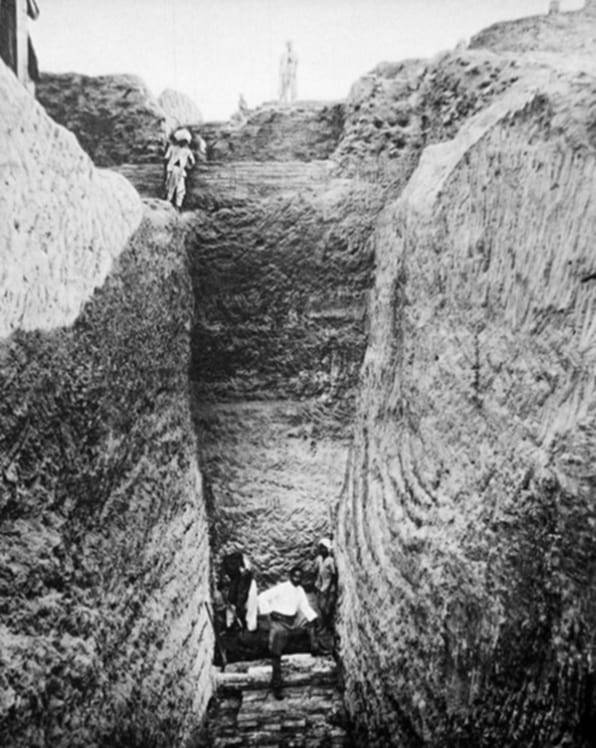
The Sir JJ College of Architecture was established in Bombay in 1913. The course had been enlarged to one of four years. The first list of graduates from this college is not available. However, on 12th May 1917, the first historic meeting was held to form The Architectural Students Association which comprised past students of Sir JJ School of Art, which later became the College of Architecture. George Wittet, the Consulting Architect to the Government of Bombay, was elected as the first president. The aim of this meeting was to foster professional connections.
The following who had passed the Advanced Examination that year were termed the Originators of the Association: 1) Mr NA Desai 2) Mr ND Desai 3) Mr BL Dhama 4) Mr GS Kalkumdrikar 5) Mr MB Pagi 6) Mr SC Pastakia 7) Mr VV Potdar 8) Mr SS Rao 9) Mr CP Shah 10) Mr KB Taraporvala 11) Mr PR Turner and 12) Mr BP Wadke.
The formation of this association is a landmark event in the history of Architecture in colonial India. This Architect’s Association was registered in 1929, as the Indian Institute of Architects and today it has more than 15,000 members. The Golden Jubilee of the Architectural Institute of Indian Architects (AIIA) was celebrated in 1967.
Training in Archaeology and Conservation work
In August 1917, he received training in archaeology and conservation work from the Archaeological Survey of India. The ASI also focused on photographic documentation of Indian monuments. This provided resources and opportunities to those who were interested in architectural history and preservation. This qualification is shown with the name of BL Dhama in a book entitled Prince of Wales Museum of Western India: A Brief Report of the Museum from its inception to 31st March 1927, Appendix III, Page 8.
DB Spooner, Offg Director General of Archaeology, writes in the Annual Report of the Archaeological Survey of India 1917-18, (Published in 1920):
“The Archaeological Scholarship for Sanskrit was held by Mr M. Ghosh, M.A. That for Persian and Arabic was offered to a Sanskrit student in view of the fact that there was little likelihood of fresh openings occurring for a Moslem Archaeologist in the near future, and Professor Rama Prasad Chanda, Assistant Master, Rajashahi Collegiate School, was selected to hold it, and joined the Department in July 1917. The Architectural Scholarships held by Messers. GC Chandra and BL Dhama were extended for a further period of one year and the scholars were attached to the office of the Superintendent, Muhammadan and British Monuments, Northern Circle, Agra for training. Maung Hla, B.A., continued to hold the scholarship in Burma.” (Page 39)
Furthermore, the Annual Progress Report of the Superintendent, Archaeological Survey of India, Northern Circle (Muhammadan and British Monuments), for the years ending 1921 provides the following details about the training of BL Dhama, during his year of Government architectural, head draughtsman and assistant training:
“Under instruction of the Government of India (Letter No. 165, dated the 9th August, 1917, Department of Education) Messrs. GC Chandra and BL Dhama reported in person at my office on the 11th October, 1917, for the purpose of receiving a training in archaeology and the special requirements of conservation work among ancient monuments, in furtherance of the intention of the Government of India to recruit the future personnel of this department from among Indians as far as possible. To this end Messrs, Chandra and Dhama had been attached to the office of the Consulting Architect. (h) The work of the Architectural scholars, Messrs, GC Chandra and Dhama, attached to this office for archaeological training, has been very promising.” (Page 77)
Later on, GC Chandra conducted excavations at the Paharpur Buddhist Monastery and Nalanda with KN Dikshit and MH Qureshi.
Appointment of BL Dhama by ASI to execute conservation work
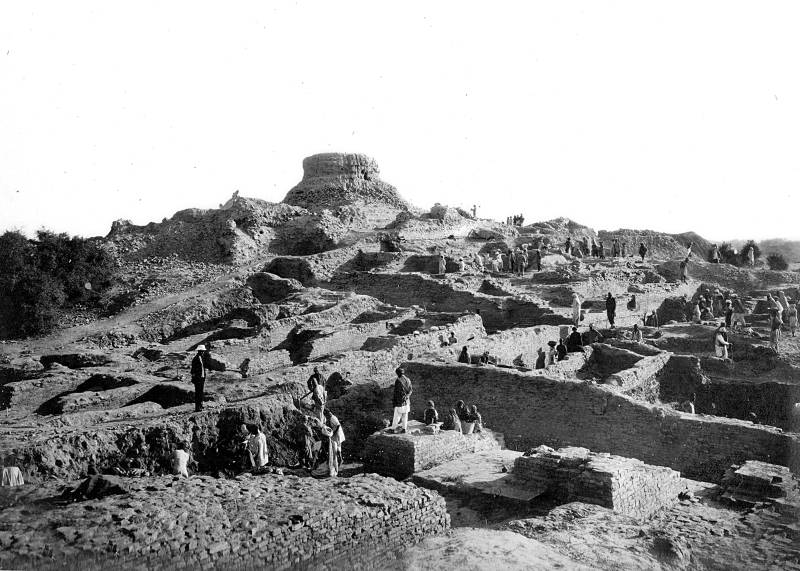
At the end of 1920, BL Dhama was appointed to execute a project. The project which BL Dhama was required to implement embraced minor works on a number of temples, but the principal items on the list were the conservation of Duladeo. In 1925, some differences arose between Mr RD Banerji and Mr BL Dhama over the conservation of the ruined spire of the Duladeo temple at Khajuraho. See: The Calcutta Review April-June 1926, Page 150.
Mr Ghulam Yazdani writes in his report entitled, Some unpublished inscriptions from the Jaipur State that, “In August 1925, Sir John Marshall, Kt., C.I.E, kindly sent me for decipherment and publication in this Journal the estampages of eleven inscriptions which Mr BL Dhama, Assistant Superintendent, Archaeological Survey, Central Circle, had noticed in his tour in the Jaipur State. The estampages have been most welcome to me for, with the exception of only one inscription which comes from Pushkar (Ajmer), the rest have not been published before and several of them contain information such as is not to be found in contemporary history.”
One might wonder: when BL Dhama joined the Archaeological Survey of India, which officers and staff worked in the Archaeological Department? The records provide us with an answer.
The Combined Civil List for India No. 85, July-September 1928 provides a list of the following officials in the Archaeological Survey of India:
1. Sir John Hubert Marshall (Director General of Archaeology in India) 2. JF Blakiston (Deputy Director General of Archaeology in India) 3. Hasan Hayat Khan 4. Rai Bahadur Daya Ram Sahni 5. EJH Mackay 6. Nani Gopal Majumdar 7. Muhammad Sana Ullah 8. Muhammad Abdul Hamid 9. Rai Bahadur Rama Prasad Chanda 10. BL Dhama 11. TA Otto 12. AH Longhurst 13. KN Dikshit 14. Ganesh Chandra Chandra 15. Vacant 16. Madho Sarup Vats 17. JA Page 18. Muhammad Hamid Kuraishi 19. Harold Hargreaves 20. Khan Bahadur Maulvi Zafar Hasan 21. C. Duroiselle 22. Maung Mya 23. Ghulam Yazdani (24. Hirananda Shastri 25. Subramanya Aiyar 26. Krishnamacharin 27. Srinivasa Rao and 28. Sir M Aurel Stein.
In 1969, BL Dhama sought permission of the UIT Jaipur to build a Vishwakarma Temple, Archaeological School, Museum and a Library on a piece of land adjacent to his Swastika House, Station Road, Jaipur
BL Dhama’s role in the large-scale excavations at Mohenjo-Daro 1925
Sir John Marshall writes in the *Annual Report of the Archaeological Survey of India 1925-26* that:
“By the beginning of December, when I arrived at Mohenjodaro, the following officers, with their staffs, were already assembled in camp;-Mr H Hargreaves (Superintendent, Frontier Circle), Mr MS Vats (Officiating Superintendent, Northern Circle), Mr KN Dikshit, (Superintendent, Western Circle), Mr BL Dhama (Assistant Superintendent, Rajputana and Central Circle) and Mr Sana Ullah (Archaeological Chemist). In addition to those gazetted officers there were also present Mr AD Siddiqui, Mr NG Majumdar (Curator of Rajshahi Museum) and Messrs; QM Moneer, JK Roy and KN Puri, all of whom did valuable service in the matter of supervising labour. From Taxila Mr Siddiqui also brought with him several of my own trained overseers besides a quantity of excavation material, tools and camp equipment.”(Page73 and 74)
At the same time, the services of a Sub Assistant Surgeon were loaned by the Medical Department, Bombay. This Surgeon helped in combating diseases among the coolies. Sir John Marshall employed a body of 1000 to 1200 labourers. Of these, 900 were Mekranis (Balochis) who migrated from Mekran to Karachi due to famine, while 300 were Sindhi villagers of the Mohenjodaro area. For contract labour, they were paid 14 annas for adult males, 11 annas for women and 8 annas for children. For local labour, the wages paid were: 11 annas a day for adult males and 8 annas for women and children. Mr A. Francis, First Class Surveyor of the Survey of India, attached to No.20 Party (Cantonments) also joined Sir John Marshall in February and was engaged on survey until the middle of August 1926. He prepared the first Topographical map of the Mohenjodaro site.
Sir John Marshall named DM Area after BL Dhama
Sir John Marshall, describing the Mohenjo-Daro Excavations, writes in the Annual Report of the Archaeological Survey of India 1925-26 (1928) that:
“The digging essayed in previous years on this site was confined in the main to three areas. The first of these is in the vicinity of the Buddhist Stupa (1922); the second, excavated by Mr MS Vats in 1923-24, lies on the further side of the broad depression to the east of the Buddhist Stupa; and the third, excavated by Mr KN Dikshit in 1924-25 is near the northeast corner of the site. In apportioning the work to be done during the past season it seemed advisable to allow Messrs. Vats and Dikshit to continue digging in the areas with which they were already familiar. For the sake of convenience these two areas are distinguished by the letters VS. and DK. Mr Hargreaves was given a new area (HR) to the south of the former and separated from it by a deep depression along which the new road from Dokri has been carried; and Messrs. Siddiqui and Dhama (working under my own personal supervision) the area SD and DM round about the Buddhist Stupa.” (74-75)
Mohenjo-Daro Maps drawn by BL Dhama
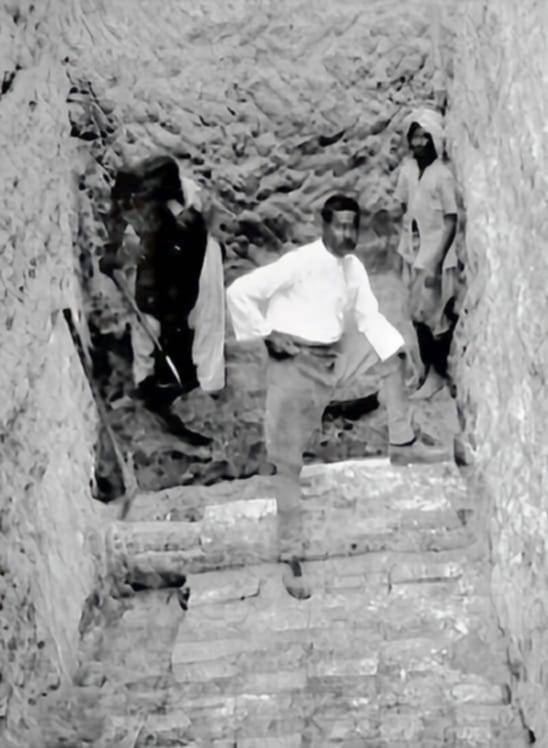
Sir John Marshall writes in his book Mohenjodaro and the Indus Valley Civilization (1931) that, “The Buddhist monuments on the summit of this mound were mainly excavated by Mr RD Banerji in 1922-3; the deeper digging in the prehistoric strata beneath them was started by Mr Banerji, but chiefly done by Mr BL Dhama under my own direction in 1925-6.” (Page 113)
Sir John Marshall writes in the Annual Report of the Archaeological Survey of India 1926-27 that:
“Director General of Archaeology:-In addition to L Area surveyed personally by Mr E. Mackay, three new drawings were prepared of the excavations at Mohenjo-daro on the scale of 10’-1” and in various colours in order to show the different strata of buildings. For this purpose, all the drawings prepared in the previous years had to be revised and new coloured tracings made. Mr BL Dhama made a detailed drawing on a large scale of the tank unearthed last year and 4 other large drawings of the important buildings exposed in the B section of HR Area were prepared by the draftsman.” (Page 245)
The said Annual Report of the Archaeological Survey of India 1926-27 was published in 1930.
Mr BL Dhama published a book entitled A Guide to Khajuraho, in 1927. BL Dhama, Assistant Superintendent for Central India, and Rajputana, officiated as Superintendent Muhammadan and British Monuments Northern Circle, Agra during the period of Mr Page’s leave. Mr Page returned from leave in October as Superintendent in the Central Circle, and Mr Dhama reverted to his original post. On reversion, Mr Hamid returned to the Central Circle as Assistant Superintendent on the 26th March, 1928.
The Annual Report of the Archaeological Survey of India for the year 1928 and 29 gives us brief information about Section I. Conservation United Provinces: Muhammadan and British Monuments. This report was prepared by Mr BL Dhama. During that year a sum of Rs. 1,52,551 was spent on the conservation of ancient monuments in the United Provinces. While the income derived from various sources was Rs. 30,304 in the United Provinces and Rs. 24,281 in the Delhi Province. Mr BL Dhama has provided descriptions of the following ancient monuments which include Agra, Itimadpur, Sikandra, Fatehpur Sikri, Kagaraul, Aligarh, Najibabad, Lucknow, Jaunpur, Chunar, Allahabad and Delhi. He also wrote A Preliminary Note of Inspection on a few places of interest in the State of Dhundar (Amber and Jaipur) in 1928.
By studying the Proceedings and Transactions of the Sixth All India Oriental Conference Patna December, 1930 we get the following Programme of the participants with BL Dhama:
“Saturday, the 20th December, 1930
7 A.M. Delegates went by motors and motor busses to Rajgir hot springs and visited Nalanda Excavations and the Museum. Mr BL Dhama was at home to the members of the Conference in the Inspection Bungalow at Nalanda at 3-30 P.M. and the Reception Committee entertained the Delegates at Rajgir.”(IV)
The Annual Report of the Archaeological Survey of India for the year, Part 1 (1930-31) reads:
“Poona. Heavy rains penetrating through the bad masonry at the Shanwar Wada caused the collapse of portions of the rampart walls, first on the south side (1930), two years later on the north side (1932). These damages have been made good by the respective Superintendents, Mr DHAMA and Dr. NAZIM.” (Plate V, e-d.) Page 21.
BL Dhama proceeded on leave: four months from 1st May, 1930. Again one month from 7th June, 1931, and eight months from 10th June 1932.
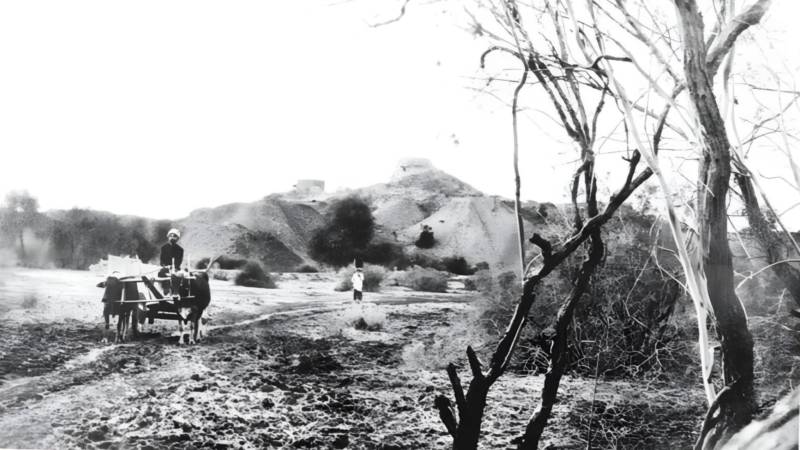
Conservation of Buddhist Stupa and Kalhora Monuments in Sindh
The Annual Report of the Archaeological Survey of India for the year, Part 1 (1930-31) describes:
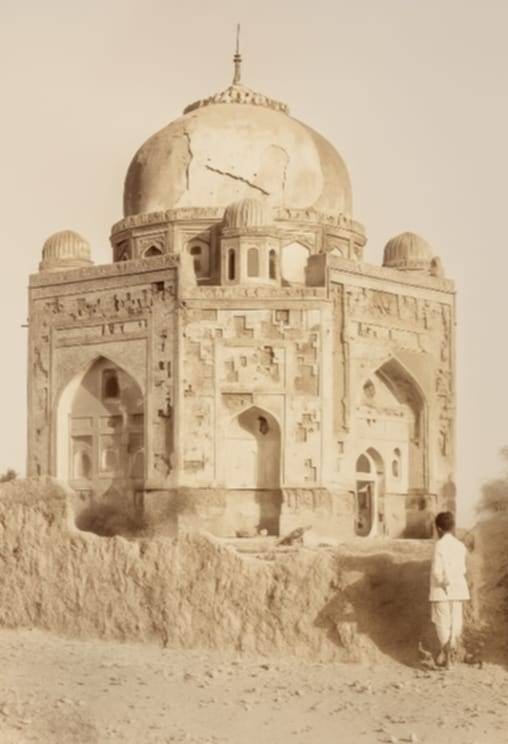
“A portion of the dome of Mirza Isa Khan’s Tomb at Tatta collapsed during the rains of 1932 and conservation was carried out in 1932-33 and the subsequent year. The platform walls of the Buddhist Stupa of Gaja, District Hyderabad, also suffered from the rains, and have been reconstructed during 1933-34. Special repairs have been carried out on Ghulam Nabi Kalhora’s Tomb, at Hyderabad. This monument is one in the group of tombs of deceased members of the Kalhora and Talpur dynasties situated to the north of the town: They are fine monuments, once profusely decorated with coloured tiles in geometric and floral patterns, but unfortunately many of these tiles have now disappeared. Ghulam Nabi Khan (A.D.1777) was the sixth ruler of the Kalhora dynasty, and his tomb was given special attention by Mr DHAMA during 1930-31. The existing tile work has been conserved as far as possible, and it is hoped that similar conservation can be carried out to the other tombs at no distant date.” (Page 26)
Resignation and Dismissal of Mr GM Bhuta and Mr BL Dhama
Probably, Poorna Chandra Mukherjee was the first victim of Archaeological Survey of India (ASI) official policies. He was called by ASI to excavate the ancient city of Pataliputra in 1897. ASI gave him his next project to search and excavate Kapilavastu, Nepal in 1899. This was the birth place of Buddha who spent 30 years of his life there. This project was carried out by Vincent Arthur Smith, an Irish Indologist and historian.
Though Waddell interfered, criticised and complained against PC Mukherjee, PC Mukherjee succeeded and brought to light Kapilavastu in the vicinity of Tilaurakot. He also excavated Mathura and Taxila. He died at a very young age of 53 on 4 August 1903. Sir John Marshall wrote an Obituary for Mukherjee.
Another example of European officers' animosity was that of Mr RD Banerjee, a Superintendent in the ASI Western Circle. He excavated Mohenjodaro, the ancient city of the Indus Valley Civilisation, in December 1922. Mr RD Banerji was also suspended with effect from the 16th August 1926.
Now it was BL Dhama’s turn, who received four months’ leave from 1st May 1930. Again 1 month from 7th June 1931, and 8 months from 10th June 1932. Dhama’s other details are given as under in the Annual Report of the Archaeological Survey of India for the year 1930-31, 1931-32, 1932-33 and 1933-34. This report was edited by CL Fabri, PhD, D Litt, Part 1, and was published from Delhi in 1936: “Mr GM Bhuta, Asst, Suptdt, C.C, resigned with effect from 6th July 1932. Mr BL Dhama Suptdt, W.C., was suspended with effect from the 5th January 1933, and ultimately dismissed from Government service with effect from 1st July 1933, as a result of the disciplinary action taken against him; he was found guilty of serious neglect of duty and of fraud for his own benefit” (Page 343)
CM Master, LV Sathe and GM Bhuta together founded the firm Master Sathe Bhuta in 1932.
The Deputy Director General’s salary was 9,600 Rs. While Mr BL Dhama’s salary was Rs 1,308.
Serving as Member Board of Trustees Prince of Wales Museum Bombay
By studying Prince of Wales Museum of Western India: A Brief Report of the Museum from its inception to 31st March 1927, we get the following information about BL Dhama:
“Mr BL Dhama ARIBA, Superintendent Archaeological Survey of India W.C (ex officio) also served as a Member of the Board of Trustees from 1st April 1931 to 31 March 1932. There were a total of 19 members on this board. Mr JW Smyth, I.C.S, Collector of Bombay (ex officio) was also a member of this Board of Trustees. He had compiled the Gazetteer of the Province of Sind which included Larkana, Sukkur and Upper Sind Frontier (Jacobabad) Districts. Most of the volumes were published in 1919. This museum had collections relating to Archaeology, Epigraphy, Geology, Ethnology, Art, Manuscripts, Books, Maps, Coins, Medals, Economic Products, Animals and Plants.”
A book entitled Globalising Everyday Consumption in India: History and Ethnography edited by Bhaswati Bhattachatya and Henrike Donner (2020) writes under Envisioning the ideal: Dreams of home, dreams of concrete in the 1940s and 1950s that:
“Focusing on that interrelationship explicitly, Jaipuri architect BL Dhama grouped multiple small scale plans together on single pages of his 1962 book Domestic Architecture. By comparing one plan to another, readers could see how moving an entrance or shifting the order of rooms affected the house as a whole. Although facilitating visual comparisons, Dhama’s plans were rendered on a tiny scale, without corresponding elevations: this meant they would have been impossible to translate into built form. This lack of construction orientation was probably strategic. Although Dhama did not directly suggest readers hire him to prepare more detailed drawings, he did offer his home address to facilitate correspondence.”(149)
Construction of Temple, Archaeological School, Museum and Library
The Urban Improvement Trust (UIT) Udaipur had allotted BL Dhama a land by auction for a sum of Rs. 19,000 on 12-2-1962. He paid 25% of the bid, 4,750 Rs. This agricultural land measuring 3063 sq. yards (27,560 square feet) was in Survey No.995, 996, 1005, 1237, 1238 and 1239, situated at Savinda Kheda, Tehsil Girwa, District Udaipur, Rajasthan, India.
In 1969, BL Dhama sought permission of the UIT Jaipur to build a Vishwakarma Temple, Archaeological School, Museum and a Library on a piece of land adjacent to his Swastika House, Station Road, Jaipur. As BL Dhama could not pay the remaining amount within 1 month, the land possession was illegally taken by UIT Udaipur from BL Dhama on 30th December 1975. He was required to submit a certified copy of the lease date and it was found by the UIT that the said land did not belong to his forefathers as claimed by him.
Finally, The Rajasthan High Court announced judgment and dismissed this case on February 4, 1976. We again see BL Dhama’s name in the official documents of The Rajasthan High Court at the Jaipur Branch in 1982 and 1995. The court announced the final decision on 17-07-1995.
Last days of BL Dhama’s life
After years of research and continuous conversations with Indian and Pakistani scholars, I could not get BL Dhama's year of death. No obituary or news of his passing away is found. It seems people of his own country do not know him today.
The website of the University of Nalanda provides information regarding BL Dhama’s book A Guide to Khajuraho: which says that this great archaeologist, architect and epigraphist died in 2001.
If we take this year as correct, BL Dhama lived for 109 years. Further research can provide accurate biographical information. Today no one knows about his family members and their locality.
Books Authored by BL Dhama
BL Dhama compiled and published the following books in English and Hindi languages:
- A Guide to Khajuraho, 1927
Khajuraho is a town in Madhya Pradesh, India which is famous for Hindu temples and other Attractions like Raneh Falls, Beni Sagar Dam, Ajaygarh Fort, Khajuraho Archaeological Museum, Ken Gharial Sanctuary, and Khajuraho Dance Festival. The exquisite temples of Khajuraho were built by the Chandela dynasty between 900 and 1200 A.D. According to Kevin Standage, it is believed that there were once 85 temples around Khajuraho, covering an area of 13 Sq Kilometers.
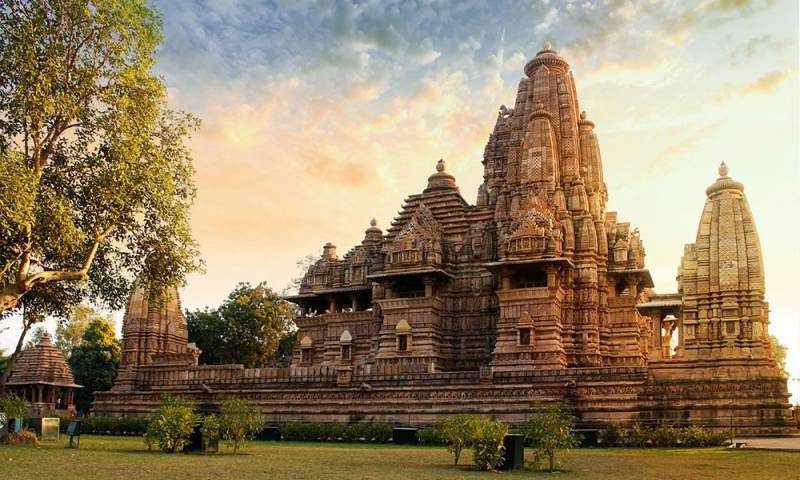
Sir Alexander Cunningham visited Khajuraho during 1852, 1864 and 1865. He recognised the importance of the monuments. Raja Deen Dayal was the first person who photographed the Khajuraho temples in 1882. While F Keithorn published the major inscriptions in 1892. The Temples of Khajuraho are divided into 3 groups: 1) Western Group 2) Eastern Group and 3) Southern Group. On the occasion of the visit of Their Excellencies the Viceroy Lord and Lady Irwin to Khajuraho in 1927, a Guide to the monuments at that place was written by BL Dhama. The book was edited by Rai Bahadur Daya Ram Sahni, M.A. Deputy Director General of Archaeology for Exploration. The 68-page book was published by the Times of India Press Bombay in 1927 on the Order of His Highness Sir Vishvanath Singh Sahib Bahadur K.CI.E, Maharaja of Chhatarpur, India.
- A Guide to Amber (Jaipur), 1931.
Amber Fort is located 11 kilometers from Jaipur, Rajasthan, India. A Guide to Amber was compiled by BL Dhama of the Archaeological Survey of India and it was published from The Times of India Press Bombay in 1931. The preface of the book was written by the author in March 1931. The book has 57 pages in total with plates. In the Preface of the book, BL Dhama says “This little Guide to Amber, the ancient seat of the House of Jaipur, has been written in commemoration of the happy occasion of His Highness the Maharaja Sawai Man Singh II’s investiture on the throne of his distinguished predecessors, and it is hoped will serve as a useful cicerone for visitors to Amber.” He again writes that, “A preliminary Note of Inspection on a few places of interest was drawn up by the writer in 1928 in the course of his official visit, and the work deserves to be followed up, as since the days of General Cunningham little has been done for rescuing from the ravages of jungle and meshes of oblivion the immense archaeological and historical wealth which is the pride of the State”.
- A Guide to Jaipur and Amber, 1948
A Guide to Jaipur and Amber was written by BL Dhama, Ex Superintendent of the Archaeological Survey of India. This book was published by Jam-e-Jamshed Press Bombay in 1948. The book was written on the occasion of the 48th Session of The All India Congress held in Jaipur in 1948. The book has the following Contents on 82 pages: Introduction, Jaipur, Itinerary Places of Interest, Environs of Jaipur, Amber. The book covers the history of Jaisingh, II, Ishwari Singh, Madho Singh I, Prithvi Singh, Partab Singh, Jagat Singh, Jai Singh III, Ram Singh II, Madho Singh II and Man Singh II from 1699 to 1922.
- Khajuraho, 1953
This book was compiled by BL Dhama and GC Chandra of ASI Agra Circle. It was published by the Director General of Archaeology in India in 1953. It has 26 pages. Mostly it deals with the Hindu temples. Another edition came out in 1957.
- Indian Architecture, Jaipur, 1956
BL Dhama published this book from Ajanta Printers Jaipur in 1968. It has 86 pages with plates.
- Jaipur and Amber, 1958
This book by BL Dhama was published by Shri Hanuman Press in 1958.
- Domestic Architecture 1962
Domestic Architecture / Hindu Shilpa was written by BL Dhama. Ajanta Printers Jaipur published this book in 1962. The length of the book is 26 pages with plates.
- Jaipur and Amber 1966
Jaipur was founded by Maharaja Sawai Singh II (1699-1743). While Amber had previously been the capital of a Rajput Kingdom. By 1966, both Amber and Jaipur were part of the newly formed state of Rajasthan, which came into existence in 1949 after the Independence of India. Author: Dhama, BL. Publisher Ajanta Printers Jaipur. Copyright 1966. In the Introduction of this book, BL Dhama mentions his house address for the first time as under: Swastika House, Station Road, Jaipur 1966.
- The Taj (English and Hindi) 1966.
Bibliographic Information of this book is given as under: The Taj by BL Dhama, 1966, 46 pages. The book provides the history and design of the Architecture of the Taj Mahal, the Mughal Monument at Agra. The book was published in both English and Hindi languages with black and white photographs. The same book TAJ was published by GC Sharma in 1992 with 43 pages.
A few pieces of rare Mughal chinaware were discovered by BL Dhama in the Agra Fort in the course of excavation. At the instance of Sir John Marshall, he also purchased an old photograph of the Taj, from Mr JK Johnson, I.C.S. (retired). This photo was taken from the Judge’s house, and was added to the collection. See Annual Report of the Archaeological Survey of India, Part 2, 1933, Page 143.
- A Guide to the Jaipur Astronomical Observatory
The book A Guide to the Jaipur Astronomical Observatory was authored by BL Dhama. This book was published by Jai Art Printers Jaipur on 1st January 1974. The book provides a guide to the Jantar Mantar, an astronomical observatory in Jaipur, Rajasthan, India.
- Good Advice (No details are found)
- Chapters from Indian Architecture (No details are found)
According to BL Dhama's book entitled Indian Architecture, the following books were under preparation for publication:
A Detailed History of Indian Traditional Architecture, A Guide to Rajputana, Memoir on the Temple of Jagat Shiromaniji at Amber, A Guide of Jaipur Astronomical Observatory with a street map of Jaipur, Astrological Yogas and Hindu Marriage based on Astrology.
How should we honour BL Dhama and his legacy?
It was after BL Dhama that Sir John Marshall named Dhama Area (DM) in the north, east and south of the Buddhist Stupa Complex in the Citadel Mound at Mohenjo-Daro during 1925-26. After 1931, he named L Area after him, which lies 28 meters (91 feet) south of the Stupa. The area was again excavated by Mackay in January 1927.
To honour BL Dhama, a University, College or School can be named after him in India and Pakistan. We should honour our heroes who shaped and preserved our past.
We should organise programmes/ commemorative events in both countries, especially on the birth and death anniversary of BL Dhama. Both governments should support conducting research on the life, works and achievements of BL Dhama and his contribution in the fields of Archaeology, Architecture and Epigraphy.
The relevant Governments, Organisations and Institutes should publicise his books. BL Dhama’s archival record, drawings and photographs should be collected. Articles on his achievements should be published through newspapers and magazines. Guide books by Dhama should be published to make the youth aware of his work. Moreover, efforts should be taken to launch his unpublished works.