

It was a humid August evening in Lahore when Mian Amer Mehmood took the stage before a packed hall. Speaking with the conviction of a reformer, he argued that Pakistan’s oversized provinces had failed to serve the people and that only bold restructuring could offer a way forward. Every division, he insisted, should be elevated into a province. His words drew strong applause, particularly from younger attendees frustrated with distant and unresponsive governance.
Yet when the floor opened for questions and I asked whether Pakistan’s parliamentary system could realistically manage thirty-two provinces—or if a presidential system might be better equipped—Mehmood smiled, adjusted his microphone, and moved on. The silence was telling. It revealed not only the sensitivity of the question but also the depth of the dilemma. If Pakistan were to attempt such a radical transformation, what political framework could sustain it?
The idea of turning all administrative divisions into provinces is not entirely new. Pakistan currently has four provinces, along with the Islamabad Capital Territory, Gilgit-Baltistan, and Azad Jammu and Kashmir. Yet governance gaps remain vast. Local governments are frequently sidelined, provincial bureaucracies are bloated, and service delivery lags behind rapid population growth. Advocates of the thirty-two province vision argue that smaller units would bring governance closer to the people, reduce entrenched elite capture, and allow new leadership to emerge from the middle class. Under such a model, divisional commissioners would be elevated to the status of chief secretaries, provincial cabinets would multiply, and service departments could, in theory, become more responsive. The logic is that smaller units can address local needs more effectively and distribute resources more fairly.
For Pakistan, where ethnic identities already overlap with provincial politics, adopting a model that deepens fragmentation could be perilous
For context, federations around the world show how oversized provinces or states can dominate national politics. California holds roughly one in eight United States residents, about 12 per cent. India’s Uttar Pradesh accounted for about 16.5 per cent of India’s population at the last census. Pakistan’s Punjab, by contrast, contains just over half the country’s people—about 53 per cent, according to the 2023 census. This imbalance underlines why advocates of reorganisation view it as a corrective measure to reduce Punjab’s overwhelming weight in national decision-making and resource allocation.
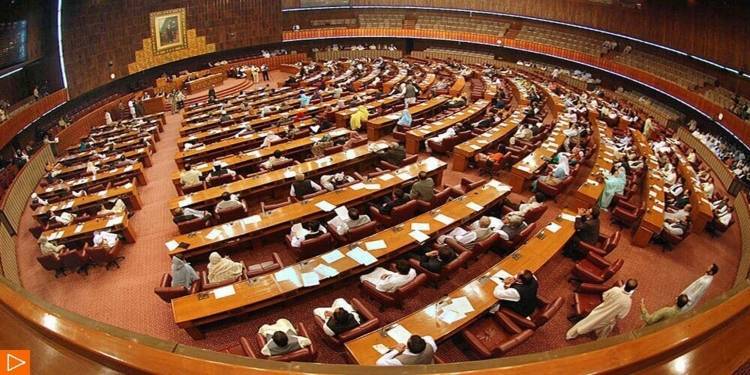
Critics, however, view the proposal as an administrative and political nightmare. Pakistan’s parliamentary system already struggles with coalition politics, regional grievances, and weak local representation. To expand the number of provinces eightfold would require not only constitutional amendments but also a complete overhaul of political culture. Questions of resource distribution, ethnic identity, and fiscal capacity would likely intensify. Moreover, Pakistan’s parliament—already strained in managing the complex federal relations of four provinces—may not be equipped to handle thirty-three.
Comparative experiences abroad offer both inspiration and caution. India is often cited as a model of adaptability. At independence, it had fourteen states. Over time, as linguistic and regional demands grew, successive governments reorganised the federation. Today, India has twenty-eight states and eight union territories. While the process has been contentious, the Indian parliamentary system has generally shown resilience in absorbing new states without collapsing into paralysis. The creation of Telangana in 2014, carved out of Andhra Pradesh, is one such example where local grievances were addressed through parliamentary mechanisms. For Pakistan, however, the scale of change envisaged is far greater. India’s expansions were incremental—one or two states at a time—whereas Pakistan’s proposal suggests leaping from four to thirty-three almost overnight.
Smaller provinces might amplify neglected voices, empower middle-class leaders, and reduce the stranglehold of entrenched elites
Nigeria provides another parallel, though under a presidential system. At independence in 1960, Nigeria had three regions. Amid ethnic conflict and civil war, successive regimes divided and re-divided the federation. Today it has thirty-six states and a powerful federal executive. The presidential model enabled the centre to maintain cohesion, distributing patronage across states and enforcing national policies through executive authority. Yet Nigeria’s experience also highlights risks. Multiplying states did not resolve ethnic tensions; it often created new arenas of contestation and increased dependence on federal oil revenues. Corruption remained entrenched, and governance improvements were uneven. For Pakistan, which already faces fiscal deficits and uneven development, Nigeria’s mixed results underscore the difficulty of assuming more provinces would automatically improve governance.
Ethiopia offers a more sobering case. Its constitution created an ethno-federal system, granting regions the right to secede. Initially seen as accommodating diversity, it has instead fuelled repeated crises. The Tigray conflict, ethnic violence in Oromia, and debates over self-determination illustrate how radical decentralisation without strong national integration mechanisms can threaten the state’s survival. For Pakistan, where ethnic identities already overlap with provincial politics, adopting a model that deepens fragmentation could be perilous.
Against this backdrop, the governance debate in Pakistan returns to the central question: can the parliamentary system realistically manage thirty-three provinces? Proponents argue that it could, provided institutional reforms accompany the restructuring. They imagine stronger parliamentary committees, enhanced coordination between the National Finance Commission and provincial bodies, and expanded roles for provincial assemblies. Opponents, however, point to the dysfunction of existing parliamentary practices. Coalition instability, frequent changes of government, and limited oversight already undermine executive performance. Multiplying the number of provincial leaders competing for federal resources could further paralyse decision-making.
This is why some voices cautiously suggest that a presidential system may prove more workable. Under such a framework, a directly elected executive could coordinate across dozens of provinces, enforce national priorities, and provide stability in ways that parliamentary coalitions often cannot. Nigeria’s experience indicates that while the risks are high, the presidential model at least offers clearer lines of authority. Yet introducing such a system in Pakistan would itself require constitutional upheaval and could ignite fierce resistance from political parties that benefit from parliamentary structures.
Policy implications, then, are complex. The risks of fragmentation are clear. More provinces could entrench ethnic divisions, intensify resource disputes, and overwhelm an already fragile bureaucracy. Yet the benefits of decentralised governance remain tempting. Smaller provinces might amplify neglected voices, empower middle-class leaders, and reduce the stranglehold of entrenched elites. Reconciling these tensions may require a phased and inclusive approach rather than sweeping reforms. Creating two or three new provinces as pilots could test administrative capacity and public acceptance. Strengthening local governments within existing provinces might also achieve many of the same goals without radical restructuring.
Ultimately, the dream of thirty-two provinces speaks to deep frustration with Pakistan’s governance model. People feel distant from power, underserved by bureaucracy, and overshadowed by elites. Mian Amer Mehmood’s vision captures this yearning for a system that listens and responds. Yet the unanswered question about governance frameworks remains pivotal. Without clarity on whether parliamentary institutions can evolve or whether a presidential model is needed, the debate risks remaining an inspiring slogan rather than a viable roadmap.
For Pakistan’s policymakers, the lesson from global parallels is not to dismiss the idea outright but to proceed with caution. Federalism can adapt, but only if it is managed through strong institutions, inclusive dialogue, and gradual reform. Whether four provinces or thirty-two, the essential challenge is not the number of units on the map but whether they deliver justice, opportunity, and dignity to the people who live within them.