

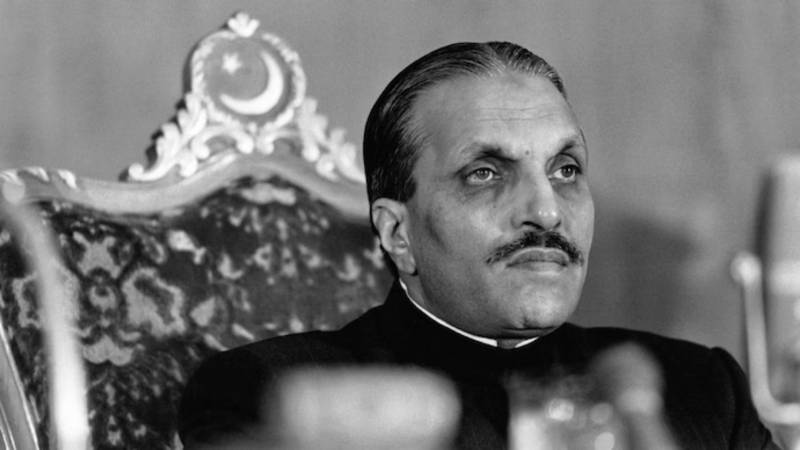
The trajectory of Pakistan's constitutional history is punctuated by military interventions, each leaving a lasting impact on the nation’s laws and politics. General Zia-ul-Haq's 1977 takeover, which saw the suspension rather than outright abrogation of the 1973 Constitution, stands as a significant moment in this narrative, a strategic choice seemingly echoed by later military interventions. Understanding the rationale behind this decision requires examining the military's evolving "constitutional understanding," particularly in the aftermath of Ayub Khan's era.
Ayub Khan's imposition of the 1962 Constitution after abrogating the 1956 document served as a crucial, albeit ultimately unsuccessful, experiment in military-led constitutional engineering. The failure of that imposed framework to gain lasting legitimacy likely informed the strategic thinking of subsequent military regimes. By 1977, the outright dismissal of the 1973 Constitution, a document forged in the aftermath of national trauma, carried the risk of similar public rejection and prolonged instability.
Zia's decision to suspend the 1973 Constitution hinted at a more pragmatic approach. Suspension offered a veneer of constitutional continuity, potentially softening domestic and international criticism. It also provided a flexible instrument for the regime to gradually reshape the political landscape through amendments and presidential ordinances, without the difficult and divisive process of drafting and legitimising an entirely new constitution. Tweaking existing provisions allowed for incremental change, enabling the regime to adapt and consolidate power on its own terms.
General Zia's preference for suspension over abrogation in 1977, and its subsequent adoption by later military regimes like Musharraf's, reflects an evolving and arguably more sophisticated "constitutional understanding" within the Pakistani military
This strategic preference for suspension and amendment over outright abrogation appeared to solidify in subsequent military takeovers. Pervez Musharraf's 1999 intervention mirrored Zia's approach, opting for suspension of the 1973 Constitution. Furthermore, the constitutional amendments enacted under Musharraf, much like Zia's 8th Amendment, focused on consolidating presidential powers and indemnifying the regime's actions, all while maintaining a semblance of civilian rule. This pattern suggests a deepening understanding within the military establishment: that control can be effectively exerted and legitimised through the manipulation of an existing constitutional framework rather than its outright rejection.
The shadow of the 1971 East Pakistan debacle – the secession of East Pakistan (now Bangladesh) following a brutal civil war – also likely loomed large for both Zia and subsequent military leaders. The secession underscored the fragility of national unity and the dangers of imposing constitutional solutions without a broad consensus. Suspending a constitution that represented a (however imperfect) agreement on the structure of the remaining Pakistan might have been perceived as a less destabilising path than completely discarding it and risking further division. The focus remained on consolidating control in the remaining nation under a familiar, albeit modified, framework.
In conclusion, General Zia's preference for suspension over abrogation in 1977, and its subsequent adoption by later military regimes like Musharraf's, reflects an evolving and arguably more sophisticated "constitutional understanding" within the Pakistani military. Informed by the lessons of past interventions and the pragmatic pursuit of control, this approach favors the strategic manipulation of existing constitutional frameworks through suspension and targeted amendments, allowing for the consolidation of power while navigating the complex political landscape. This historical understanding continues to subtly shape Pakistan's political landscape in 2025, where the military’s enduring influence, even during democratic periods, often operates through nuanced legal and constitutional maneuvers rather than overt takeovers, a pattern that remains central to the ongoing debates about civil-military relations in the country.