

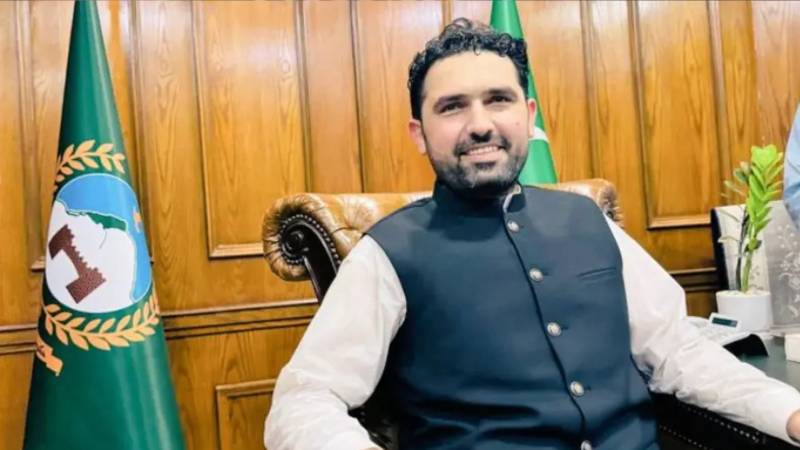
In a country where political influence has often been shaped by military establishments and entrenched family legacies, Pakistan Tehreek-e-Insaf (PTI) has presented an alternative model by promoting individuals from middle-class and grassroots backgrounds. One example of this shift is Sohail Afridi, a political worker from the former Federally Administered Tribal Areas (FATA), specifically Khyber, who began his career as a student activist and later emerged as a provincial leader.
Afridi’s political journey began at the University of Peshawar, where he was among the founding members of the Insaf Student Federation (ISF) in 2007. Over time, he served as District President and later Provincial President of ISF and the PTI Youth Wing. His involvement reflects the early years of PTI’s grassroots mobilisation, a period characterised by student engagement and volunteer activism rather than established political influence.
A photo that has recently resurfaced on social media shows Afridi with Tahir Dawar, another founding member of ISF, during their university days, holding a notebook while discussing party matters. For many, the image represents a formative stage in PTI’s evolution, when young activists were motivated by ideals of political change and social reform. Their efforts reflected a broader aspiration: to create opportunities for citizens from non-elite backgrounds to participate in governance.
This principle became part of PTI’s organisational identity, promoting the idea that leadership positions should not be confined to established families or economic elites. Afridi is one of several early ISF members, including Murad Saeed, Shahid Khattak, Meena Khan Afridi, and Shafqat Ayaz, who went on to assume legislative or administrative roles within the party and government structures.
In the 2024 Khyber Pakhtunkhwa provincial elections, Sohail Afridi contested from PK-70 (Khyber-II) as a PTI candidate and secured a victory. He was subsequently appointed as Special Assistant for Communication and Works in the Gandapur administration and later as Minister for Higher Education. His steady progression from student activism to public office illustrates one of PTI’s central claims—that political advancement within the party can be achieved through merit and long-term dedication rather than inheritance.
Cases like Sohail Afridi’s illustrate an evolving trend in Pakistan—one where alternative pathways to leadership are becoming more visible
Pakistan’s political history, however, has been shaped by strong dynastic traditions. Academic studies and election data analyses indicate that between 40% and 60% of Pakistan’s legislators belong to political families. Research by the Pakistan Institute of Development Economics (file.pide.org.pk) highlights how dynastic ties significantly shape party nominations and electoral outcomes.
This trend has been particularly visible in the country’s major parties. For instance, the Pakistan Muslim League-Nawaz (PML-N) has been closely identified with the Sharif family since its emergence in the early 1990s. Nawaz Sharif served as Chief Minister of Punjab (1985–1990) and Prime Minister on three occasions (1990–1993, 1997–1999, 2013–2017). His brother Shahbaz Sharif has also held multiple terms as Chief Minister and later served as Prime Minister (2022–2023, 2024–present).
The next generation of the Sharif family has continued this political lineage: Hamza Shahbaz briefly served as Chief Minister in 2022, while Maryam Nawaz currently holds the same office (2024–present). She previously led the PML-N’s 2013 election campaign, served as Chairperson of the Prime Minister’s Youth Programme (2013–2014), and currently holds senior party positions.
When compared with figures like Sohail Afridi, the contrast in political trajectories becomes evident. Whereas the Sharif family’s influence stems from an established industrial and political background, Afridi’s experience is rooted in student politics and grassroots mobilisation. PTI’s leadership selection process has often emphasised internal party work and activism, contrasting with dynastic succession patterns seen in some traditional parties.
In the recent race for the Chief Minister position in Khyber Pakhtunkhwa, these differences were again visible. PML-N nominated Sardar Shahjehan Yousaf, son of former Federal Minister Sardar Muhammad Yousaf Zaman, reflecting the continuation of family-based political participation. Jamiat Ulema-e-Islam-Fazl (JUI-F) put forward Maulana Lutf-ur-Rehman, the brother of party chief Maulana Fazlur Rehman and son of former Chief Minister Mufti Mahmud—another instance of political lineage. Similarly, the Pakistan People’s Party (PPP) nominated Arbab Zarak Khan, son of senior party leaders Arbab Alamgir Khan and Asma Arbab Alamgir.
PTI, on the other hand, nominated Sohail Afridi, whose background as a student activist and non-dynastic political worker stood in contrast to these selections. Analysts viewed the choice as consistent with PTI’s stated commitment to promoting candidates from within its activist base. However, critics argue that while PTI’s approach may represent a departure from dynastic norms, internal party hierarchies and centralised decision-making remain influential factors across Pakistan’s political spectrum.
Pakistan’s broader political evolution continues to grapple with the balance between dynastic continuity and merit-based representation. For decades, political participation was largely dominated by families with economic power or long-standing political networks, leaving limited space for individuals from lower or middle-class backgrounds.
Parties such as PTI have sought to challenge this pattern by highlighting the role of grassroots workers and local organisers. This strategy has contributed to the party’s consistent electoral success in Khyber Pakhtunkhwa, where it has positioned itself as more accessible to ordinary citizens. Yet, political analysts caution that lasting institutional change requires sustained internal reforms, transparent decision-making, and equitable opportunities across all levels of governance.
Academic and policy analyses have often framed PTI as a populist or anti-status quo movement that mobilised around themes of accountability, anti-elite politics, and institutional reform. Studies published by the European Centre for Populism Studies describe PTI’s rhetoric as challenging entrenched political families and patronage networks. Likewise, public opinion polls by Gallup Pakistan have consistently shown that many voters view PTI as an outsider party representing change from traditional dynastic politics, even if assessments of its governance performance remain mixed.
While debates over dynastic versus merit-based politics continue, cases like Sohail Afridi’s illustrate an evolving trend in Pakistan, one where alternative pathways to leadership are becoming more visible. Whether this marks a lasting transformation or merely a temporary shift remains open to debate among scholars, observers, and citizens alike.