

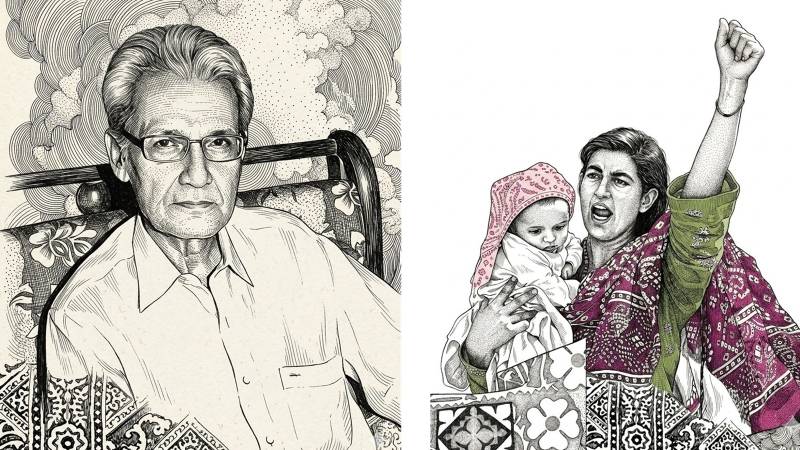
The path of the critic is no straight road, but a spiral ascent forged through a lifelong devotion to the word. Scholarship is born where the heart of the book meets the soul of history. Like the masters before him, Rasool Bakhsh Palijo bound the beauty of art to the hard truths of Sindh’s suffering. He raised his genius upon two enduring pillars: an unquenchable thirst for knowledge, and a disciplined method that melted raw learning into the gold of insight. He did not merely observe the world; he mastered the art of seeing through it.
This article explores how Rasool Bakhsh Palijo evolved into a forceful voice in Sindhi literary criticism. A close reading of his life and work reveals a clear and deliberate pattern. That pattern began with general reading and a deep engagement with Sindh’s classical literature. He then widened his vision through the critical literature of the Left. Armed with these tools, he examined and judged the writings of his own age with fearless clarity. In the past, most writers used very formal and difficult language. He chose to write as if he was having a conversation instead. This oral narrative style ensured his messages were accessible to everyone rather than just a small group of scholars. The following sections use specific headings to trace his impressive journey toward becoming a critic in detail.
General Reading and Global Perspectives
Rasool Bakhsh Palijo began his intellectual journey in the enchanted world of early translations of Alf Laila. There he encountered dreamlike figures such as Anjuman Ara, Gulparizad, and Shahzado Jan Alam, all moving through radiant palaces and magical realms. His imagination expanded further through the writings of Muhammad Ali Diplai, whose novels and novellas challenged Pir-parasti and questioned inherited authority.
While studying at Sindh Madressatul Islam, Palijo served as the library in-charge, surrounding himself with books and scholarship. He immersed himself in texts on Fiqh and Hadith and carefully studied the writings of Abul Ala Maududi, a scholar and founder of Jamaat-e-Islami. In Karachi, his friend Nabi Ahmed introduced him to Karl Marx and Friedrich Engels. He read foundational books like The Communist Manifesto, The German Ideology, and The Condition of the Working Class in England. He also studied The Civil War in France, Socialism: Utopian and Scientific, and The Origin of the Family, Private Property and the State. These texts reshaped his entire worldview. He realised that physical needs like food and shelter dictate human thought. He learned that labourers endured brutal conditions during the Industrial Revolution. He explored the role of workers in the Paris Commune. These writings taught him that social change requires a scientific approach. He saw how private property transforms social structures. Ultimately, he understood that history is a struggle between workers and wealthy owners.
During the cultural repressions of the 1960s, Palijo penned Andha Oonda Weejh as a fierce, articulate defense of progressive Sindhi poetry and the controversial poet Sheikh Ayaz
This encounter marked a decisive shift in his growth. Yet even as he embraced new ideologies, he never abandoned the classical Sindhi canon. He closely observed social change within Sindh and studied how different political eras shaped writers and their art. In doing so, he created a bridge between local traditions and global intellectual movements. Through the lenses of modernism and post-colonial thought, he began to reinterpret Sindhi literature with fresh critical energy.
Reading remained an enduring passion throughout his life. In the 2009 memoir Manek Chonoon Jin Jo, the late Syed Muhammad Alam Shah recounts a memorable day in London when he accompanied Palijo into a bookshop in the morning and emerged only at dusk. During those long hours, Palijo selected nearly fifty books. When reminded of the passing time, he insisted on searching every shelf, fearing that these intellectual treasures might disappear before his next visit. Even after purchasing them, he remained deeply anxious about how the books would safely reach Sindh. Six months later, the collection finally arrived. This hunger for knowledge never weakened. Until his final days at the South City Hospital in Clifton, Karachi, on the 7th of June 2018, Palijo remained immersed in books and music, faithful to the life of the mind.
Palijo read everything within his reach. He read books with purpose, but he also read whatever fragments the world placed before him. Torn magazine pages, old newspapers, international journals like Time and Newsweek — nothing escaped his attention. If he could hold a piece of writing in his hands, he would read it. While his intellectual interests were vast, the classical Sindhi voices of Shah Latif, Sachal, and Sami permanently anchored Palijo’s thought.
An Analytical Reading of Sindh’s Classical Literature
Rasool Bakhsh Palijo anchored his intellectual world in Sindh’s classical and folk literature. This grounding gave him cultural depth and stability. It allowed him to move confidently toward modern literary movements without losing touch with his roots. He ventured into deep intellectual waters yet always knew how to return to the shore. Through his study of classical texts, he discovered the first principles of art itself. In the soil of Sindh, he found the roots of tragedy, the scale of epic vision, and the cutting edge of irony. These ancient works became his permanent benchmark. They provided him with both the authority to judge and the strength to launch a new literary consciousness. Mastery of the classics transformed him into a disciplined critic whose eyes remained fixed equally upon the past and the future.
Palijo followed the path of earlier Sindhi intellectuals while also shaping a distinct vision of his own. He, like his seniors, reimagined the heroines of Shah Abdul Latif Bhittai as symbols of resistance and human dignity. In speeches and interviews, he described Marvi as the embodiment of patriotism, Sasui as the icon of struggle, Sohni as the spirit of sacrifice, Noori as the image of humility, Momal as the voice of repentance, Leela as the grace of forgiveness, and Sorath as the symbol of devotion. He rejected the idea that these women were helpless victims trapped by fate. Instead, he portrayed them as courageous and self-aware figures who shaped history through resolve and independence. Through this interpretation, Bhittai emerged not merely as a poet of mysticism, but as a radical guide and a champion of women’s strength.
From the 1950s until his death in 2018, Palijo remained one of the strongest interpreters of Bhittai’s thought. Like many progressive Sindhi intellectuals, he saw Bhittai’s poetry as a call for cultural awakening. The 1960s opened with the great Sindhi language movement, followed by years filled with struggle, purpose, and collective energy. There was the rise of Bazam Sofia-e-Sindh, the observance of Sindhi Language Day, the movement to make Sindhi the official language, and the wider campaign to secure its national recognition. Through every Sindhi Sham, Latif Day, and Jashan-e-Latif, Palijo stood present at the heart of the movement, speaking passionately about the power and dignity of Sindh’s classical heritage. No doubt, he saw the movement not simply as protest, but as the birth of a new cultural consciousness. That insight gave his criticism emotional force and historical depth.
A New Worldview: The Literature of the Left
The socialist revolution transformed the landscape of literature. Writers increasingly turned their attention toward social contradictions, inequality, and class struggle. Advocates of socialist thought insisted that literature must serve a historical purpose. Russian and Chinese literatures became models for this transformation. Russian realism, led by figures such as Maxim Gorky, introduced the figure of the proletarian hero and redirected literature toward the struggles of ordinary people.
Rasool Bakhsh Palijo adapted Lenin’s ‘National Question’ to defend Sindhi identity and used Maoist strategies to mobilise the rural masses. He studied Lenin’s book What Is to Be Done?, to understand why revolutions need disciplined political parties. He explored Lenin's Imperialism, the Highest Stage of Capitalism to see how resource hunts spark international conflict. He thought Lenin's The State and Revolution as a manual to dismantle old structures and build a socialist state. He turned to The April Theses, also by Lenin, for the direct instructions that steered the Bolsheviks toward power. Palijo learned that Lenin’s works serve as practical guides for statecraft and strategy, offering a concrete roadmap for gaining and maintaining political control in a turbulent world.
Palijo also read Quotations from Chairman Mao to learn the core beliefs of the Cultural Revolution. He studied On Guerrilla Warfare to see how small forces defeat stronger enemies through local support. He analysed On Practice and On Contradiction to understand how action creates knowledge and conflict drives progress. He reviewed On Protracted War to learn the strategy of defeating invaders through persistence. Palijo understood that Mao Zedong adapted European communism for Asia. Mao focused on the peasantry and long-term warfare, effectively shifting the revolutionary centre from urban factories to the rural countryside.
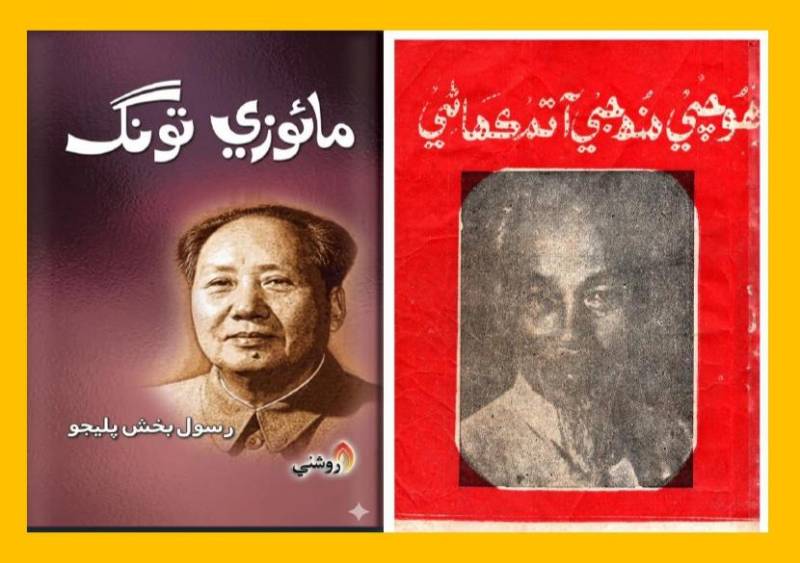
Rasool Bakhsh Palijo translated and presented biographies of Mao Zedong and Ho Chi Minh, whom he regarded as the twin pillars of Asian revolution. Their lives reshaped the twentieth century by challenging imperial power and mobilising the masses.
The Sindhi translation of Mao Zedong’s biography narrated his rise from a peasant family in Hunan to the founding of the Chinese Communist Party in 1921. It described his leadership during the legendary Long March of the 1930s, a brutal journey that saved the revolutionary movement from collapse. Mao’s faith in the rural peasantry rather than the urban worker became central to his political philosophy. In 1949, he seized power and transformed China into a global force through sweeping programmes such as the Great Leap Forward. His theories argued that constant struggle keeps a nation alive and strong.
Ho Chi Minh’s path unfolded differently yet led toward the same revolutionary horizon. As a young man, he travelled across the world and worked on French ships before founding the Viet Minh movement to fight for Vietnamese independence. Over time, he became a father figure to his people, affectionately known as “Uncle Ho.” Until his death, he remained a symbol of humility, endurance, and unbreakable resistance.
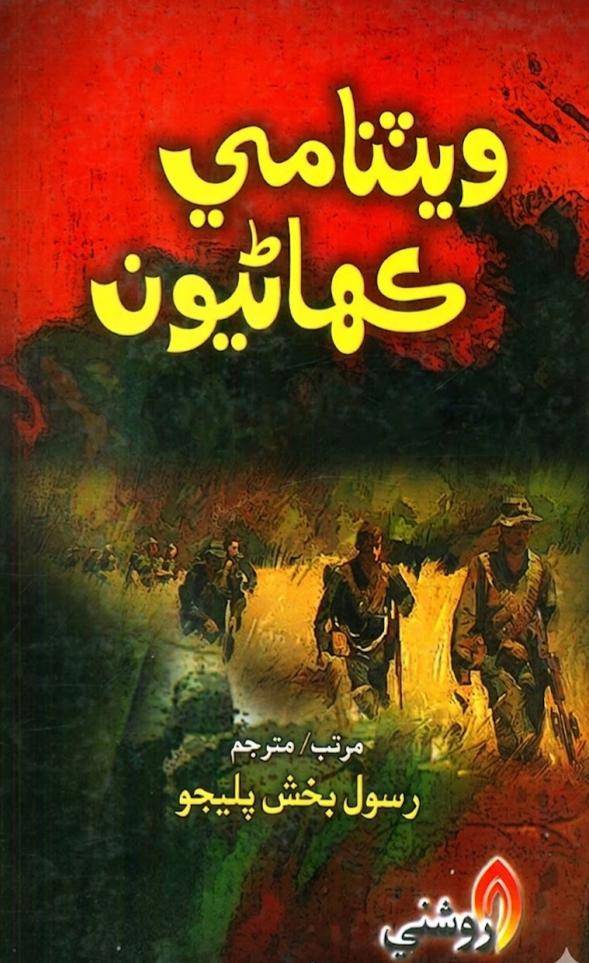
Palijo also translated and compiled some selected stories related to Vietnam’s war and society. The Sindhi translation of those stories was presented through Vetnami Kahanyoon. First published in 1977 and later reissued by Roshni Publication in 2015, the work brought together stories by writers including Palijo himself, Dr Najam Abbasi, Ali Muhammad Pervaiz, Syed Akbar, Naseem Sindhi, Panah Jigir Sindhi, Salam, Zafar Ali, and Jamal Sindhi. These stories celebrated bravery, commitment, sacrifice, and guerrilla resistance against American military power. Chinese and Vietnamese literatures together created a revolutionary narrative that challenged decaying traditions and cleared the ground for a new modern identity.
The Rise of Palijo’s Critical Narrative
The powerful prose of Rasool Bakhsh Palijo emerged as a direct response to the aggressive campaigns of right-wing writers. In the 2017 research book Sindhi Adabi Sangat - A Movement, Dr Adal Soomro documents the fierce ideological battle between progressive and reactionary writers in Sindh during the 1950s and 1960s. According to Dr Soomro, this conflict grew out of painful political realities: the separation of Karachi from Sindh, the exclusion of the Sindhi language, the imposition of One Unit, the Martial Law of Ayub Khan, and the Sharif Commission. As nationalist thinkers and writers demanded cultural and political rights, sections of the Urdu press launched smear campaigns against them. Progressive writers were branded agents of India or Russia and accused of being anti-Islamic. Even the Hyderabad-based Sindhi daily Mehran joined the attack, accusing Sindhi intellectuals of carrying “Hindu thoughts.”
Amid this climate, Ghulam Muhammad Grami published his landmark essay Mashriqi Shairia ja Fanni Qadar ain Rujhanat. The work offered a masterful defence of Sindhi poetic tradition. Grami reinterpreted controversial symbols such as wine and infidelity as metaphors of divine love rather than moral corruption. Tracing the development of Sindhi poetry from Bhittai to Sheikh Ayaz, he argued that spiritual love transcends religious prejudice. Through immense scholarship and hundreds of references, he defended modern Sindhi poetry and built a bridge between tradition and innovation.
During those difficult years, the Sindhi Adabi Sangat spearheaded a movement of cultural resistance, standing shoulder-to-shoulder with politicians, students, and everyday citizens. It was in this charged atmosphere that Rasool Bakhsh Palijo penned Andha Oonda Weejh, which first reached the public through the pages of the newspaper Khadim-e-Watan. As Idrees Laghari recounts in the 2022 biography, Autobiography of Rasool Bux Palijo, the poet Shamshir-ul-Haidari once challenged Palijo to confront the reactionary critics head-on. Palijo accepted without a moment's hesitation, drafting a powerful response. From that day forward, Shamshir made regular journeys to Thatta, personally collecting each new instalment to ensure Palijo’s voice continued to resonate in print.
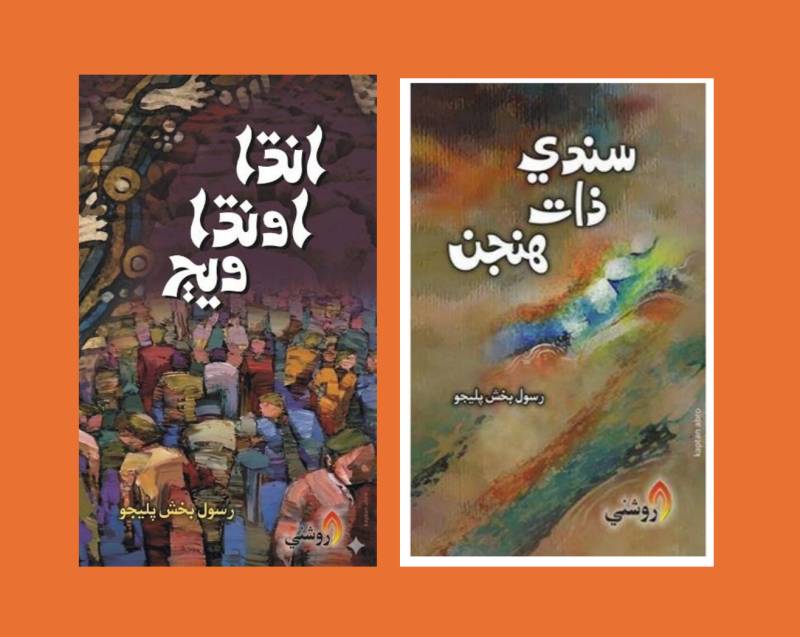
Andha Oonda Weejh is a collection of seventeen articles, many of which open with verses by Shah Abdul Latif Bhitai. The work emerged at a time when reactionary forces were targeting progressive Sindhi literature and branding Sheikh Ayaz a heretic. Through this book, Palijo defended Sindhi poetry and the genius of Ayaz with unmatched force.
He dismantled narrow narratives, exposed the prejudices of literary gatekeepers, and argued that Ayaz represented a milestone not merely for Sindhi literature, but for world poetry itself. Consequently, the book became a monument of progressive criticism. Palijo’s arguments were sharp yet clear, passionate yet disciplined. First published in 1967 with a preface by Ibn-e-Hayat Panhwar, the book has continued to attract readers across generations. Later editions were released through Sindhi Sahat Ghar and Roshni Publication, while digital versions now circulate widely online.
Palijo also authored Sandhi Zaat Hanjan, a companion work to Andha Oonda Weejh. Though publication delays postponed its release until 1983, the book eventually appeared through the Sindhi Adabi Publishing Agency in Hyderabad and later went through multiple editions. In its preface, Muhammad Ibrahim Joyo observed that Palijo was confronting a dangerous enemy within literary circles: self-proclaimed modernists who, in his view, weakened the moral and social foundations of literature.
Palijo argued that novelty alone never guarantees artistic value. He believed many modernists had abandoned human concerns and refused to see literature as a reflection of society or a tool for change. Instead, they separated art from lived experience and transformed it into a hollow exercise detached from struggle and humanity. Their work, he argued, served only a narrow elite and abandoned the language of ordinary people. Literature became, in his words, a private code rather than a shared human voice.
Despite its aggressive tone, the book Sandhi Zaat Hanjan remained broad and open-minded in its ideas. Palijo explored global literature, philosophical traditions, Greek thought, the European Renaissance, Islamic scholarship during the Abbasid era, Latin literature, Iranian history, and literary developments across Asia and South Asia. He discussed thinkers such as Rabindranath Tagore, Salman Rushdie, and Jean-Paul Sartre, bringing complex philosophical debates into language ordinary readers could grasp.
To this day, critics of Sindhi literature regard the book as essential reading. It remains a foundational guide for emerging writers and critics seeking to understand the craft of literary criticism and the moral responsibilities of the written word.
The Dictation Method: An Oral Style of Writing
Rasool Bakhsh Palijo transformed writing into a collective intellectual ritual. From the 1970s through the 1990s, he dictated his works to a close circle of companions and fellow activists. Among them were Syed Alam Shah, Gul Hasan Kerano, Dr Ali Gul Maitlo, Dr Bakht Jamal, Dr Ayoub Shaikh, Rehana Shaikh, Sajida Shaikh, and Zahida Shaikh. Belonging to the Sindhi Awami Tehreek, Sindhyani Tehreek, or Sindhi Girls Students Organisation, these individuals served as scribes, listeners, and intellectual companions. Dictation shaped his prose. His writing pulsed with conversational rhythm, spontaneous movement, and rhetorical energy. Syntax rose directly from speech. This created a distinct oral narrative. Through this technique, the written word retained the warmth of a living human voice.
Palijo’s vocal technique distilled dense theory into sharp, lyrical images that struck with instant impact and haunted the mind. Readers experience this mastery across his entire body of work. He applied this technique in writing about political ideologies, constitutional debates, the federation, and the refined themes of Sindhi literature. In all written forms, his dictated style carries a lasting, rhythmic force. Without doubt, he introduced a fresh voice and a new way of writing to the Sindhi readers.
In conclusion, Rasool Bakhsh Palijo emerged as a literary critic through the extraordinary fusion of global knowledge, cultural rootedness, and progressive political thought. His devotion to reading gave him a sweeping understanding of philosophy, history, and literature, while his engagement with Sindhi classical traditions connected him deeply to the cultural spirit of Sindh. Embracing Left-oriented ideas, he developed a critical framework capable of confronting injustice, feudalism, and intellectual stagnation. Be assured, Palijo kindled the spirit of a nation. He became a lamp for the shackled. He led the wanderer from the shadows. He pointed the way to a righteous dawn.