

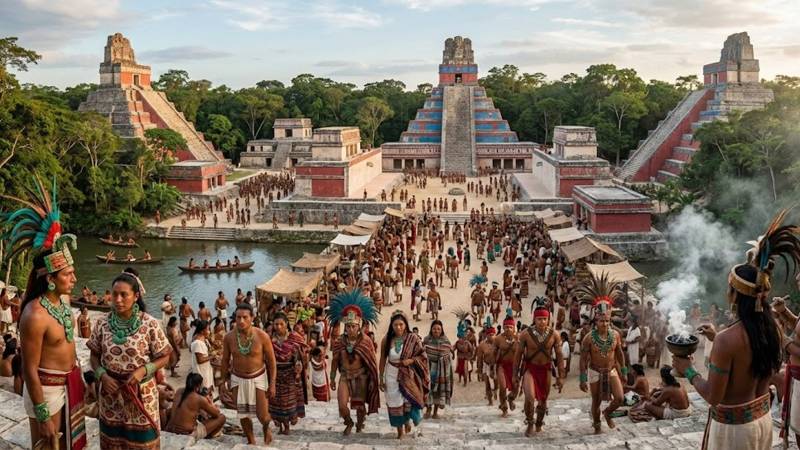
The Mayan civilization developed across the areas that now constitute southern Mexico, Guatemala, Belize, El Salvador, and Honduras, from ~2000 BC to the Spanish arrival, with a peak during a period known as the Classic Period (200–900 AD). The Maya developed the most sophisticated writing system in the Americas, invented the concept of zero, created intricate calendars, and excelled in astronomy and art.
They were organized into powerful city-states (eg Tikal, Palenque, Copán) with stratified societies, complex religious beliefs (polytheistic, ritual sacrifices), and extensive trade networks. They cultivated corn (maize) as a staple, alongside beans, squash, and avocado, using methods like slash-and-burn and terracing.
Their southern cities collapsed around 900 AD due to a variety of factors like prolonged drought, deforestation, overpopulation, intense warfare, and resource strain, though the northern cities persisted longer.
Today, millions of Mayan descendants populate the regions where the civilization once prevailed, speaking various Mayan languages and maintaining cultural traditions. Even though the Spaniards conquered the Mayan territories, they were unable to suppress all expressions of native identity and culture.
I did not know any of this until I saw the Mel Gibson film Apocalypto, soon after it was released in 2006. It is set around the year 1511 and portrays the journey of a young man, a late Mesoamerican hunter and his fellow tribesmen who are captured by an invading force, presumably the Spaniards. After a raid on their village, they are brought on a perilous journey to a Maya city for human sacrifice at a time when the Maya civilization is in decline.
The movie is stunning and beautifully filmed and acted. It sparked an interest in me, to make time and visit some of the areas where the Maya civilization prevailed. Finally, I arrived in Cancun in mid-February 2018. That’s when I got to appreciate the grandeur of the Mayans.
On the spring and fall equinoxes, the play of late afternoon light and shadow create the illusion that a serpent is moving down 365 steps on the pyramid until it arrives at the base of the Kukulcán pyramid
Cancun is located in southeast Mexico, on the northeastern tip of the Yucatán Peninsula, bordering the Caribbean Sea in the state of Quintina Roo, famous for its stunning white-sand beaches, turquoise waters, resorts, and vibrant nightlife. It’s a major tourist hub, especially for people from the US and Canada. But it also draws people from all over the world. In the last couple of years, I have even met a few people from Pakistan who came there to attend a several weeklong course in meditation.
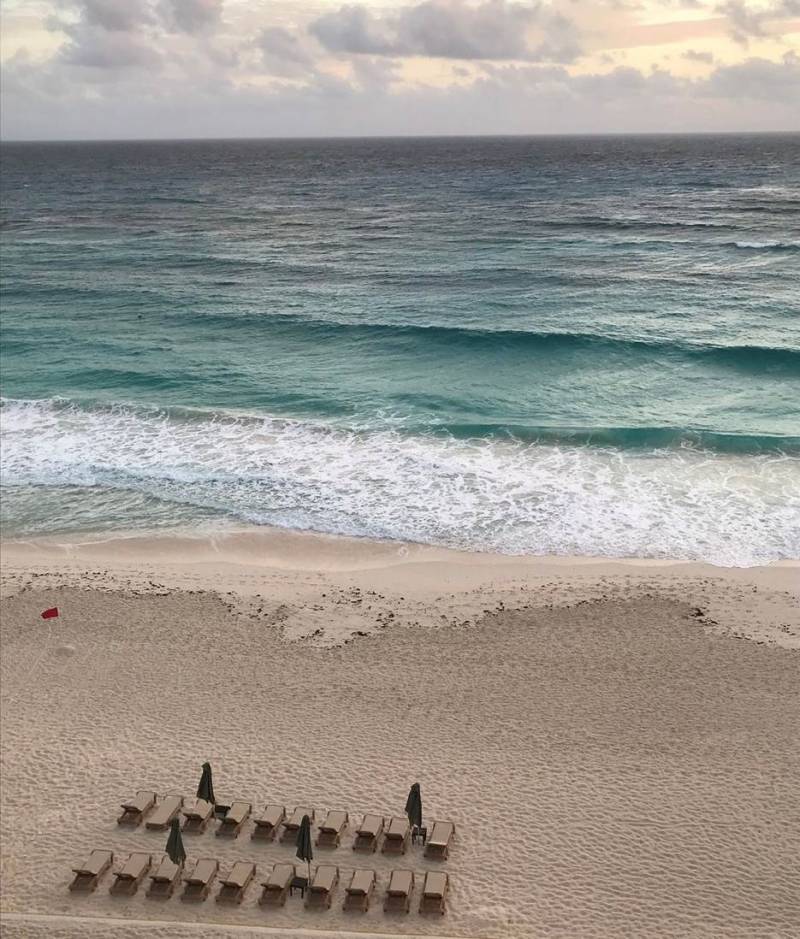
Our hotel was located on the beach. Every morning, we would wake up at sunrise, enjoy the views from the balcony, and go for a walk on the sandy beach. It felt heavenly. The water of the Caribbean Sea is warm, unliked the cooler waters of the Pacific on Hawaiian beaches. Cancun's sand comes from crushed coral and shell, which also keeps it cool underfoot, making it exceptionally bright and desirable.
Cancun has many fine restaurants that offer a wide range of Mexican, American, and European cuisines and many shopping centres. That keeps many visitors busy and they never venture out of town. But we had also come to enhance our knowledge of the Maya.
The first attraction we visited was Chichen Itza, a pre-Columbian city which encompasses seven square miles. The name translates to “At the mouth of the well of Itza.” It was one of the largest Maya cities, located inside a dense jungle. The site was inhabited for about 800 years, beginning as early as 432 AD during the Mayan Classic Period.

Its most famous attraction is a pyramid known as the Temple of Kukulcán, which is a Maya feathered serpent deity similar to the Aztec Quetzalcoatl. This is considered to be one of the seven wonders of the new world. The Spaniards called it El Castillo (The Castle). To the Maya it was the centre of the universe. It is built on top of a smaller pyramid, since the Maya did not believe in destroying an older building to build a new building.
The soil in the area is only a couple of inches thick. Underneath is an endless slab of limestone. The pyramid is made of limestone and stands nearly 100 feet tall. Building it without metallic tools must have taken a lot of hard work since the only tools available in those days were made of pointed stones.
The pyramid’s uniqueness comes not from its modest height but from its design and orientation. The heads of a serpent are carved at the four corners where the pyramid meets the ground. On the spring and fall equinoxes, the play of late afternoon light and shadow create the illusion that a serpent is moving down 365 steps on the pyramid until it arrives at the base and disappears. Was this by design, or is that an accident? That question continues to be debated by archaeologists.
There are at least thirteen ballcourts for playing the Mesoamerican ballgame near the pyramid, but the Great Ball Court about 150 meters to the north-west of the Castillo is the most impressive. It is the largest and best-preserved ball court in ancient Mesoamerica. It measures 168 by 70 meters.
At one end of the Great Ball Court is the North Temple, also known as the Temple of the Bearded Man (Templo del Hombre Barbado). Built into the walls are the temples of the jaguar, a motif that permeates several of the architectural sites in the area.
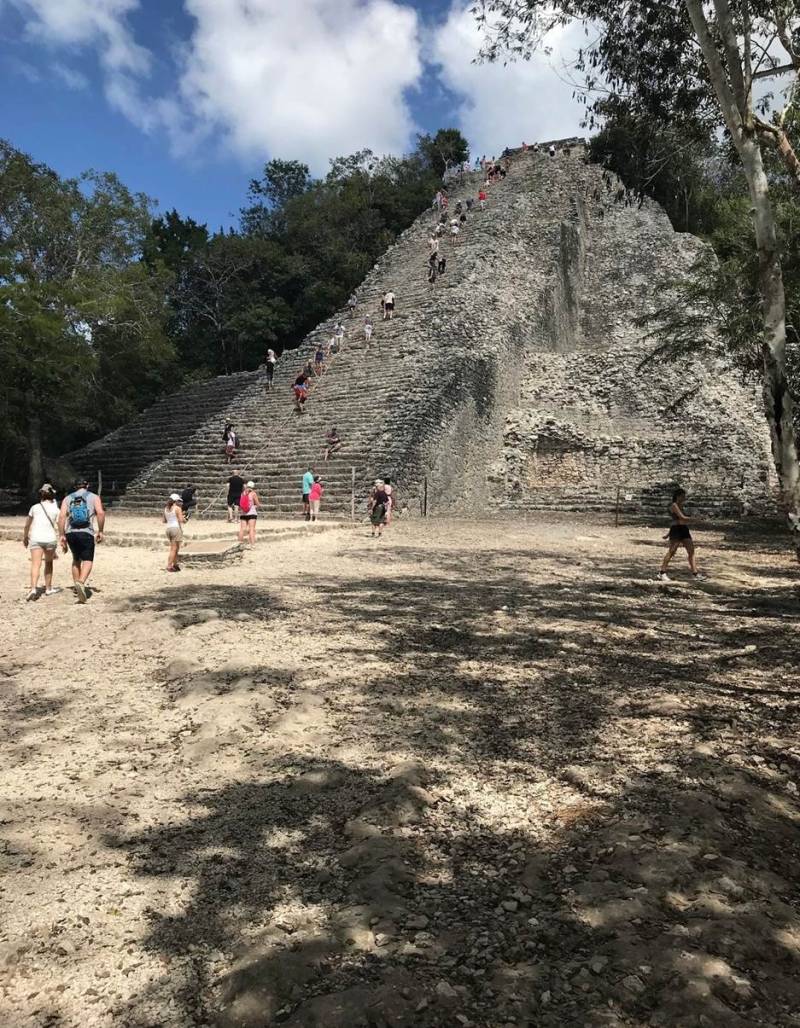
The Yucatán Peninsula is a limestone plain, with no rivers or streams. But it has several underground sinkholes known as cenotes. They are encased within large caves. The pyramid is in the centre of four cenotes, and it is built atop a fifth cenote.
We visited one cenote and saw a few people swimming with ease in the crystal-clear water. These water-filled sinkholes were naturally formed by the collapse of limestone and are located across the Yucatan Peninsula, which is estimated to have 10,000 cenotes. The ancient Maya commonly used cenotes for water supplies, and occasionally for sacrificial offerings.
Later, we visited a museum which had several exhibits about the Mayan civilization. At a store, we bought a copy of the Mayan calendar. Throughout Mesoamerica, a calendar cycle of 13 periods of twenty days each was used. It has been in use for the last two thousand years. The Maya called it tzolkin while the Aztec called it tonalpohualli. This 260-day calendar had a ritual and a prophetic use.
Finally, we visited Tulum, a smaller, fortified port city, famed for its dramatic Caribbean coastal cliffs. It was one of the last cities built by the Maya and thrived from 1200-1521 AD. Tulum also has several Mayan ruins, but they are smaller in size and not as well restored as those in Chichen Itza. One of the most notable structures is the Temple of the Frescoes, which contains murals that once depicted Mayan cosmology.
Tulum served as the centre of maritime trade for the Maya. Today, it is a major tourist destination, mostly for the stunning views of the sea. And the colour of the sand on the beach is as pure white as it gets anywhere in the world, even ahead of the sands in Greece.
The six days we spent in Cancun and its neighbouring areas went fast. There was something new to do every day. Each day was full of learning opportunities, which were often accompanied with great views and fine food, a unique combination.