

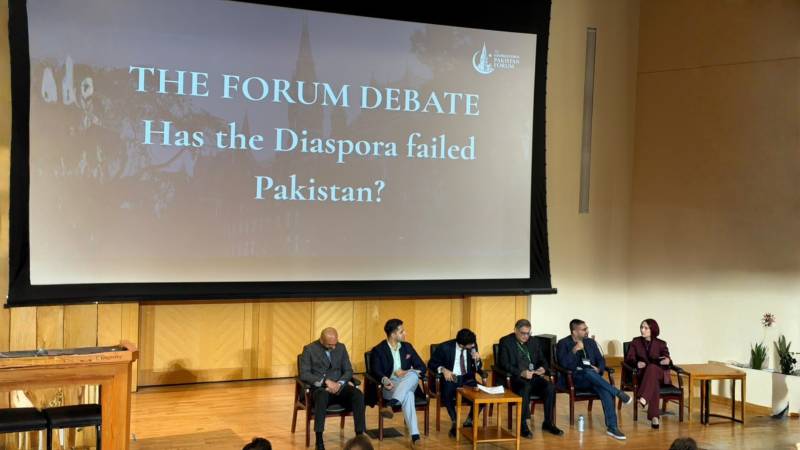
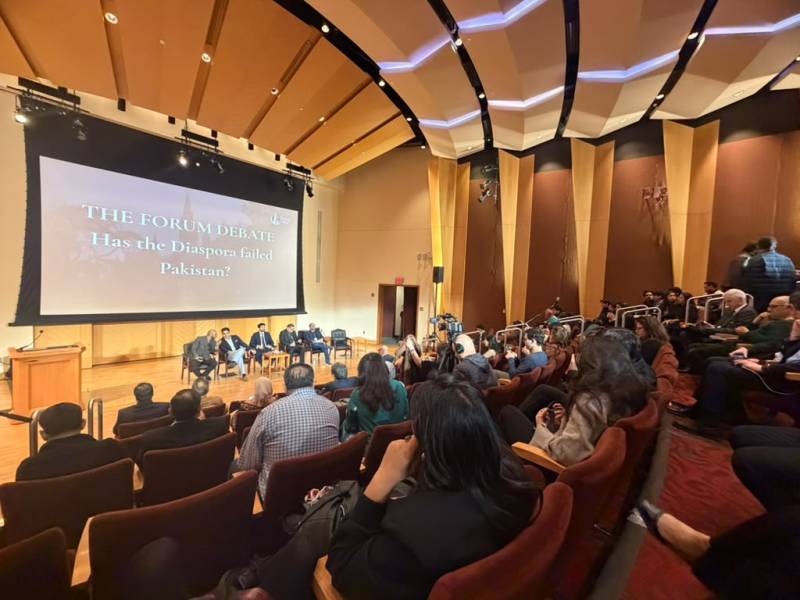
WASHINGTON, D.C. — A spirited debate at Georgetown University over whether the Pakistani diaspora has failed its homeland brought sharply contrasting perspectives on overseas Pakistanis’ economic contributions, political influence, cultural identity, and responsibility toward their country of origin.
Speakers on both sides acknowledged the extraordinary achievements of Pakistanis abroad but disagreed over whether those accomplishments have translated into meaningful progress for Pakistan.
The proposition argued that despite decades of financial support, professional success and philanthropy, the diaspora has failed to use its collective influence to address Pakistan’s deep-rooted institutional and economic problems.
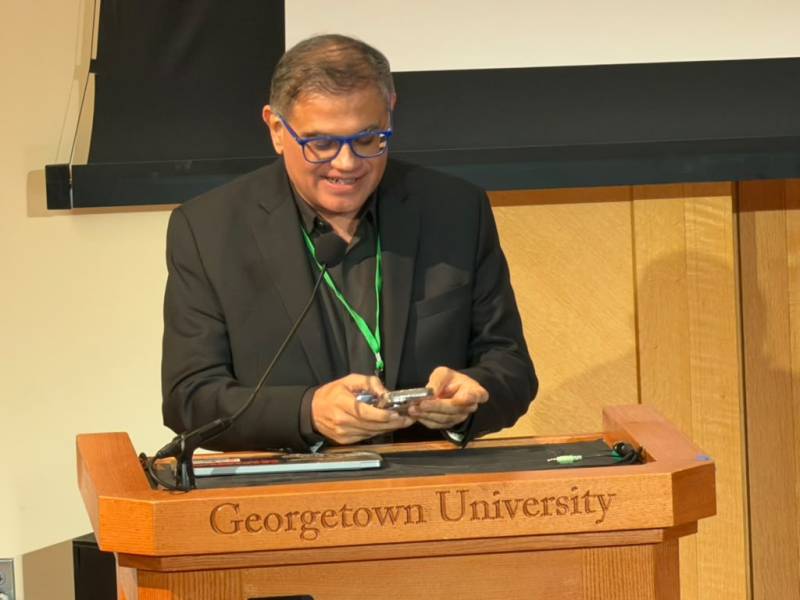
The opposition rejected that characterization, arguing that millions of overseas Pakistanis have supported their families, strengthened communities and promoted Pakistan internationally, often compensating for the failures of the Pakistani state itself.
Remittances emerged as a major point of contention, with opposition speakers citing billions of dollars sent to Pakistan by overseas workers.
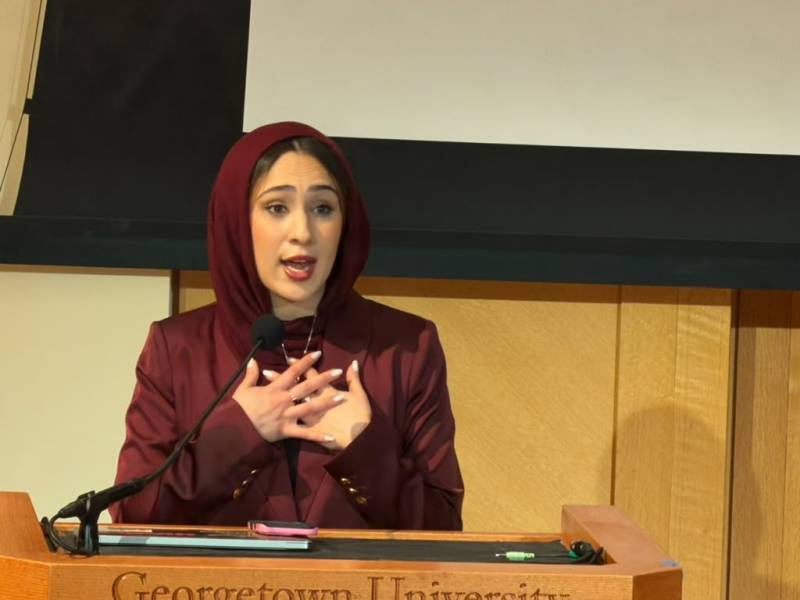
One speaker highlighted the sacrifices of Pakistani construction workers in Saudi Arabia, plumbers in Doha and taxi drivers in Dubai who send their earnings home to pay for education, healthcare and essential family expenses.
The speaker criticized what he described as an elitist approach to evaluating the diaspora, arguing that the debate should not focus exclusively on wealthy Pakistani professionals living in Western countries.
For the opposition, these workers represented the backbone of Pakistan’s overseas community.

The proposition, however, argued that financial contributions alone could not be considered sufficient evidence of success.
Its speakers maintained that remittances, although essential for millions of households, have not produced the industrial development, institutional reform or economic transformation Pakistan urgently needs.
They also questioned whether diaspora investment has been disproportionately directed toward real estate and consumption rather than productive industries and long-term economic growth.
Another major disagreement centered on the diaspora’s charitable activities.
The proposition acknowledged the contributions of Pakistani doctors, entrepreneurs and philanthropists who have funded hospitals, schools, scholarships and emergency relief efforts.
However, its speakers argued that the need for repeated charitable interventions revealed the persistence of structural failures.
They questioned why overseas Pakistanis continued raising money for healthcare and education generation after generation without adequately confronting the political and economic systems responsible for those deficiencies.
The opposition countered that providing medical treatment, educational opportunities and financial assistance should be recognized as meaningful achievements rather than dismissed because larger institutional problems remain unresolved.
The debate also addressed the migration of Pakistani talent.

Proposition speakers questioned whether the success of Pakistani professionals abroad had translated into sufficient investment in Pakistan’s universities, research institutions, export industries and technological capabilities.
China’s economic development and the role of overseas Chinese communities were cited as a comparison, although the relevance of that example was challenged.
Opposition speakers argued that Pakistani professionals working in Silicon Valley, international universities and major corporations can contribute to Pakistan without necessarily relocating.
They emphasized mentorship, technology transfer, international business networks and investment as potential benefits of a globally connected Pakistani community.
Political Influence and Pakistan’s Identity
The discussion became particularly heated when speakers examined political divisions within overseas Pakistani communities.
The proposition argued that diaspora organizations often reproduce the political, ideological and social divisions found in Pakistan, limiting their ability to pursue common objectives.
An opposition speaker strongly rejected that assessment, pointing to political coalition-building among Pakistani Americans and other communities in the United States as evidence of successful integration and collective engagement.
He also argued that overseas Pakistanis have helped challenge negative stereotypes about Pakistan and Muslims while promoting multiculturalism, religious tolerance and democratic participation.
The speaker invoked Muhammad Ali Jinnah’s vision of Pakistan, suggesting that diaspora communities have helped preserve ideals of pluralism and inclusion that remain contested within Pakistan itself.
The sharpest disagreement ultimately concerned the meaning of failure.
The proposition maintained that the diaspora’s growing wealth, education and global influence had created a responsibility to do more than celebrate cultural identity and individual achievements.
Its speakers argued that acknowledging collective failure was necessary to encourage greater organization, accountability and meaningful engagement with Pakistan.
The opposition offered a different interpretation.
Rather than describing the diaspora as a failure, one speaker characterized its relationship with Pakistan as an unfinished mission.
Opposition speakers argued that Pakistan’s institutional challenges were rooted in decades of political and economic difficulties and could not reasonably be placed on the shoulders of people who had migrated abroad, rebuilt their lives and continued supporting their homeland.
The exchange raised questions extending far beyond remittances and charitable donations: What does Pakistan owe its overseas citizens, and what do overseas Pakistanis owe Pakistan? Should diaspora success be measured by individual achievement, financial support or the ability to bring about lasting institutional change?
While the speakers remained divided, the debate highlighted the diversity of Pakistan’s global community, from low-wage migrant workers in the Gulf to influential professionals and entrepreneurs in North America and Europe.
At its heart was a question neither side could easily dismiss: Has the Pakistani diaspora failed Pakistan, or has it succeeded in ways that have yet to translate into the transformation of its homeland?