

Nearly two decades ago, the emergence of the slogan "ye jo dheshatgardi hai, iss ke peechey wardi hai" (behind this terrorism is the [military] uniform) resonated with contemporary observations regarding the Pakistani state’s security apparatus. The phrase highlighted the perceived culpability of the military establishment, which had fostered Islamist militancy since the 1980s, primarily within the Afghan theatre, to achieve various ‘strategic’ objectives.
This long-standing policy eventually precipitated a significant domestic blowback as various militant factions turned their aggression toward the Pakistani state. Nevertheless, the authorities persisted with this framework well into the early 2010s by employing a reductive dichotomy: the distinction between ‘good’ and ‘bad’ Taliban. While the former were categorised as strategic assets engaged against Western forces in Afghanistan, the latter were identified as domestic insurgents responsible for brutal attacks against Pakistani security personnel and civilians. It was not until 2024 that the military leadership appeared to concede that this distinction was fundamentally flawed, acknowledging the shared ideological and operational foundations of these groups.
Nearly two decades ago, observers who questioned the state’s reluctance to initiate a comprehensive military offensive against the Tehrik-i-Taliban Pakistan (TTP), or who criticised the concurrent bolstering of the Afghan Taliban’s operational capabilities, were frequently marginalised. Such critics were often pejoratively dismissed as ‘liberals’ allegedly acting under the influence of Western intelligence agencies or Western-funded non-governmental organisations (NGOs).
This pattern of delegitimisation was exemplified in 2011 following the publication of Taliban and Anti-Taliban by the Pakistani academic Farhat Taj. Pro-establishment commentators accused Taj of subverting national interest after her field research suggested a collaborative relationship between Islamist militant groups and Pakistani intelligence services.
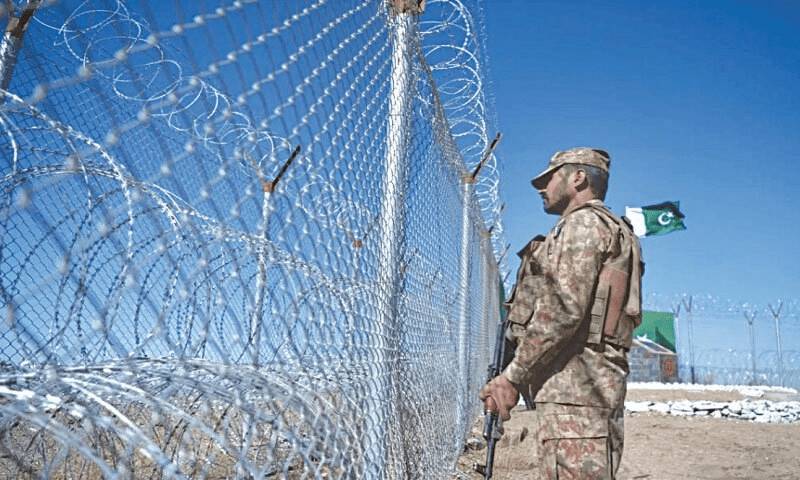
By that period, however, the existence of such links had become an open secret, framed for a concerned public as a necessity for achieving 'strategic depth.' This doctrine, which originated in the early 1990s, posited that a pro-Pakistan administration in Kabul was essential to safeguard the country’s western frontier in the event of a conflict with India. This strategic imperative drove the support for the Taliban’s emergence in 1996 and the subsequent provision of sanctuary and institutional support following the US-led invasion of Afghanistan in 2001.
Following the ouster of Imran Khan, the military leadership systematically erased the strategic distinction between the TTP and the Afghan Taliban to initiate targeted cross-border strikes
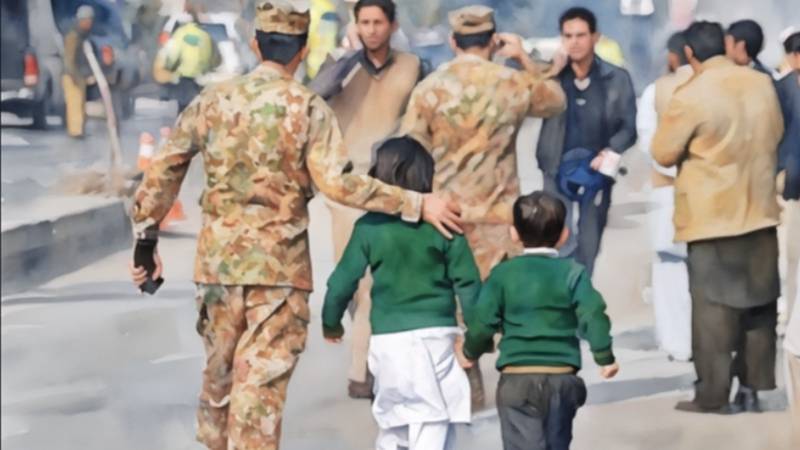
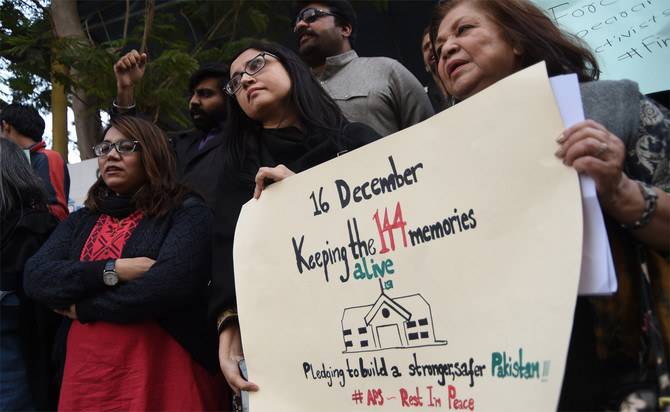
It was not until 2014 that the civilian government and military leadership finally reached a consensus to launch a comprehensive offensive against the TTP. While the primary catalyst for this was the harrowing TTP massacre at the Army Public School in Peshawar that resulted in the deaths of over 140 students and staff, advocacy for such an operation had been intensifying prior to this event.
Support for military intervention originated largely from the Pakistan People’s Party (PPP), the Awami National Party (ANP), and the Muttahida Qaumi Movement (MQM), alongside various civil society groups often collectively labelled as ‘liberals’. The PPP, ANP and MQM had suffered significant casualties, losing numerous leaders and activists to TTP violence.
Despite growing internal pressure from within certain military ranks, the administration of Mian Nawaz Sharif remained hesitant to authorise an offensive, preferring a policy of engagement and dialogue. This stance persisted despite a history of previous agreements being consistently violated by the militants.
Sharif’s reluctance was partly informed by fears of domestic blowback and the populist challenge posed by Imran Khan’s Pakistan Tehreek-e-Insaf (PTI). At the time, Khan was increasingly positioned by influential factions of the security establishment as a 'popular' civilian mouthpiece. He propagated a narrative that cast mainstream political parties as corrupt entities serving Western interests, while simultaneously framing the TTP as ‘naraz bhai’ (disaffected brothers) and the Afghan Taliban as ‘ghairatmand’ (honourable) insurgents resisting American imperialism.
Khan further delegitimised proponents of military action by branding them ‘khooni liberals’ (bloody liberals), accusing them of inciting civil strife. It is essential to note that such rhetoric aligned with the military’s broader strategic objective of installing a pro-Pakistan regime in Kabul. The overarching goal remained the facilitation of an Afghan Taliban victory to ensure their eventual return to power following the withdrawal of US forces.
Recognising the growing internal pressure within the security apparatus, the Chief of Army Staff, General Raheel Sharif, exerted significant influence to compel Prime Minister Nawaz Sharif to authorise a military offensive and to secure the reluctant acquiescence of Imran Khan. The ensuing operation proved tactically successful. By 2017, there was an approximate 70% reduction in TTP-led insurgent activity.
However, in a notable strategic reversal, the subsequent administration of Imran Khan sanctioned a policy of reconciliation. This initiative invited TTP militants who had sought refuge in Afghanistan to return to Pakistan under the aegis of rehabilitation and employment programmes. Despite their repatriation, many of these individuals retained their weaponry and remained committed to the establishment of a theocratic state in the country's north-western frontier regions.
The architecture of this repatriation policy was primarily attributed to a powerful faction within the military, led by Lieutenant General Faiz Hamid, who maintained a close alignment with the Khan administration. But this move elicited concern from other quarters of the military leadership. When the Afghan Taliban successfully ousted US forces and the incumbent Kabul government in August 2021, Khan lauded the event, asserting that Afghans had "broken the shackles of slavery."
This perceived victory significantly emboldened the TTP, facilitating their reorganisation and gradual re-occupation of territories from which they had been displaced during the 2015–2017 operations. This resurgence caused profound alarm within the military establishment, particularly as the Afghan Taliban leadership increasingly disregarded Pakistani diplomatic pressure, adopting an ideological and operational path mirrored by the TTP.
Following the removal of the Khan administration via a parliamentary vote of no confidence in April 2022, the military leadership under General Asim Munir, in coordination with the PML-N-led coalition government, began to systematically dismantle the strategic distinction between the TTP and the Afghan Taliban. This policy move was further substantiated by emerging allegations that both were functioning as regional proxies for Indian interests.
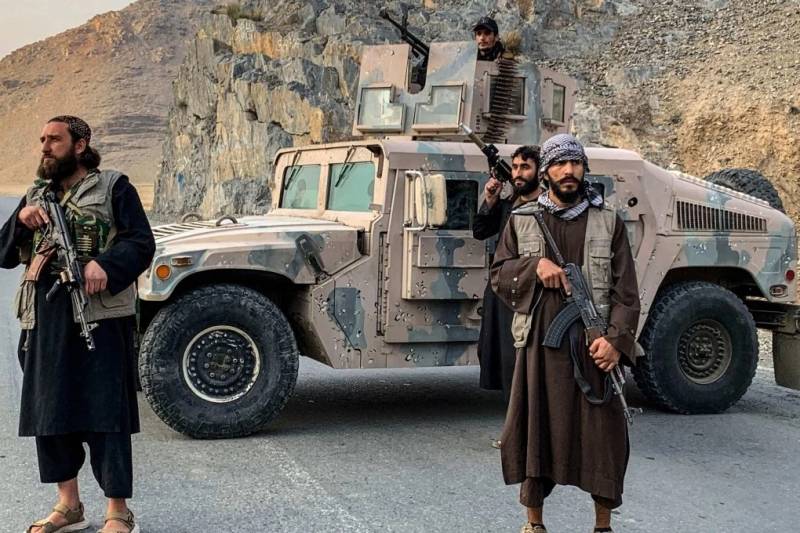
As a result, Pakistan abandoned the pursuit of diplomatic engagement, as the dialogue process had failed to elicit meaningful security guarantees from the Afghan Taliban administration. The Kabul regime consistently refused to prevent the TTP and other anti-Pakistan militant groups from utilising Afghan territory as a base for cross-border insurgent operations.
In response, Pakistan initiated a concentrated kinetic campaign targeting TTP strongholds within Afghanistan, primarily through the use of aerial bombardment. While the Afghan Taliban administration continues to allege that these strikes have resulted in civilian casualties, Pakistani authorities maintain that the operations are strictly confined to the destruction of terrorist bases and munitions depots.
The contemporary liberal critique of Pakistan’s kinetic doctrine appears less like a principled stand for human rights and more like a byproduct of profound cognitive dissonance
This brings us to the central inquiry of this analysis: why have ‘liberals’ once again become the focal point of widespread criticism? From 2010 onwards, these circles consistently lobbied for a decisive military offensive, an objective that was eventually realised. Subsequently, they expressed profound concern that the Khan administration was dismantling the tactical gains achieved by that operation. Concurrently, however, they became equally preoccupied with the humanitarian impact of military engagements on civilian populations caught in the crossfire, particularly within the Khyber Pakhtunkhwa (KP) province.
At present, these voices are voicing apprehension regarding the military’s evolving doctrine, which formalises the rejection of diplomacy in favour of a more systematic and aggressive kinetic strategy against both the TTP and Baloch separatists. These measures include targeted strikes against Afghan urban centres and settlements identified as sanctuaries for TTP leadership and combatants.
Cognitive dissonance
The friction between the state and its 'liberal' critics underscores a fundamental dilemma in contemporary Pakistani counter-terrorism strategy: the reconciliation of national security imperatives with the protection of civil liberties. While the state views its current move towards a more aggressive kinetic doctrine as a pragmatic necessity born of failed diplomacy, critics argue that such strategies often occur in a legal and humanitarian vacuum.
In provinces such as Khyber Pakhtunkhwa (KP) and Balochistan, the escalation of military operations has frequently resulted in significant civilian displacement and allegations of extrajudicial measures. For the state, these are often 'collateral' necessities in a high-stakes struggle against existential threats. For human rights advocates and the 'liberal' intelligentsia, the erosion of due process and the lack of transparency regarding civilian casualties represent a systemic failure that may ultimately alienate the local populace and fuel further radicalisation.
This is all fine and noble. But contemporary "liberal" critique of Pakistan’s kinetic doctrine appears less like a principled stand for human rights and more like a byproduct of profound cognitive dissonance. Having spent over a decade lobbying for the very military decisiveness they now condemn, these circles find themselves in an ideological vacuum.
Their current apprehension reveals a deep-seated, reflexive suspicion of the military establishment that outweighs any consistent counter-terrorism logic. While they once correctly identified the perils of "strategic depth," their transition from hawks to humanitarian sceptics suggests an inability to reconcile the state's eventual adoption of their own advice with their inherent distrust of the institution that is now working on that advice.
This incoherence is further exacerbated by a baffling, new-found admiration for the populist rhetoric of Imran Khan. By aligning with the very "Taliban Khan" narrative they once pilloried, these critics have traded their ‘secular’ credentials for the convenience of ‘anti-establishment’ populism. By riding on a populist narrative that they once branded as apologism, liberals have traded empirical consistency for a convenient political alliance. The so-called ‘left’ in this country is particularly susceptible to this.
The liberal stance suffers from a marked lack of pragmatic and empirical knowledge regarding the ground realities of 21st-century asymmetric warfare. Their arguments remain tethered to outdated theoretical frameworks of Westphalian diplomacy and civil liberties that are increasingly ill-suited to a changing world order.
In an era where non-state actors operate with regional proxy support and have disregard for borders, the insistence on "dialogue" and "due process" borders on the naivety of a bygone era.
By prioritising abstract ideals over the cold, hard necessity of national survival, the liberal intelligentsia risks becoming obsolete. As the state moves toward a more aggressive, systematic strategy to secure its frontiers, the critique from the sidelines appears less like a moral compass and more like an echo of a theoretical past that the modern world, and the militants themselves, has long since abandoned.
In 2026, the global security terrain has shifted toward "open war" against non-state proxies and the use of advanced technologies like quadcopters and AI-enabled surveillance. In a region where the Afghan Taliban serve as a "master proxy" for fragmented militant interests, the liberal insistence on "diplomatic engagement" is not just naive, it is a dangerous relic of a previous era.
While the state grapples with the fallout of failed diplomacy and an existential threat that recognises no border, the liberal critique remains trapped in a legalistic vacuum. In the end, their refusal to acknowledge the empirical failure of soft-power approaches proves they are more interested in the aesthetics of dissent than the practical security of the citizens they claim to represent.