

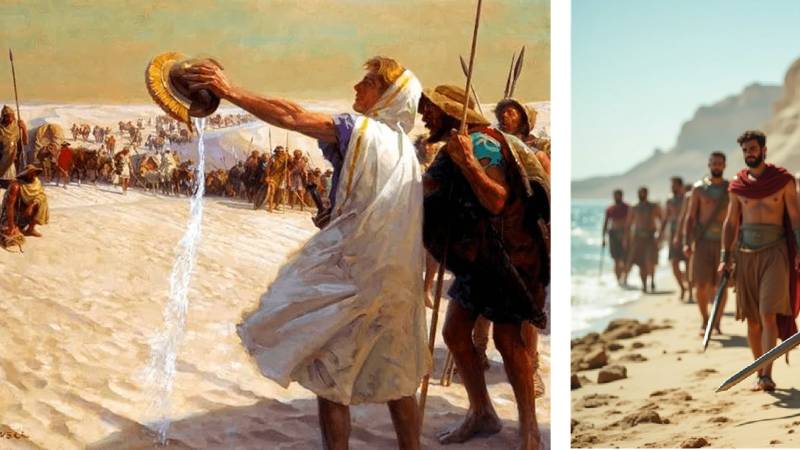
Click here for the first part of this account of the journey that Alexander the Great made across ancient Makran
In discussing the Gedrosians, the men of ancient Makran, Robin Lane Fox (1973) writes:
"The closer they kept to the coastline, the less their comfort from the Gedrosian natives. The men of Makran were inhospitable and thoroughly brutish. They allowed their nails to grow from birth to old age, and they left their hair matted; their skin was scorched by the sun, and they dressed in pelts of wild animals (or even of the larger fishes). They lived off the flesh of stranded whales. They were a people still living in the Stone Age, and they used their long nails instead of iron tools: the army named their neighbours the Fish-Eaters, because they caught fish in nets of palm bark and ate them raw. Their houses were built from oyster shells and whale bones, like Eskimos in some warmer environment; a few sheep ranged on the edge of the sea, where the desert gives way to pebbles and salt cliffs; these were killed and eaten raw, but their flesh tasted horribly fishy. Dead fish had infected the whole district, and in the heat, which never moderates even on an autumn evening, it rotted and stank. It was as well that the army had picked the sweet nard grass which grew in the desert valleys, for they used it as bedding or roofing for their tents to dispel the smell of surrounding decay. Other plants were less amenable."
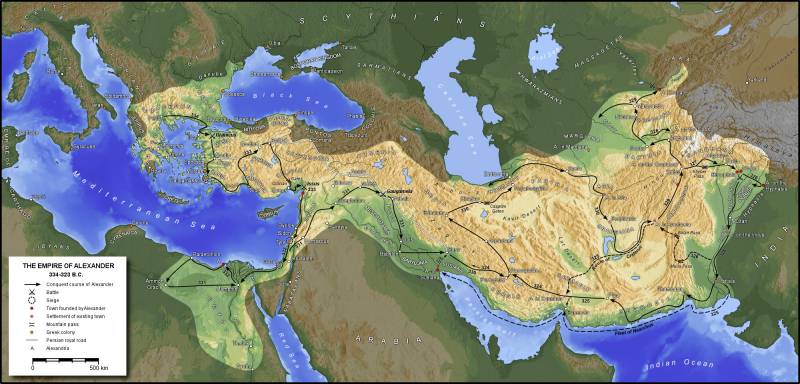
The modern-day region of Palestine, Lebanon, Syria, and Jordan is called the Levant. This land is also called Phoenicia (Canaan), which was situated on the eastern coast of the Mediterranean Sea. Phoenicians founded independent city-states like Byblos, Tyre, Tripolis, Berytus, and others. The Phoenicians were well-known sea traders who traded from the Levant to the Indus Valley in the east. There is evidence of trade between the Phoenicians of the Levant and western India as early as 975 BC Phoenician exports included cedar, pine wood, and fine linen.
About the role of the traders in supplying the army on the march, Fox (1973) writes:
"When the march began, Levantine traders who had followed the army were keenly collecting the desert spice plants among the Oreitans and around the new Alexandria and loading them on mules, sure of a market and a fortune if they could ever bring them home. But the mules had mostly died, and plant collecting was seen to be a risk, for spices were interspersed with a poisonous oleander whose juicy leaves, pointed and leathery like a laurel, caused any man or beast who ate them to foam at the mouth as if with epilepsy and die a painful death from convulsions. Mules and horses could not be allowed to graze, for there was also the danger of a prickly spurge, whose milky juice, used on poisoned arrows by pygmies, blinded any animal into whose eyes it spurted. Its fruits were strewn invitingly over the ground. Once again, it was the snakes who removed the men’s last hopes of peace. They hid beneath the scrub on the hillsides, and they killed every person they struck; if a man strayed far from camp, he put himself at serious risk, but the further the march went, the fewer there were who could not help straying. Some despaired of thirst and lay in the full sun in the middle of the road; others began to tremble, and their legs and arms would jerk until they died, as if from cold or a fit of shivering. Others would desert and fall asleep and lose the convoy, usually with fatal results. For those who survived, the unripe dates on the palm trees proved too strong a food, and many died from the sudden strain on their stomachs."
Oreitans kill Alexander’s satrap in the newly founded city of Alexandria
Fox (1973) gives the following description:
"Before entering Makran, Alexander had left several thousand troops, a bodyguard, and a satrap to round off the conquest of the Oreitans and to settle the new Alexandria on the old river site; the satrap is said to have been given other firm orders, and they are easily deduced from the sequel. When the fleet finally reached the first depot in his territory, they took on ten days’ supplies. Plainly, the satrap was to be Alexander’s link with the fleet. He had been ordered to fill up its stores, direct it to suit the army’s timing, and detail its meeting points with Alexander. These would have been specified from the Oreitans’ local knowledge. But when Alexander marched west, the Oreitans round the new Alexandria united with their neighbours and harassed both the satrap and the fleet way back on the Indus. Perhaps they burnt a part of the store heap. Certainly, they killed the satrap in a major battle. Meanwhile, Alexander was far into Makran and daily despairing of contact with his fleet and his main supplies."
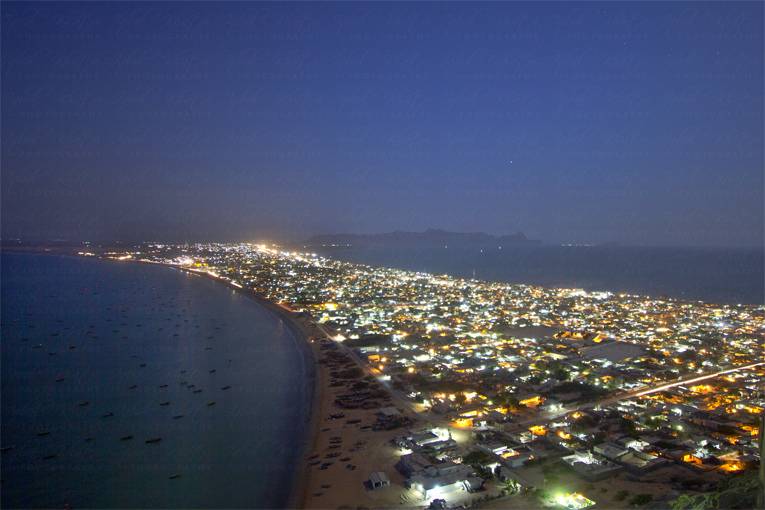
Alexander was leading a land army which was large, containing some 30,000 fighting men, 8,000 of them Macedonians.
Loss of royal equipment, pack animals, weapons and people during the flash floods
Robin Lane Fox (1973) writes:
"In places, the dunes were so high that one had to climb steeply up and down quite apart from the difficulty of lifting one’s legs out of the pit-like depths of the sand; when camp was pitched, it was kept often as much as a mile and a half away from any watering places, to save men plunging in to satisfy their thirst. Many would throw themselves in, still wearing their armour, and drink like fish underwater: then, as they swelled, they would float up to the surface, having breathed their last, and they would foul the small expanse of available water. The expected summer rains, which would run down from the mountains and fill the rivers and the water holes and soak the plains, had not yet fallen along the coast; that was bad luck, but to crown it all, when the rains came, they fell out of sight in the hills and found the army bivouacked beneath near a small stream. Shortly before midnight, the stream began to swell with the spate of fresh water which was coursing down from its source in a flash flood. It drowned most of the women and children who were still following the expedition, and it swept away the entire royal equipment, including the remaining pack animals. The men themselves only just managed to survive, and even then, they lost many of their weapons."
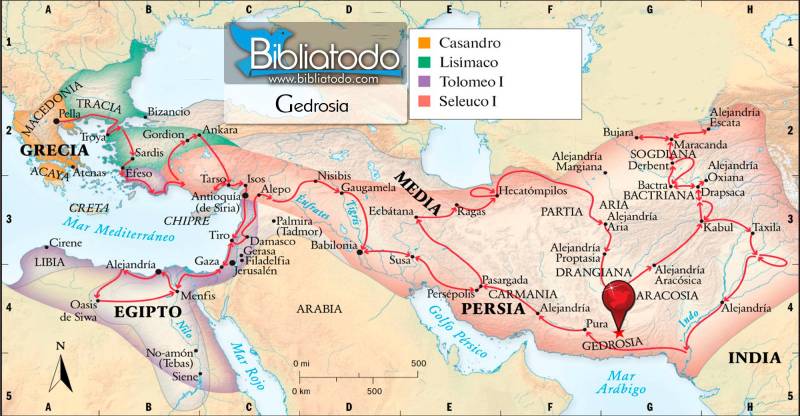
The famed philosopher Kalanos belonged to Taxila, in the Gandhara Satrapy, in the Indus Valley. Alexander treated this eastern philosopher with great respect
Further, about the continued sufferings, Fox (1973) writes:
"To those who abandoned them, they must have seemed happier dead; the stench, the sand flies, the ceaseless rise and fall of dunes which all looked the same, they ground men into the belief that they would never survive; then, near Cape Ras Malan, some 300 miles from their starting point, the native guides admitted they had lost their way. The sand ridges carried no landmark; the sea was no longer in view. They had wandered too far inland, and they had made the last mistake they could afford."
About Pura or modern-day Iranshahr, Fox writes that,
"But suddenly, near Gwadar, the guides began to recognise the ground which rose on their right: it was the border of the one recognised track north up the valley. If so, they were close to the borders of Makran, and the fleet’s well-being could now be forgotten. Risking their last strength for survival, they struck inland, and to their relief, the landscape smoothed into a milder pattern: the scrub persisted, but here and there, the ground offered grazing to a few flocks, and the guides for once had been proved right. Another two hundred miles would bring them to the local capital at Pura, and from there, it was an easy stage to their agreed meeting point with fleet and reserves near Kirman."
The city of Pura or Poura is identified with Bampur, the local capital in Kerman. Salmous came after Pura, where Nearchos visited Alexander and recounted the incidents of his voyage from the Indus to Seistan and Kerman. The Early Bronze Age site of the Jiroft Culture (2500 BC) is located in present-day Sistan & Balochistan in Iran.
Worship and sacrifice of a donkey to the war god in Alexandria Carmania
Many expected that Alexander the Great would not come alive from the Gedrosian Desert. Defying such expectations, the Macedonian conqueror emerged from the desert in mid-November. There were three satraps who waited for Alexander with their supplies and baggage animals on the Carmania or Kerman borders. They spent eight weeks (60 days) crossing the desert. Only 15,000 soldiers could survive to see Kirman out of all 40,000 fellow soldiers and camp followers.
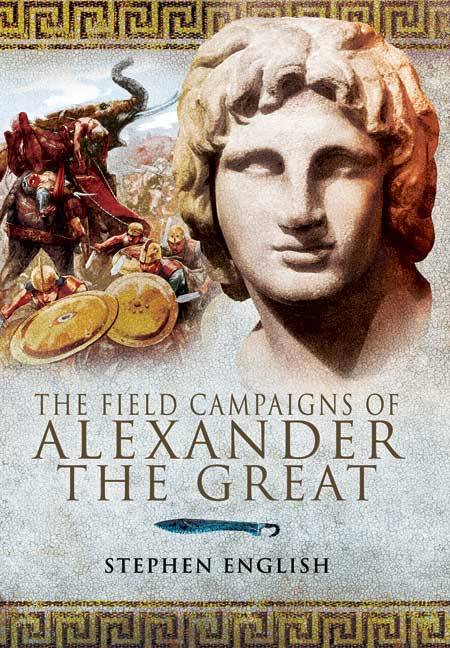
According to Fox:
"Kirman was distinguished for its sweet wells, grazing, and its mines of red gold, silver, bronze, and yellow arsenic. Its people were attractive and inevitably, they had been unruly, especially during Alexander’s times, because horses were scarce; most of the people there used donkeys even for wars. The war god was the only god they worshiped, and they sacrificed a donkey to him. The people of Kirman were aggressive. Nobody married until he had cut off the head of an enemy and brought it to the king: the king then stored it in the palace, where he minced up its tongue, mixed it with flour, and tasted it himself. He gave the remains to the warrior to eat with his family; the man who owned most heads was the most admired."
This was the time when Craterus came from Arachosia to Alexandria Carmania.
A pyre in Persepolis: Kalanos’ self-immolation in Persia
The famed philosopher Kalanos (Calanus or Kalanoi) belonged to Taxila, in the Gandhara Satrapy, in the Indus Valley. Plutarch gives his real name as Sphines. Kalanos may have been a Jain sage. Calanus felt free to travel with Alexander because his region, Taxila, was more open to trade and travel. Alexander treated this eastern philosopher with great respect. Calanus fell ill and refused to take medical treatment. As he was too feeble to walk or ride on horseback, he chose to end his life.
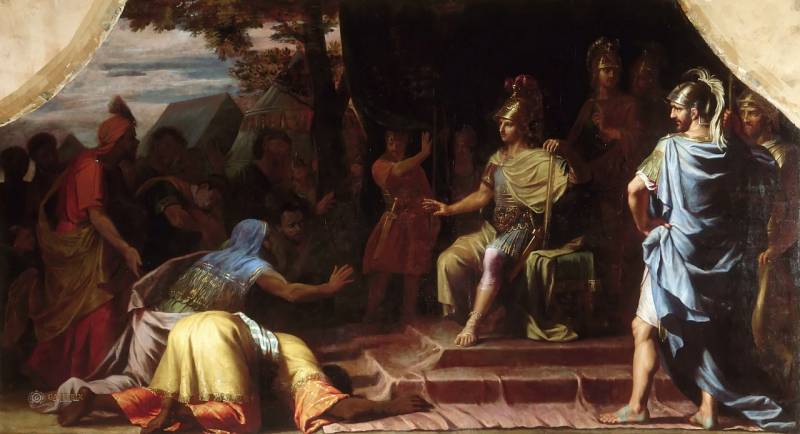
According to Richard Stoneman’s book Alexander the Great: A History of his Legends (2022),
"Calanus joined Alexander’s entourage, which put him in bad odour with his fellow ascetics." (93)
When Alexander’s army reached Susa in April 324 BC, the 72-year-old Kalanos committed suicide on a funeral pyre. Alexander’s general Ptolemy superintended all the arrangements. Mentioning the pyre, Richard Stoneman writes in his book The Greek Experience of India (2023) that,
"Strabo adds more details about the pyre, saying that according to one account, it was surmounted with a golden couch on which Calanus lay down to die. But others state that a wooden house was built and that it was filled with leaves and that a pyre was built on its roof; being shut in as he had bidden, after the procession which he had accompanied, he flung himself upon the pyre and, like a beam of timber, was burned up along with the house." (303)
Plutarch and Arrian state that Calanus’s final words were interpreted as a prophecy of Alexander’s death in Babylon. The act of self-immolation was experienced by onlookers as pity, praise, and cruelty of the custom.
John Gillies writes in his book The History of Ancient Greece (1825) that,
"In sight of the Macedonian army, who had been ordered to assist at this uncommon solemnity, Calanus composed himself decently on the pyre; the music struck up; the soldiers raised a shout of war; and the Indian, with a serene countenance, expired amidst the flames, singing a hymn to the gods of his country. The curiosity of Alexander was unbounded; but his humanity likewise was great. This principle, which is too often a stranger to the breast of conquerors, made him decline witnessing the extraordinary death of a friend who, for his sake, had abandoned his native land. But before Calanus was carried to the funeral pile, the king affectionately paid him the last visit. Calanus, having embraced all present, refused to take leave of Alexander, saying that ‘he should again see him in Babylon.’ The words of a dying man were considered by the Greeks as prophetical. Those of Calanus sunk deep into the mind of Alexander; and the painful impression which they made hastened his departure from a city in which so many concurring circumstances forbade him to reside." (433)
The last farewell was done in front of Alexander’s army and court. It was as if all had planned to honour the funeral pyre. Alexander tried to dissuade him, but Calanus remained resolute. Finally, Calanus was escorted to the pyre by a solemn procession: horses, men, soldiers in armour, and people carrying all kinds of precious oils. Nearchos witnessed this historic event.
Strabo quotes Nearchos for the information that the Brachmanes engage in affairs of state and attend the kings as counselors; but that the other sophists investigate natural phenomena; and that Calanus is one of these. Onesicritus quotes Calanus that, “In olden times the world was full of barley meal and wheat meal, and there were fountains of water, milk, honey, wine and olive oil. In that blessed past, men and gods lived together on earth.”
Onesikretos of Astypala had been given the funerary horse of Kalanos. Onesikretos knew philosophy as well as the sea. He studied with the great Diogenes, master of Greek Cynic School on the Island of Cos. Onesicritus was also writing a history which was published after Alexander’s death. It was he who was sent by Alexander to interview the philosophers in Taxila. In the beginning, he met with 15 wise men two miles from Taxila who were lying naked in various postures. Calanus was their chief guru. Alexander found him very interesting to talk during his campaign. He also taught philosophy to this Greek admiral of Alexander. Pyrrho had also 2 years to enjoy the company of Calanus. Onesicritus was one of the Alexander’s original historians including Callisthenes, Ptolemy, Aristobulus and Nearchos. Robin Lane Fox (1973) and Waldemar Hackel (1992) have briefly discussed Kalanos and Onesicritus details in their books.
Alexander celebrates on accounts of the Indian Conquest at Susa
While Alexander arrived by land, Nearchos had first started his voyage from the Hab River to the Bay of Kalmat and then reached Susa. Fox informs us that:
“The result of his promise was an enormous write off of some 10,000 talents, or two thirds of the annual treasure income of the Persian empire in its prime. This largesse was accompanied by the usual rewards for competitive merit, for the value of medals was not lost on Alexander. Nearchus, now returned from the ocean, Peucestus and other bodyguards who had saved the king at Multan, Leonnatus who had routed the Oreitans, each were crowned with gold crowns as a public honour.”
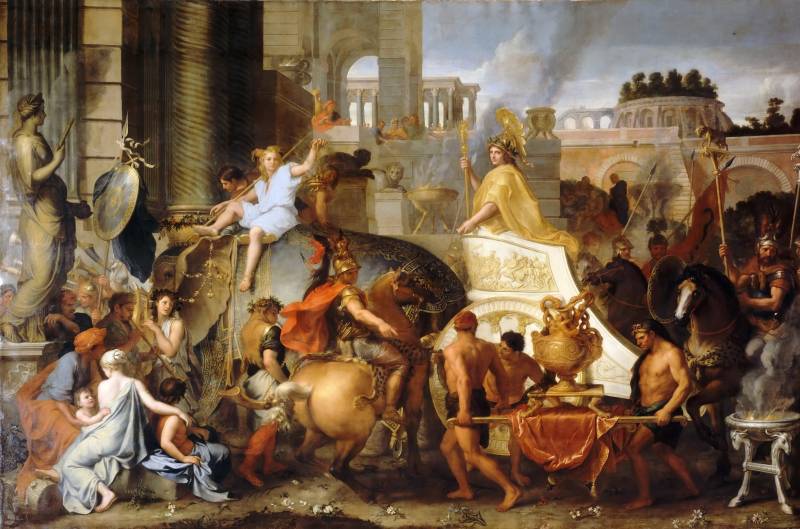
Alexander married Stateira, the daughter of the Persian King Darius III, in 324 BC at Susa, Iran. His first wife was Roxane, whom he had married in Spring 327 BC; she was the daughter of a Bactrian chieftain. In October 325 BC, Alexander's closest friend Hephaestion died at Ecbatana. Alexander the Great himself died on 10th June 323 BC at Babylon in Mesopotamia (modern-day Iraq). His most trusted general, Ptolemy I Soter, hijacked the funeral carriage and transported Alexander's body to Egypt for burial.
Soon after Alexander's death, his vast empire was divided among his generals. Sindh remained under the continuous governance of Peithon. In a tragic turn of events, Alexander's first wife Roxane murdered his second wife Stateira. Historians emphasize that Alexander's conquests created unprecedented connections between East and West. Nearly all Greek soldiers had taken Persian and Indian brides from noble families, yet following Alexander's death, most Greeks repudiated these marriages.
The birth of Alexander IV, son of Alexander and Roxane, occurred in August 323 BC. Subsequently, Alexander's half-brother Philip III was murdered by Olympias in September 317 BC. Olympias herself faced execution in 316 BC at the hands of Cassander, the king of Macedonia. Cassander again demonstrated his ruthlessness in 311 BC by executing Alexander's son Alexander IV when the boy was just 12 years old. Three years later, in 308 BC, Alexander's sister Cleopatra was murdered on orders from Antigonus, king of Macedon. The violent saga continued when Alexander's half-sister Thessalonike, wife of Cassander, was assassinated in 296 BC by her own son Antipater.
The Royal Cemetery containing Alexander's family remains is located at Aigai in Vergina, Macedonia, Greece. Greek archaeologist Manolis Andronikos made the remarkable discovery of these tombs in 1977. The Great Tumulus, a massive burial mound, contains three distinct tombs designated as I, II and III. Artifacts recovered from these tombs are currently displayed at the Museum of the Royal Tombs of Aigai in Vergina, Macedonia, Greece. Recognized for its historical significance, the Vergina site has been a UNESCO World Heritage Site since 1996. Despite these discoveries, Alexander the Great's own tomb remains missing to this day.