

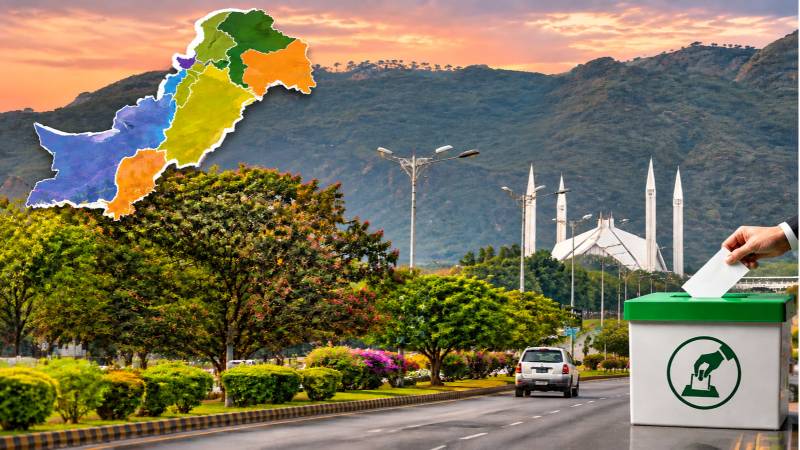
Pakistan’s argument over new provinces should begin with the citizen waiting for a decision: a trader seeking a permit, a parent demanding a functioning school, a commuter losing hours between home and work. Smaller governments could shorten that distance. Islamabad’s proposed elected administration offers an opportunity to show how.
There is a persuasive case for considering twelve provinces. More centres of elected decision-making could give neglected regions a stronger claim on public money and create opportunities for leadership beyond established provincial capitals. But twelve must be tested against geography, financial viability and public consent. It cannot become a target that planners force communities to fit.
An elected mayor and assembly would matter if residents could identify who controls their services and remove that leadership when it fails. The legislation should clearly allocate responsibility for water, waste, transport and planning, including the relationship between elected representatives and the Capital Development Authority. Budgets and procurement decisions should be publicly accessible.
Delhi offers a useful warning. Its elected legislature operates within a special constitutional arrangement that excludes public order, police and land from its legislative domain. Islamabad should define reserved federal functions precisely, so residents know which government can actually resolve their complaints.
Smaller provinces could improve growth by making public investment more responsive. A government serving a manageable area may understand which road connects farmers to markets, where technical training is needed and which industrial estate lacks reliable infrastructure. Faster, predictable approvals would help firms expand and employ people.
Before approving new provinces, an independent commission should publish transition costs, staffing requirements, revenue estimates and expected transfers. Existing public buildings should be used before new secretariats are commissioned. Performance should be measured through service access, business processing times and investment delivered, with results compared against the starting position.
Nepal shows why this discipline matters. The World Bank’s 2024 fiscal federalism review found that provincial governments underspent their budgets by 34 percent in FY2023. It identified unclear responsibilities and weaknesses in planning and implementation. Devolution needs trained staff and workable financial systems alongside elected institutions.
Smaller provinces could widen the political field. A teacher, entrepreneur or local organiser with a regional reputation might find it easier to build a credible campaign within a smaller political arena. Regional parties could organise around transport, agricultural livelihoods or language rights, bringing concerns into coalition negotiations that national parties often overlook.
India’s recognised state parties include the Telugu Desam Party and Dravida Munnetra Kazhagam. Their existence illustrates that regional political organisation can operate within a national electoral framework. It does not establish that smaller units automatically produce better leaders.
The constitutional route matters. Article 239 requires two-thirds support in each parliamentary house for constitutional amendments and, where provincial limits change, two-thirds approval in the affected provincial assembly. An administrative label cannot make provincial interests disappear.
Islamabad can provide an early demonstration, but its reform must come with a credible election timetable. Across Pakistan, provincial restructuring should deepen local authority rather than simply move power to another capital.