

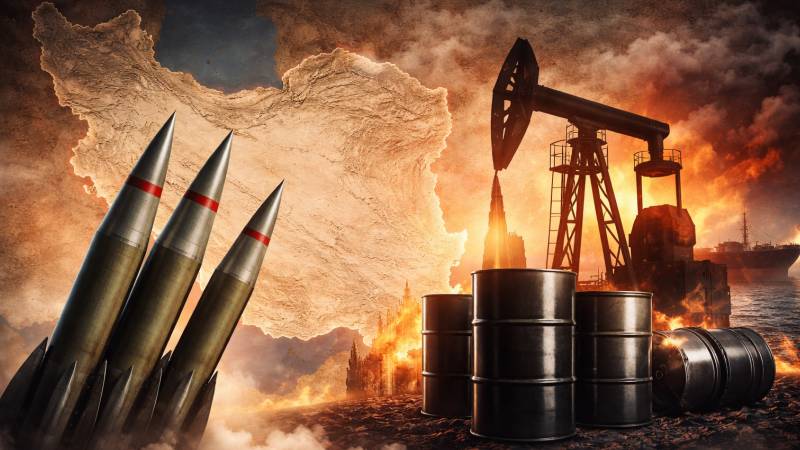
If you think this war is only about nuclear weapons, modern missiles, or proxy militias, you are not looking behind the veil. This is not only a military story. It is also an energy story. A finance story. A supply-chain story. Since the United States and Israel began striking Iran on 28 February 2026, traffic through the Strait of Hormuz has fallen to a near halt. That matters because this narrow waterway normally carries around one-fifth of the world’s oil and gas trade. When that artery closes, the whole system feels it.
To understand the deeper logic, you have to look at China. For years, Iran has been one of Beijing’s most useful sanctioned suppliers. China buys the vast majority of Iran’s shipped oil. China bought more than 80 per cent of Iran’s shipped oil in 2025. Another analysis put the share near 90 per cent of Iran’s exports and about 13.6 per cent of China’s crude purchases. These were not ordinary barrels. They were discounted barrels. And cheap energy is not a side issue for an industrial power. It is the blood supply.
This is why the Iran–China relationship mattered so much. In 2021, both countries signed a 25-year cooperation agreement. That pact signalled long-term alignment under sanctions pressure. But serious analysis must stay careful here. The famous $400 billion figure is repeated everywhere, yet recent academic research says there is little hard evidence for that exact number. So the agreement was real. The symbolism was real. But the scale was often exaggerated in public debate. Good analysis separates documented structure from political mythology.
What made this trade important was not just volume. It was the method. Iranian crude often moved through shadow fleet networks, ship-to-ship transfers, disguised origins, and layers of intermediaries. The United States has repeatedly sanctioned vessels, traders, and terminals tied to these flows. Treasury and State Department actions in 2025 and 2026 show how seriously Washington viewed this system. Iran’s oil revenue was still reaching Asia despite sanctions. Beijing did not need a perfect channel. It only needed a workable one.
For years, that is what it had. The currency issue made the story even bigger. China and Iran had long used yuan-based payment paths when dollar settlement became dangerous. This pattern was reported years ago. More recent U.S.–China Commission research says Iran uses networks in China and Hong Kong to recycle renminbi proceeds into the wider financial system. This does not mean China fully escaped the dollar order. It does mean Beijing kept building partial alternatives. That matters. Great powers do not only fight over oil fields. They also fight over the pipes through which money moves.
A bomb dropped on Iran does not stay in Iran. It moves into freight rates. It moves into refinery margins. It moves into factory costs in Asia. It moves into inflation fears in Europe and America
China’s stake in Iran was not abstract. It was physical. After the strikes, Chinese firms had links to projects in steel, power infrastructure, hydropower, freight, and trade promotion inside Iran. So when Iran is hit, the damage is not limited to crude exports. It also reaches a wider web of Chinese commercial interests. An oil shock can be temporary. A broken corridor can last longer. That is why Iran mattered to Beijing as more than a seller. It was also a platform.
Now look at the timing. The war has not only battered Iran. It has also squeezed one of China’s cheapest energy lanes. Iranian crude made up about 11.5 per cent of China’s seaborne crude imports this year before the conflict escalated. At the same time, China was also losing easier access to Venezuelan barrels. China’s imports from Venezuela were expected to slump after U.S. moves there, and Venezuela’s February exports fell after losing the Chinese market. In plain terms, Beijing entered this crisis with a discounted supply already under pressure. Then Hormuz became the choke point.
Still, an honest analyst must stop where proof stops. There is no public evidence showing that Washington launched this war mainly to cripple China’s economy. That is an interpretation. A strong one. But still an interpretation. What can be said with confidence is this: the economic effect runs straight toward China. Beijing’s refiners now face higher costs. China has already raised domestic fuel price caps sharply. Chinese officials have also been scrambling to protect shipping and energy security as Hormuz tightened. Whether this was the main goal or a strategic bonus, the pressure on China is real.
The broader meaning is hard to miss. A bomb dropped on Iran does not stay in Iran. It moves into freight rates. It moves into refinery margins. It moves into factory costs in Asia. It moves into inflation fears in Europe and America. The conflict pushed oil to its highest levels in years, while economists warned of a wider inflation shock and slower global growth. This is how modern power works. The battlefield is local. The bill is global.
And then there is the human side. Every grand strategy has a human invoice. Iranian civilians pay first. Workers across importing countries pay next. Families pay for fuel, food, and transport. Poorer Asian states risk being priced out of energy markets before richer ones even feel the full pain. So, this is not only a story about states testing each other. It is also a story about ordinary people being forced to absorb the shock of elite rivalry. That is why this war should be read not just as a military campaign, but as an economic struggle over energy, finance, and the future shape of power itself.