

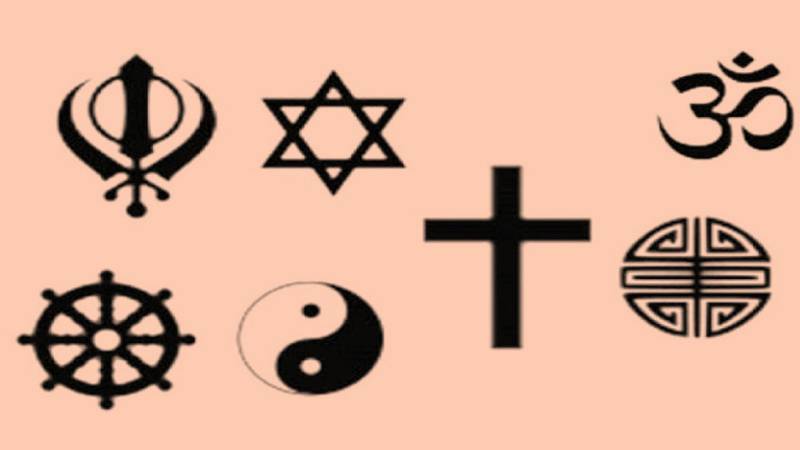
Pakistan is often misunderstood in global conversations. Too many times, when people talk about Pakistan, they use the phrase "all Muslims," assuming the country is just one group with one mindset. But this is far from the truth. Pakistan is not just a Muslim country—it is a home to many religions, cultures, and communities that live together under the same sky.
Pakistan is a multi-religious, multi-ethnic nation. While Muslims form the majority, non-Muslim communities make up nearly 4% of the population—including Christians, Hindus, Sikhs, Parsis, and others. These groups are not outsiders—they are citizens, patriots, and contributors to the country's progress since its inception in 1947.
When public figures, media outlets, or even common discourse frames Pakistan as “all Muslims,” the message that gets sent is exclusionary. It invisibilises the legacy and ongoing sacrifices of Pakistan’s religious and ethnic minorities and fails to acknowledge that the identity of a nation is broader than just the majority faith.
Take, for example, Justice A.R. Cornelius, a Christian who served as the fourth Chief Justice of Pakistan and is still regarded as one of the most principled figures in the judiciary. Cecil Chaudhry, a national war hero and decorated fighter pilot, was a Christian who served the Pakistan Air Force with honor during the 1965 and 1971 wars. Names like Dr. Ruth Pfau, a German-Pakistani nun who dedicated her life to eradicating leprosy in Pakistan, and Jogendra Nath Mandal, a Hindu leader and key figure in Pakistan’s early political framework, are more than historical footnotes—they are foundational pillars of the country’s story.
Every time someone says ‘Muslims won’ instead of ‘Pakistan won,’ it unintentionally sidelines the millions of Christians, Hindus, Sikhs, and other minority groups who have proudly contributed to the nation's resilience and success
While these individuals show how deeply minorities have shaped Pakistan’s narrative, the risks of ignoring their presence are equally important to examine.
The Dangers of Oversimplified Language
Using religion as shorthand for nationality is not only inaccurate—it is dangerous. It fuels stereotypes, deepens religious divides, and allows extremist narratives to flourish. It also hands dangerous leverage to supremacist ideologies, giving extremist groups the space to vandalise Pakistan’s rich narrative of diversity. This narrowing of identity gives dangerous leverage to supremacist mindsets, enabling extremist groups to erode Pakistan’s rich diversity and bring discomfort to minority communities, including Christians, Hindus, and others, who have often faced challenges simply due to their religious identity.
Moreover, such language plays directly into Islamophobic narratives abroad, where Muslims globally are unfairly linked with militancy and extremism. Within South Asia, however, the consequences are equally alarming: these oversimplifications contribute to a rising tide of hate against minorities, both within and across national borders. The result is a hostile environment where diversity becomes a target instead of a strength, paving the way for division, discrimination, and instability.
Regional Consequences of Religious Profiling
These challenges are not unique to Pakistan—other countries, including India, face similar struggles with balancing national identity and religious diversity.
Across the border, India too has witnessed the damaging effects of rising religious intolerance in recent conflicts with Pakistan. Hate-driven ideologies have led to fear and violence against Muslims, Christians, Sikhs, and other marginalised communities. When nationalism merges with religious supremacy, it risks pushing entire regions into conflict, not over policy differences, but over faith-based generalisations. This cycle of provocation and mistrust has only worsened tensions, often reducing nuanced bilateral relations to dangerous, emotionally charged flashpoints.
A Call for Thoughtful and Inclusive Language in Real-Life Casual Talks
In light of these realities, a shift in how Pakistan is spoken about is overdue. Recognising Pakistan as a diverse and pluralistic nation is not only a fact—it is essential for fostering unity, encouraging tolerance, and building peace in a region that has seen too much conflict. Overlooking this diversity not only harms minorities; it weakens the national fabric itself.
Every time someone says ‘Muslims won’ instead of ‘Pakistan won,’ it unintentionally sidelines the millions of Christians, Hindus, Sikhs, and other minority groups who have proudly contributed to the nation's resilience and success. This phrasing not only excludes but subtly erases the dedication, sacrifices, and shared pride with which all communities have stood for Pakistan. National victories are collective, and our language should honor that collective spirit.
From civil servants and soldiers to teachers, artists, and athletes, minority communities have continued to serve Pakistan with dedication and pride. Narrow language or exclusive labels should never overshadow or dismiss their contributions.
Extremism has already taught this region some painful lessons. It has led to wars, violence, broken communities, and deep mistrust. The only way forward is to learn from these mistakes—to dismantle hate, to build stronger institutions, and to embrace an inclusive, respectful national identity.
Conclusion: Words Shape Nations
Language is more than communication—it reflects belief, shapes perception, and guides action. If the goal is peace, unity, and progress, then how Pakistan is spoken about must reflect the truth of its diversity.
It’s time to move past lazy generalisations and choose language that honors the full spectrum of Pakistan’s people. A more inclusive narrative not only better reflects Pakistan’s reality, but it also enhances its moral and national strength. A more inclusive narrative not only reflects reality, it strengthens the nation and sets the stage for a more tolerant, peaceful future.