

Every nation has justified its decision to develop nuclear weapons as an act of self-defence. It has argued that it developed them to counter an adversary who possessed nuclear weapons, or was in the process of developing them, or which was much larger in size.
This ‘movie’ has played out several times on the world stage. Ostensibly, the US did so after receiving intelligence reports that Nazi Germany was developing an atomic bomb. In May 1945, Germany surrendered to the Soviets without putting up much of a fight, let alone using the nuclear weapons that it never had.
Once the US tested the bomb in July 1945, it could not resist using them against Japan just a month later. Hiroshima was bombed on 6 August and Nagasaki on 9 August. The US knew Japan did not have the bomb. Its bombing shocked the world. The rationale was also questioned by General Douglas MacArthur and Admiral Chester W Nimitz. They believed that Japan was ready to surrender. When President Harry Truman was informed that vast numbers of civilians, mostly women and children, were killed in the bombings, he feigned to be surprised.
Once the US bombed Japan, its archival, the USSR, accelerated its nuclear program and exploded an atom bomb in 1949. When the Americans detonated a hydrogen bomb in 1952, the Russians followed suit in 1953.
The People’s Republic of China was created in 1949. After a brief honeymoon with the USSR, Beijing’s relationship with Moscow soured. The relations between the world’s two largest communist powers deteriorated to such a point that Chairman Mao was concerned that Comrade Stalin might wipe out a few Chinese cities with atomic bombs.
China began working feverishly on its nuclear program and exploded its first atom bomb in 1964, sending a strong signal to the Soviets to keep their hands off China.
In 1962, China had fought a border war with India. The two countries, which were once considered ‘brothers,’ had turned into combatants. India started working on its atomic bomb and exploded it in 1974.
Pakistan, which had fought a major war with India in 1971 and lost half of the country in the process, was now headed by President (and later Prime Minister) Zulfikar Ali Bhutto. He had anticipated India’s explosion. Sometime between 1971 and 1973, according to Brigadier Feroz Hasan Khan's book Eating Grass: The Making of the Pakistani Atomic Bomb, he is believed to have declared to an inner circle of policy makers: “If India builds the bomb, we will eat grass or leaves, even go hungry. But we will get one of our own. We have no other choice." In fact, Bhutto had told Patrick Keatley of The Guardian paper early in 1965, even before the September 1965 war, that if India went nuclear, in response to the Chinese atomic detonation, "Then we should have to eat grass and get one, or buy one, of our own."
Pakistan felt that India would never attack what remained of Pakistan if it had the bomb. Of course, there was no evidence that India wanted to attack what remained of Pakistan. Pakistan had initiated all prior wars with India to wrest Kashmir, which it regarded as the unfinished business of Partition.
Indeed, India would not have attacked East Pakistan if the Pakistani army had not annulled the national elections of 1970 and banned the political party that had won an absolute majority in the National Assembly, triggering a civil war and resulting in the exodus of millions of East Pakistanis into Indian Bengal.
The rationale often given by all nuclear powers for developing nuclear weapons is two-fold. First, they prevent war. And, second, they allow countries to reduce their spending on conventional forces
But given Bhutto’s paranoia, Pakistan began working on developing its atomic bomb. Indian intelligence was tracking these developments closely. To send a clear signal to Pakistan to not mess with India, India exploded five atomic bombs in Rajasthan, close to the Pakistani border in May 1998. In response, just two weeks later, Pakistan exploded six in Balochistan, quite far from the Indian border.
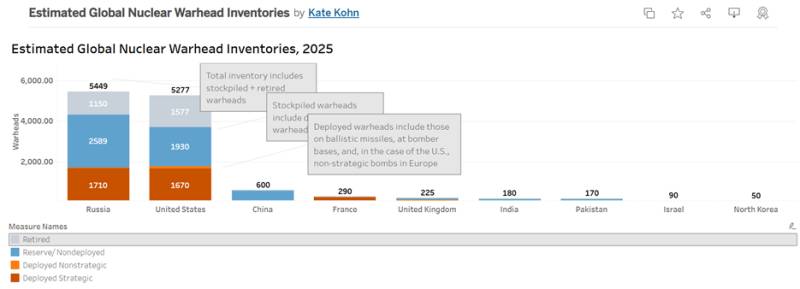
Since then, both countries have been working feverishly on their nuclear weapons. According to the Federation of American Scientists, India currently has 180 nuclear warheads while Pakistan has 170. These numbers are approaching those of the United Kingdom and exceed those of Israel. None of the Arab countries possess nuclear bombs. But they are collectively much larger in size than Israel. However, it has always defeated them on the battlefield. Even then, Israel has felt a need to develop nuclear weapons.
In 1981, in a pre-emptive strike against Saddam Hussein, it knocked out Iraq’s nuclear facilities. Today, it is concerned that Iran is working on nuclear weapons and may well carry out a pre-emptive strike against that country’s nuclear facilities.
Interestingly, China only has 600 warheads, which is dwarfed by the nuclear inventories of US and Russia.
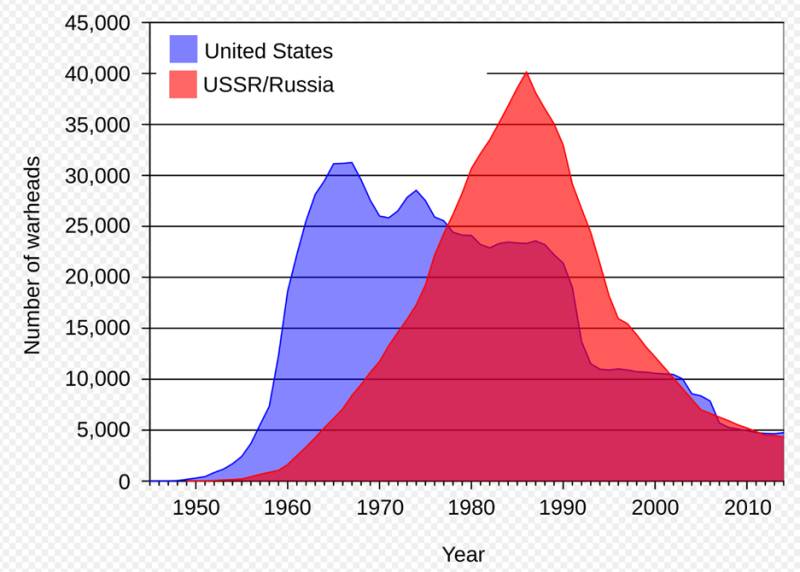
Since their nuclear inventories were so large, the US and the USSR are the only countries that have reduced the size of their nuclear warheads.
The rationale often given by all nuclear powers for developing nuclear weapons is two-fold. First, they prevent war. And, second, they allow countries to reduce their spending on conventional forces. Both assertions are hypotheses with no empirical evidence to support them.
In the spring of 1999, just a year after both countries had exploded several atomic bombs, Pakistani forces attacked Indian forces in Kargil, Kashmir. India responded forcefully and the Pakistani incursion was stunted in a couple of months.
Some argued the war did not extend to the international border, as it had in 1965, because neither side was ready to engage the other with nuclear weapons. But this remains conjecture.
In December 2001, months after the 9/11 attacks in the US, terrorists attacked the Indian Parliament, leading India to deploy a million troops along the border with Pakistan. Pakistan responded by deploying several hundred thousand troops. War was averted, ostensibly through American mediation.
The presence of nuclear weapons by the two siblings has done little to restrain their conventional arms race. The number of nuclear weapons continues to grow, along with their sophistication and delivery systems. The risk of sabotage and infiltration by terrorists can never be eliminated. Nor can the bigger risk that a demented leader, civilian or military, may one day push the button to annihilate the adversary.
The two countries should take steps to cap their nuclear weapons programs and ultimately eliminate them. For that to happen, they have to resolve the Kashmir issue peacefully.