

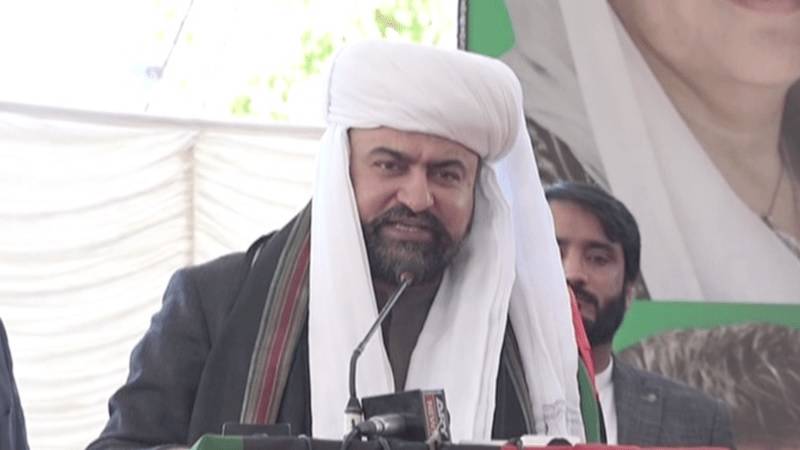
After the formation of the current government in Balochistan, the province’s political situation has continued to depreciate. Instead of moving towards stability, political uncertainty has increased. A major reason behind this growing instability appears to be the mind-set of the current leadership, where many political challenges are treated as matters of personal ego and interests rather than issues requiring dialogue, political wisdom, and democratic engagement. As a result, political disagreements are increasingly being met with force instead of consultation, which is further deepening the crisis in Balochistan.
The government of Peoples Party appears to rely more on the use of state authority than on effective governance and political dialogue to resolve issues. Rather than addressing grievances through political means, every dissenting voice is often portrayed as a challenge to the state, creating an atmosphere of fear and confrontation. This approach is not only increasing political tensions but is also weakening the relationship of trust between the people and state institutions. Amnesty international has emphasized that dissenting voices must not be silenced, Amnesty International, May 28, 2025).
Oriana Fallaci’s book ‘’Interview With History’’; Fallaci discussed her interview with Zulfikar Ali Bhutto and described him as a leader who possessed an extraordinary belief in the power of authority. Throughout the political history of the Pakistan Peoples Party, the question of power and its use has remained a subject of debate during different periods. A similar pattern appears to be visible in the governance approach of the current Balochistan government, where the use of authority seems to be given greater importance than political strategy and reconciliation.
The present government was introduced with the objective of creating an alternative political narrative in Balochistan, and therefore many of its policies are presented as being in the national interest. However, several actions on the ground appear to have produced the opposite effect by increasing public resentment and reducing trust in state institutions. The weakening of the relationship between the state and citizens cannot be considered an achievement of any government; rather, it represents a serious political setback.
Instead of political stability, an environment of tension, confrontation, and uncertainty continues to prevail. The government’s approach increasingly reflects a policy that appears to encourage conflict rather than resolve it. Its leadership is being symbol of Pro-Violence and has been Fuelling Political instability. Viewing every issue from a narrow perspective, ignoring political and social complexities, dismissing the advice and insight of other political stakeholders, and treating every disagreement as a threat to state authority are not indicators of mature political leadership.
Former chief minister of Balochistan Dr Abdul Malik Baloch and JUI-F senator Maulana Abdul Wassay also held the current government responsible for week leadership and the resulting political instability, Dawn.com, March 15, 2026). This report shows how the government used power against dissenting voices in Balochistan province of Pakistan, AP News- Abdul Sattar, August 01, 2025).
Another concerning aspect of the government’s approach is the tendency to associate criticism and opposition with anti-state narratives. In a democratic society, disagreement is not hostility, and criticism is not treason. Turning political differences into questions of loyalty only intensifies the crisis. The impression being created in Islamabad is that only “me” represents loyalty to the state while the rest of Balochistan remains under suspicion. This perception is damaging the Balochistan’s political environment.
Speaking to The Friday Times in this regard, Zarif Rind journalist said: The on-going conflict between the state and anti-state armed groups in Balochistan has increasingly been used to blur the line between violent militancy and legitimate political dissent. As a result, many political voices and critics are branded as "anti-state" simply for questioning those in power. Such an approach undermines democratic principles, weakens constitutional rights, and shrinks the space for peaceful expression. It also creates an environment where accountability becomes easier to suppress while those in power consolidate their position.
Despite this, people continue to speak out. Some raise their concerns through public protests, while others choose quieter forms of resistance. The persistence of dissent itself suggests that official narratives and government policies do not enjoy unanimous public support, even if criticism is often met with attempts to silence it.
Government employees, teachers, and the Grand Alliance can observe a clear example of this attitude in the protests. These groups did not take up arms, nor did they challenge the existence of the state. They were exercising their constitutional and legal right to peaceful protest. However, their demonstrations were met with baton charges, tear gas, arrests, and legal cases. The treatment of elderly teachers is particularly troubling for any democratic society. When peaceful political expression is handled through force, the distinction between political disagreement and criminal activity, corruption, extortion, and ransom becomes blurred. This strengthens the argument of those who believe that democratic voices in Balochistan are not being given adequate space. Grand alliance)
The government of Peoples Party appears to rely more on the use of state authority than on effective governance and political dialogue to resolve issues.
Current government political behaviour often gives the impression of being driven by confrontation, humiliation, and retaliation rather than reconciliation. Previous leaders of Balochistan, including Nawab Aslam Raisani, also faced political and tribal challenges, and disputes with figures such as Sardar Rind existed, but those conflicts did not reach the same level of confrontation during his Chief minister ship.
The performance of a government is ultimately measured not by its ability to suppress opposition but by the quality of its governance. If issues such as corruption, kidnapping for ransom, theft, organized crime, and insecurity continue to affect the province, then these realities will determine the government’s success or failure not its ability to silence critics.
Avoiding political dialogue reflects a decline in the ability to tolerate differences of opinion. Strong leadership does not fear criticism; it listens to opposing views, accommodates and tolerates differences, and uses debate to reach better decisions. However, in Balochistan, there appears to be an increasing effort to silence disagreement by attaching political criticism to anti-state narratives.
Even a review of recent events highlights a gap between government claims and ground realities. The victim families of the Ziarat are still holding a sit-in in Quetta, Dawn.com, July 15, 2026). While the government repeatedly claims that it has established its writ over law and order, the important question remains: how secure does the ordinary citizen actually feel?
The powerful authorities still have an opportunity to reassess the situation in Balochistan objectively. It is not enough to measure loyalty by how strongly an individual presents himself as a patriot. The real test is whether government policies have strengthened or weakened trust among ordinary citizens, government employees, youth, civil society, and state institutions. If the distance between the people and the state continues to grow, it cannot be considered a success of governance; rather, it reflects the satisfaction of personal ego over public interest.
Balochistan has witnessed periods of turmoil before. One such crisis emerged during the era of General Pervez Musharraf, the consequences of which are still felt today and second turmoil has started by this government’s leadership. If the current government continues on its present course, it risks creating another cycle of instability and further narrowing the space for a political solution to the Balochistan issue. Power is temporary, but the consequences of political decisions can last for generations.