

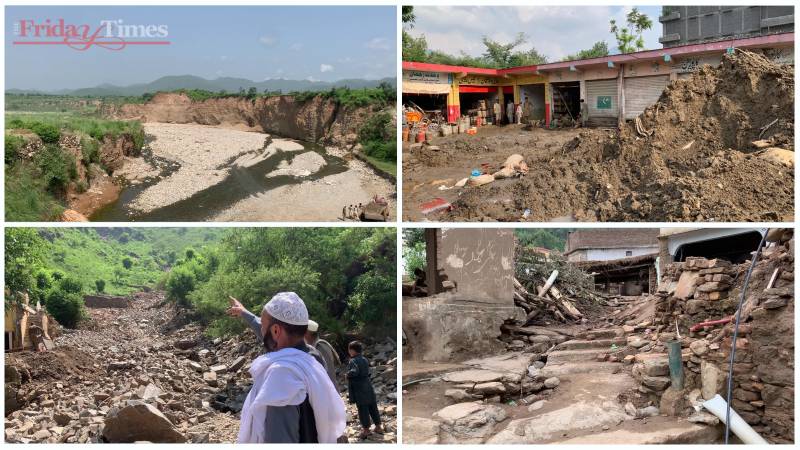
Pakistan reels under monsoon floods, but Khyber Pakhtunkhwa’s Buner and Swabi districts faced stranger calamity: torrents of water mixed with terrifying rock falls from mountains. In Buner’s Beshonai and Qadar Nagar villages, located along rain-fed streams at the foot of the mountains, the morning of August 15 turned catastrophic around 9 a.m. Similarly, in Dalorai Bala village of Swabi situated in a mountain basin similar episode occurred between 6 and 7 a.m. on August 18, carrying with them massive boulders that wiped out entire families. In events, 40 members of one household were killed, while another family lost 24 lives. in another place, 13 and 11 members of families perished within moments, and in another house, four women and children were buried under flood debris, their bodies recovered three days later from debris and nearby thickets. Buner reached 238, with most of them being women, 115, 71 male and 52 children, while 42 in Swabi, in which 19 males, 14 women’s and 9 children lost their lives in these incidents.
According to PDMA officials, in the province, from June 25 to 02 September t 23 June the devastating floods in Khyber Pakhtunkhwa (KP) claimed 498 lives. Women were the prime victims, 183, 161 men and 154 children. In Pashtun culture, women mostly stay at home, with limited access to survival skills and opportunities like swimming or disaster awareness that men often have. This tragic loss raises pressing questions for the KP Government. Despite women bearing the brunt of climate disasters, their voices remain largely ignored in disaster risk reduction strategies.
PDMA Monsoon Disaster Toll in Khyber Pakhtunkhwa (25 June to 02 September 2025)
· Deaths: 498 (Male: 161, Female: 183, Children: 154)
· Injured: 236 (Male: 108, Female: 50, Children: 78)
· Houses Damaged: 2,957 total (Fully: 633, Partially: 2,324)
· Schools Damaged: 306 (Fully: 18, Partially: 288)
· Other Infrastructures: 65 (hospitals, bridges, shops, etc.)
· Livestock Lost: 5,633
The Tragic Tales of Two Districts
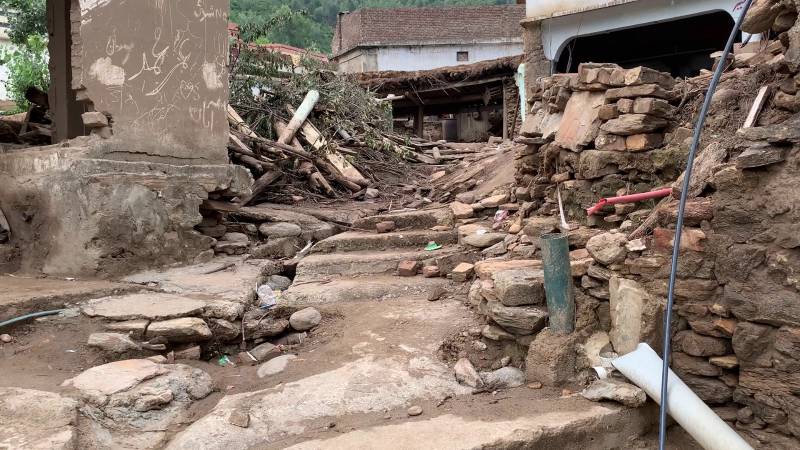
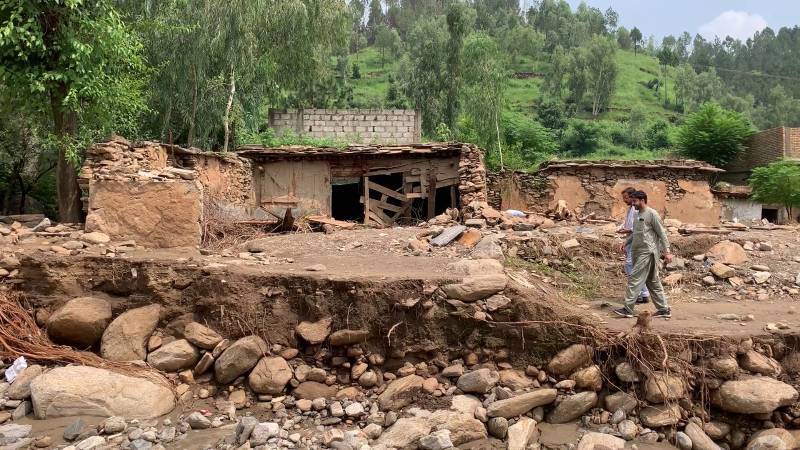
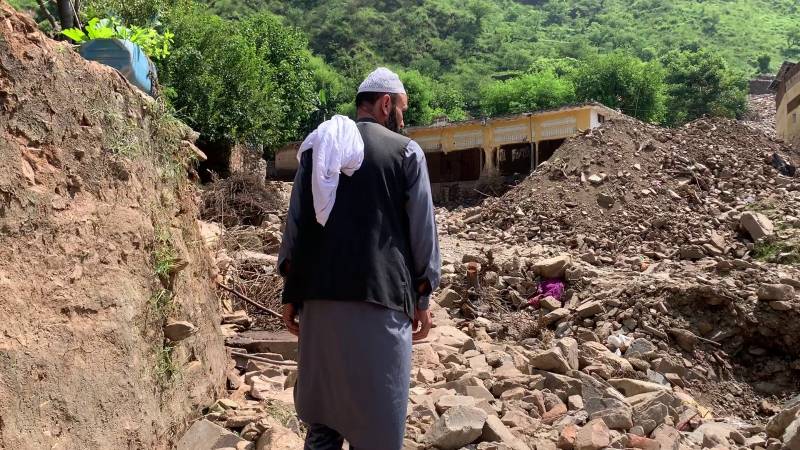
The village of Dalorai Bala in Swabi is surrounded by mountains on three sides. On 18 August, the tragedy that struck this village was disastrous. Standing on the rubble of his collapsed house, 50-year-old Nadir Khan showed us his mother’s broken charpai. Thirteen members of his family, including his mother, brothers, sister, nephews, and nieces, were killed.
Nadir Khan, who works in London, recalled how he first learned of the tragedy. “I was on duty when I received a call from the village, but I didn’t answer. Moments later, a picture of my destroyed house arrived on WhatsApp. When I saw it, my heart sank. This was my home, built with so much love. A house worth 20 million rupees is now nothing but stones,” he said, his voice breaking. He consoled himself only with the fact that he was able to reach Pakistan the next day and attend the funerals of his loved ones.
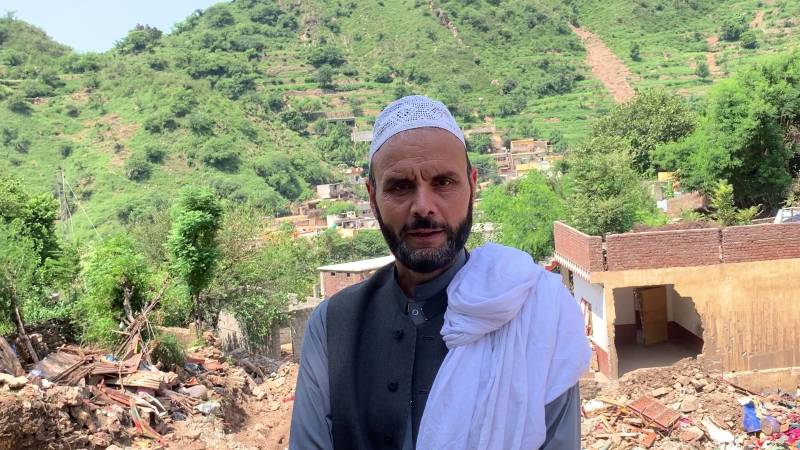
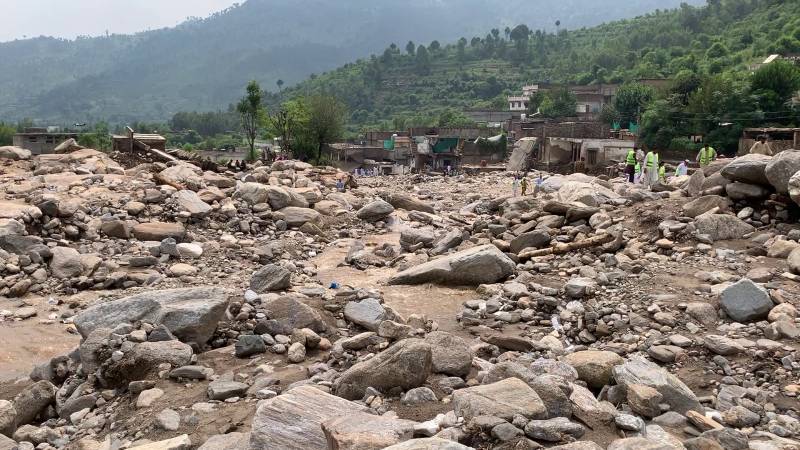
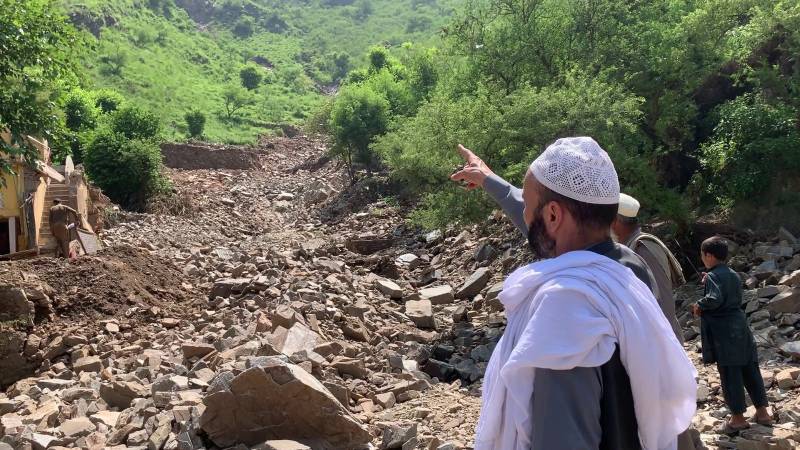
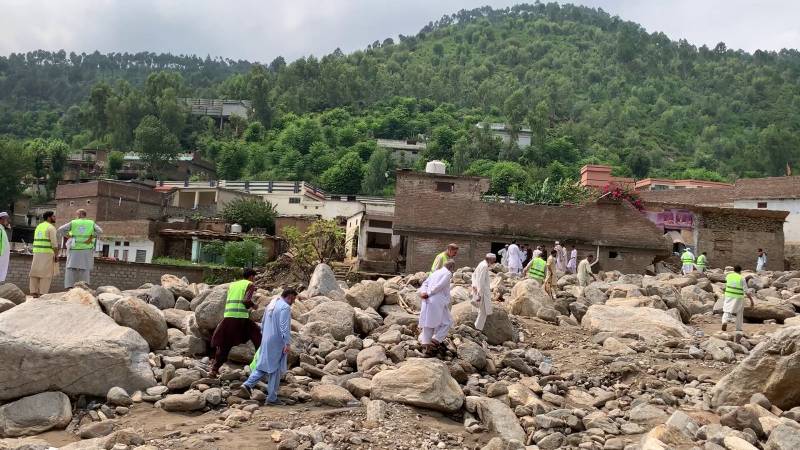
Similar devastation unfolded in Qadar Nagar and Beshonai villages of Buner. On the morning of 15 August, within minutes, both villages were ruins.
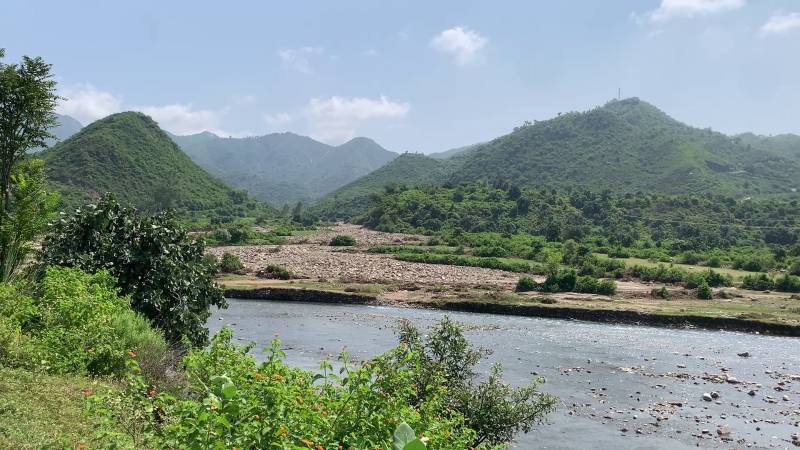
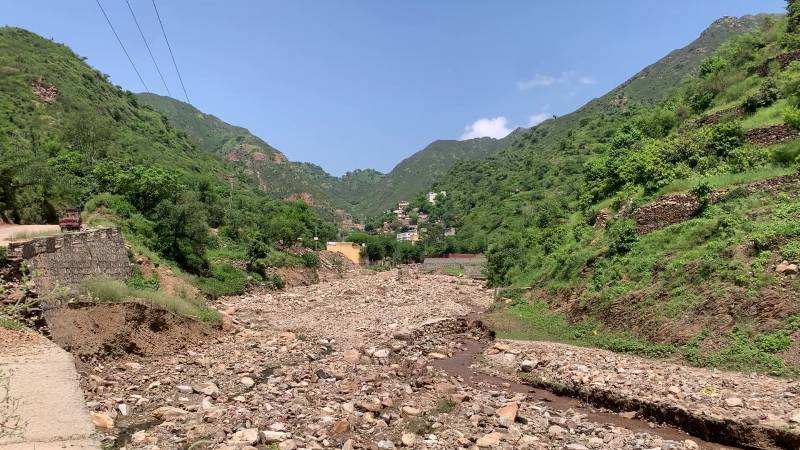
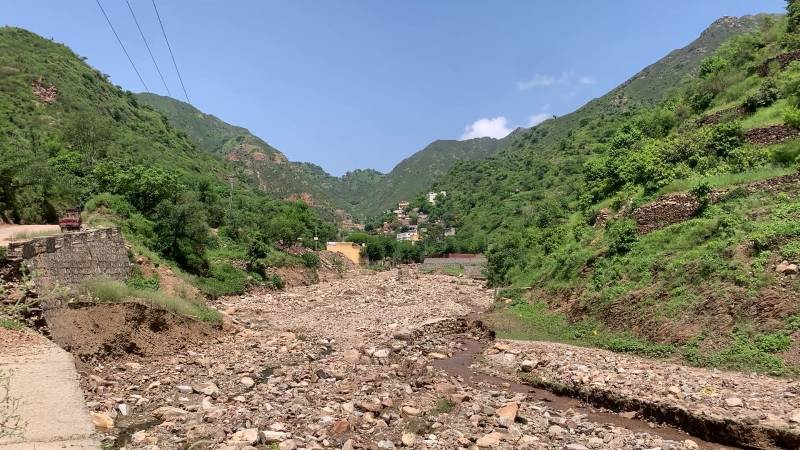
Beshonai, located at the foot of the Buner mountain range, has a seasonal stream that flows during monsoon rains. But this time, the water surged with massive boulders tumbling down from the mountains, wiping out an entire section of the village. Speaking to The Friday Times, 57-year-old Muhammad Ali said nine members of his family were swept away. “It was a horrifying scene. We were trying to save the women and children, but one house after another collapsed, and the water was so violent it left no chance to rescue anyone,” he recounted, his eyes brimming with tears. He could not finish his story.
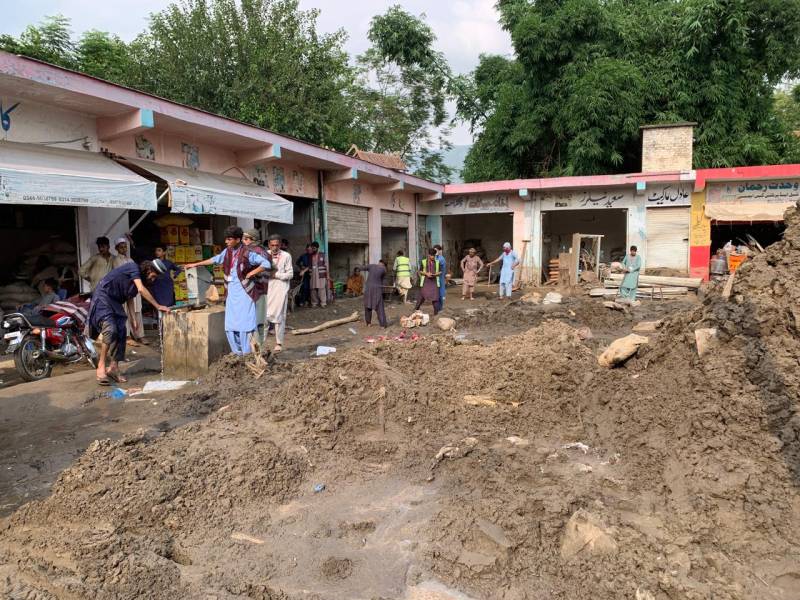
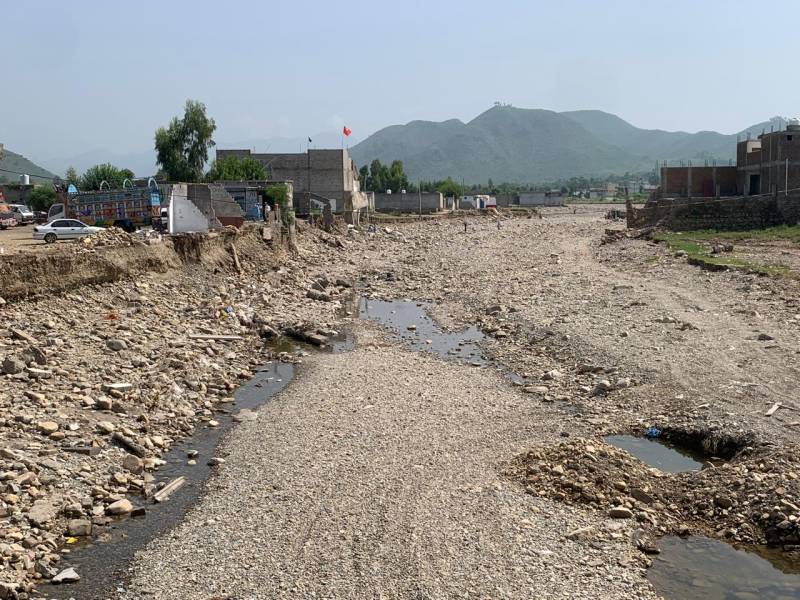
The Historic Streams of Buner Mountains
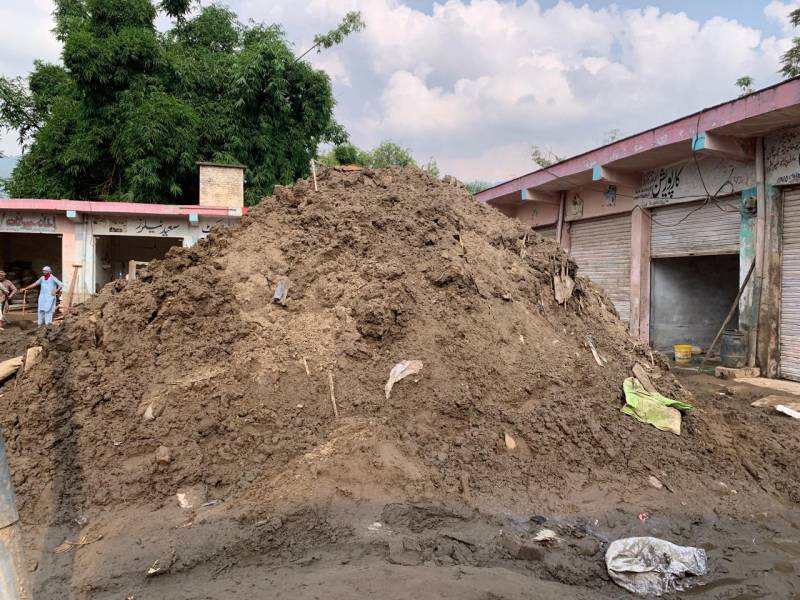
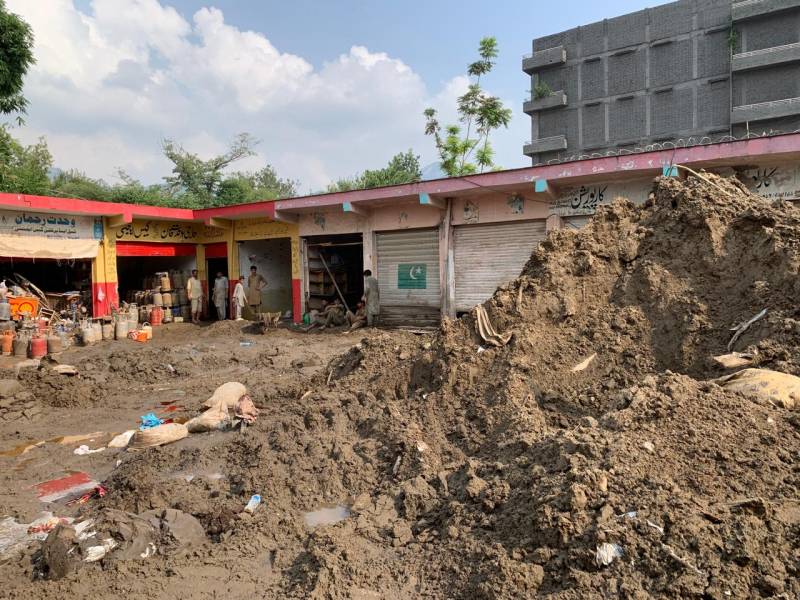
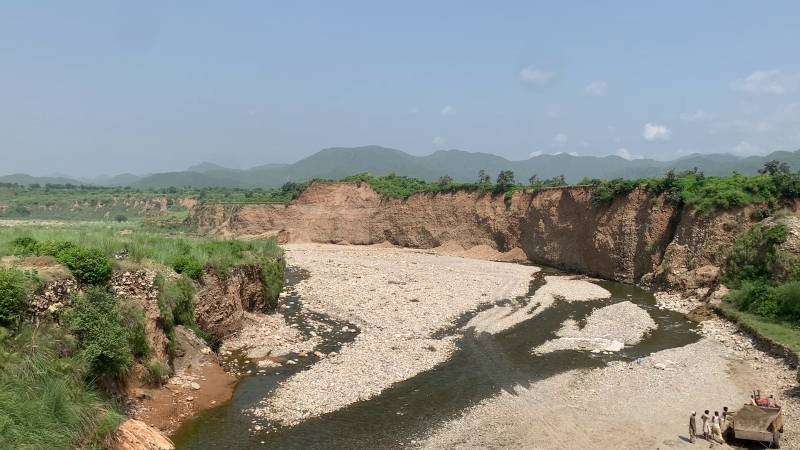
The Buner Mountains, straddling the borders of Swat, Buner and Swabi, are the source of rain-fed streams, locally called khwar in Pashto, which carry water from springs and rainfall. Two of the largest streams in Buner are the Malak Abad Khwar, which carries floodwater from Beshonai, and the Fani Khwar, which flows through Pir Baba bazaar and carry water from Qadar Nagar before joining the Indus River in Swabi. These streams regularly swell with small monsoon floods, but this year neither homes nor markets near them were spared. In Pir Baba bazaar, where Qadar Nagar’s stream also converges, the destruction was severe. Naveed ur Rehman, a schoolteacher, told TFT that the Fani Khwar has not been cleaned for years. “Encroachment has increased as rainfall patterns shift due to climate change, and poorly designed bridges worsened the damage by trapping trees and diverting water into the bazaar,” said Naveed, whose medical shop was also badly hit.
On the Swat side of Buner historic Elum Mountain, floods devastated Mingora city. Casualties were limited, but economic losses were staggering. Multimedia journalist Arif Ahmed told TFT that market losses running into millions, with some shops suffering damage of up to Rs. 30 million. He warned that residents are dumping flood debris and clay back into the streams, risking another disaster while the government remains silent.
Misreporting Disaster and Humanitarian Activities
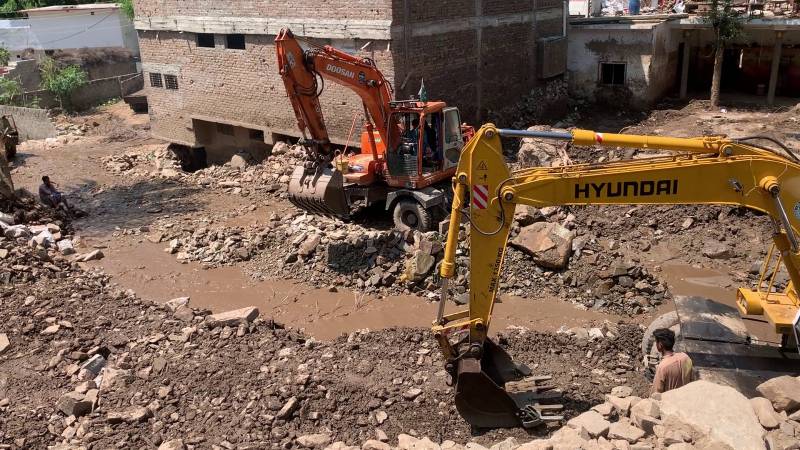
On 24 August, The Friday Times visited Beshonai village in Buner to review relief efforts. Aid operations were underway, with organisations' people from neighbouring districts and across the country arriving to assist. But relief distribution was flawed by mismanagement. According to survivors, even people who were not directly affected were receiving aid. A young man, who lost six family members, including three women and three children, complained that some people were even filming videos of distributing a few thousand rupees. KP Chief Minister Ali Amin Khan Gandapur announced 2 million for each damaged house, but this amount is not enough, the locals lamented. After these incidents, the KP government declared a flood emergency, and the government machinery engaged in relief activities. Prominent people, provincial Ministers and Federal ministers visited Buner and Swabi for condolence and urged the affected people to be facilitated.
Flood disasters are not new to Pakistan, but this year’s tragedy carried a different dimension. While social media brought the scale of destruction to global attention, it also fueled biased and unnecessary reporting. Instead of guiding people toward relief efforts, fear and panic were amplified. Misreporting of “cloudbursts” by mainstream media was an easy escape for responsible authorities, while fake videos circulated widely. Disaster Risk Reduction (DRR) principles were ignored, and relief operations remained disorganised and uneven.
Sarah Zafar, a climate change, inequality, localisation, and inclusive DRR expert associated with Oxfam International, told TFT that while social media has amplified coverage, a troubling trend has emerged: many widely shared videos are fabricated. The easy availability of AI tools has accelerated the creation of manipulated content, spreading panic and confusion among the public. Zafar said that, often, well-meaning users share such material unknowingly, but the intent of its creators is clear: exploiting public anxiety to gain likes, shares, and followers.
She emphasised that responsibility lies with the Pakistani media and civil society to ensure verified and coordinated information. She quoted the 2010 and 2022 floods; UN OCHA regularly provided fact sheets that supported relief coordination and fundraising. This time, however, international NGOs appear largely absent, raising concerns about whether local institutions have the technical capacity to coordinate emergency response while also preparing for long-term recovery. Sara said that women are the prime victims in such disasters. Due to strict norms and tradition, women haven’t survival skills that men had.
What Really Happened in Buner and Swabi?
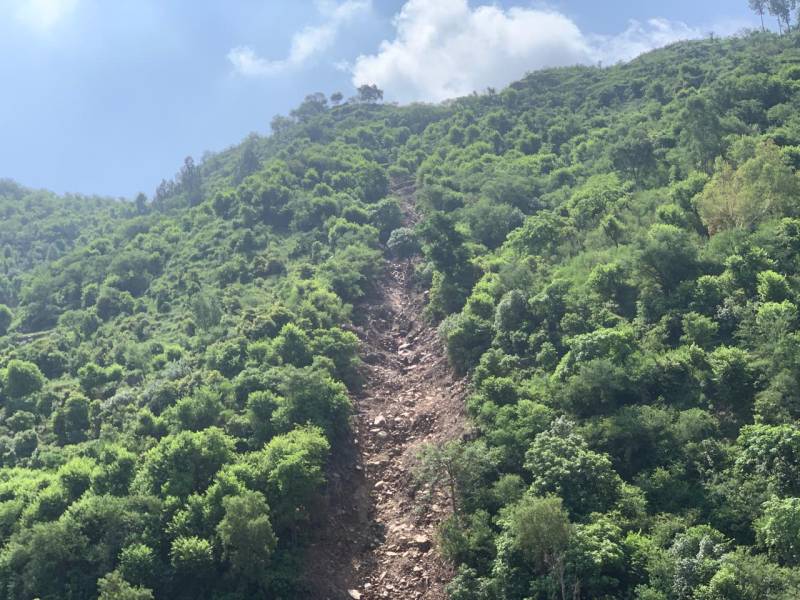
On the way to Dalorai village, we observed signs of rocks falling from the mountains at 17 different points. According to residents, land sliding incidents occurred before, but the current events are shocking. According to locals, incidents occurred at nearly 40 locations in the surrounding mountains. People hold varying views: some call it divine wrath, others describe it as thunder or lightning, some insist it was a cloudburst, while a few even believe these were “planted incidents” to displace them from their land.
So, what really happened in Buner and Swabi? Naya Daur TFT posed this question to two major institutions of the country, the Provincial Disaster Management Authority (PDMA) and the Pakistan Meteorological Department (PMD). PDMA termed it a “cloudburst,” saying that no technology in the world can predict such an event in advance. PMD, however, identified it as unusually intense monsoon rainfall, triggered by climate change.
It’s worth noting that Swabi and Buner don’t have a weather station; one station at Buner is not working, announcing its cloudburst, the concerned authorities are avoiding their responsibilities.
TFT shared visuals of the mountains with PMD officials. Deputy Director PMD Dr. Shahzada Adnan told TFT in a Zoom interview, as per the World Meteorological Organisation WMO when 100 mm of rainfall falls over one square KM area, it would be called a cloudburst. Shahzada said lightning strikes were recorded on the radar, which may explain some of the marks, but the signs mostly resemble landslides triggered by heavy rains. It is also possible that the lightning caused these slides, though at present this remains an assessment, not a confirmed finding. Shahzada said PMD earlier predicted a harsh monsoon, and the concerned authorities were informed.
For the past five years, the United Nations-led Intergovernmental Panel on Climate Change IPCC and leading scientists worldwide have repeatedly warned that climate change is increasing the frequency and intensity of extreme weather events, with India and Pakistan particularly vulnerable to monsoon floods. The 2025 floods in Pakistan created a debate and raised several critical questions: How safe are mountain and urban settlements? Why are women the prime victims? Why are constructions allowed on river deltas? Why are timely early warnings and local awareness still missing? Why do we lack advanced monitoring stations to forecast disasters? And why, amid a climate crisis, does poor governance continue to worsen the impact?