

To ally with great powers to defend your neighbour is a strategic trap; if you win, you become the slave of the greater power; if the allied power is defeated, you remain alone and defenceless against the angry neighbour, and you are destroyed. — Machiavelli, The Prince
On 28 February 2026, a new chapter unfolded in the Middle East in the name of Operation Epic Fury. In a daylight robbery-style mission, the US-Israel alliance attacked Iran without any solid reason or cogent objective in sight. The unprovoked aggression against a sovereign country was performed and choreographed under the aegis of Israel. Nevertheless, this was the second gruesome attack by the US-Israel alliance on mainland Iran; in June 2025, they had unleashed a 12-day war against Iran to “obliterate” Iran’s nuclear and missile facilities.
Resultantly, in a tit-for-tat move, Tehran struck back at Tel Aviv and American military installations in Arab countries — Iran had already reminded Washington that if they attacked, the Arab nations would become legitimate targets for counter-attacks. This mindless, illegal, illogical, and naked aggression by the US under the pressure of Israel has rattled the global economy, trade, security, stability, and sustainability — particularly in the Middle East.
Nonetheless, both sides are still at loggerheads. A fragile truce under the mediation of Pakistan is still being observed by both states to create breathing room for a possible off-ramp. Notwithstanding deep mistrust, perpetual hostility, political wrangling, and Israel’s hegemony, major obstacles to a peaceful resolution of long-standing grievances.
Meanwhile, the Gulf nations are in the crosshairs of the US-Iran rivalry. They have become primary and legitimate targets for the Iranian side due to hosting US military bases. The UAE, Qatar, Bahrain, Jordan, and Saudi Arabia faced an onslaught and barrage of low-cost drone attacks from Iran’s defence forces — famously the IRGC. Strangely, despite possessing some of the world’s most advanced and sophisticated air defence technology, they were unable to defend themselves against Iranian aerial strikes. Although some drones were intercepted, debris from those drones fell on civilian localities, causing death and destruction. Nevertheless, this war has produced irreversible damage in the political, economic, diplomatic, and security domains of the Middle East.
Politically, the GCC nations are livid with Washington for not protecting them from Iranian drone and missile attacks. The leadership of the Arab nations is mulling withdrawal from the American security umbrella, which is no longer considered safe. Moreover, they depend on tourism and the oil sector for survival.
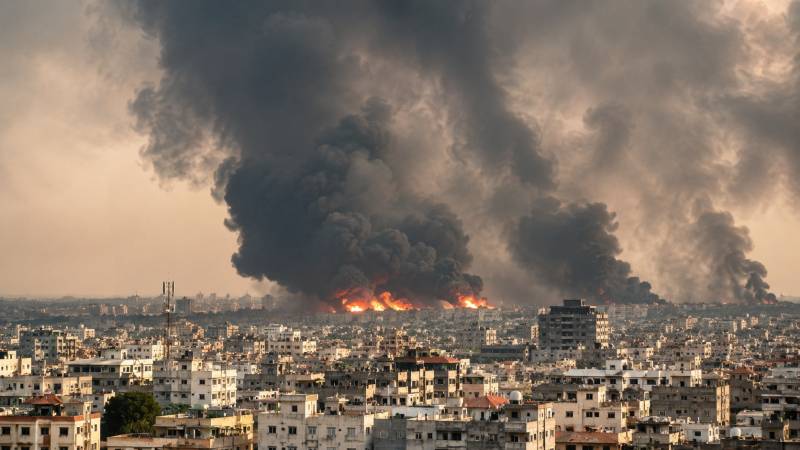
The whole Middle East will remain on fire if the leadership of the Arab nations does not devise a workable relationship with one another
Due to the barrage of missile and drone attacks from Iran on critical and strategic oil facilities, airports, and desalination plants, the Arab nations deem themselves sitting ducks. They were alone, beleaguered, and resentful over their continuous losses on multiple fronts.
Economically, the Arab countries rely on a petrodollar economy for their sustainability, functionality, and productivity. When this critical resource comes under severe strain or is unexpectedly shut down, they feel the heat of devastation and disruption. Desalination plants and oil installations are of strategic importance to the Gulf nations, just as oil is important to the global economy.
Strategically, the Iranians struck critical income-generating facilities, such as the biggest oil facility in Riyadh and crucial airports on the UAE mainland. Strangely, it was the UAE that endured the most attacks from Tehran. Subsequently, the Arab nations’ economies went into a tailspin. They could no longer sustain this war of attrition. Further instability and chaos may produce unintended consequences for them.
Diplomatically, the GCC nations were satisfied that they had strategic bilateral partnerships with America for security and defence assistance. This was evident in the Arab nations hosting Pentagon military bases. Moreover, as Machiavelli advised, excessive dependence on a single entity for long-term security and outsourcing strategic defence installations would jeopardise a state’s internal security and increase its external vulnerability at the hands of rivals.
Similarly, when the tides change, external overreliance for security purposes no longer remains a valid strategic partnership. States should look inward and become self-reliant in the strategic defence of their territory.
Arguably, the Arab nations had taken the USA for granted regarding the protection of their assets and economies. Paradoxically, the Americans have strategic interests aligned with Israel. They have neither the ambition nor the interest to secure the Middle East. This duplicity from the USA forced the Gulf states to recalibrate their security and defence architecture. Coincidentally, before this conflict, Riyadh had signed a “Strategic Mutual Defence Agreement” with Pakistan to bolster its security. This pact demonstrates Pakistan’s long-term commitment to Saudi Arabia for strategic, political, and economic necessity.
Strategically, the whole Middle East will never be the same after this war — if it ends. The conflict has exposed and widened major cracks in defence agreements between America and the Gulf countries. As they bear the heavy burden of this unholy war in the form of economic and revenue losses, they have become cautious regarding any future defence deals with the US. The war has dealt a major blow to the strategic relationship between America and the Arab countries.
Similarly, the relationship between Iran and other Gulf states will witness a dramatic and unprecedented shift in the form of deep hostility and diplomatic rivalry. The whole of West Asia will see a paradigm shift in defence and strategic affairs. Ironically, the Iran-USA war will further strain the relationship between the Arab world and Tehran.
This was visible during the intense and scathing verbal confrontation at the UN between the Iranian and UAE diplomatic leadership. Resultantly, according to analysts, a more chaotic, bewildered, and bruised West Asia will emerge after this unexpected war. This is a turning point for the Arab world.
In a nutshell, what Machiavelli advised and cautioned states about treading carefully when interacting with other powers remains relevant in the contemporary political and diplomatic domain. Iran is a neighbour; the US is far away. The Gulf nations will understand that relying on a distant country for security imperatives exposes them to the wrath of their neighbours.
Neighbours are those who understand and support one another when no one else is willing to help. Therefore, the Arab nations should sit together, peacefully resolve their internal differences, and pledge to defend themselves against foreign aggression. Forging an OIC-style league or pact will surely help them avoid relying on a single power whenever conflict strikes the Middle East.
Moreover, they must understand that Israel has nefarious interests in the Middle East. Tel Aviv wants the Gulf nations to fight each other and become vulnerable so that its vested interests can be fulfilled. The Arab countries that have normalised relations with Israel should revisit their relationship with Tel Aviv. Otherwise, the whole Middle East will remain on fire if the leadership of the Arab nations does not devise a workable relationship with one another.