

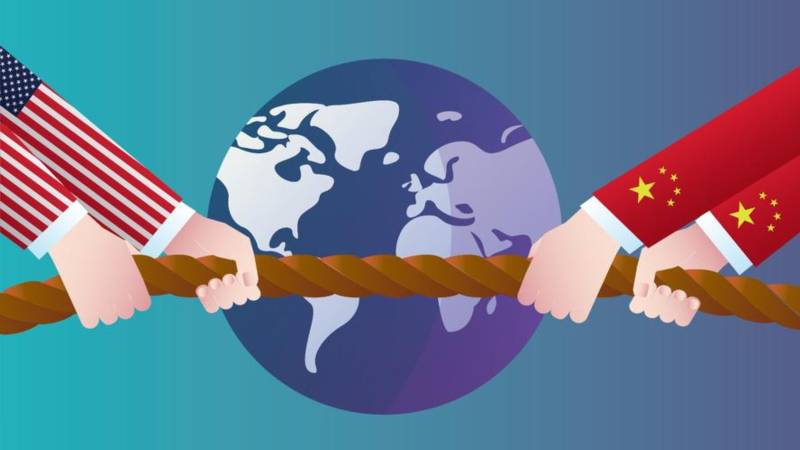
China as a future superpower is a beautiful and attractive idea, which is fast becoming a reality. China doling out economic goodies to the world is what comes to mind when we think about a future world order based on Chinese supremacy. We haven’t seen China browbeating any weak country in its neighbours. Its pet project, the Belt and Road Initiative (BRI), will facilitate economic growth, trade and commercial activities in the lands through it. No foreign wars, no ambitions on foreign lands—China’s diplomacy revolves around geo-economics and not geo-politics. Good enough. But more than 12 days of the Israel–Iran deadly war has exposed a weakness in the Chinese model of superpower. China’s strategic aloofness from the war was immensely chilling. China’s inability to influence the war and its directions is understandable—it has no military footprints in the region. China has strong strategic and military relations with one of the belligerents, Iran, but disappointingly no influence with Israel, the other belligerent.
Chinese strategic aloofness from the Israel–Iran war had two aspects: Firstly, it showed very little diplomatic interest in the conflict, besides issuing some foreign policy statements from Beijing. Secondly, China has no diplomatic, political or military capacity to bring about a ceasefire in this conflict. It is not that this conflict would not have deeply affected China. Any prolonged war or any attempt by Iran to close the Strait of Hormuz would have proved devastating for the Chinese economy, as most of the oil China imports from the Gulf passes through this route. A prolonged Israel–Iran war would have badly affected the economies of regional countries like Pakistan and India.
The good thing about Chinese power is that it is not militarily threatening to countries in the Middle East. The bad thing about Chinese power is its inability to influence military events in this part of the world. The Chinese could have provided shiploads of weaponry to the belligerent Iran, its ally, but that would not have solved the problem. Washington was providing loads of weapons and ammunition to the Israeli military during the war. But this was not the aspect of American power which makes its status as a superpower attractive for the international system of states. It could make the warrior state of Israel and the Islamic clergy that led Iran to agree on a ceasefire that proves its utility for the international system. This ability shows Washington’s diplomatic clout, its political influence and its relevance to political situations in different regions of the world.
President Trump’s enticing statements that now was the time to rebuild Iranian society would have appeared attractive to Iranian state leaders who have been facing stifling US-led economic sanctions for the past forty years
In Pakistani society, being pro-Chinese is considered patriotic. If you are pro-American, you are a suspect, at least at the political level. But you are not an outcast. Pakistanis are pragmatic people, and they usually think if someone is pro-American, he or she would be influential. So pro-American people are treated with respect but still considered suspect to the imaginary political causes the Pakistani nation is pursuing.
China has hostile relations with India. China is on good terms with Muslim countries like Iran and Saudi Arabia. All these factors make China more acceptable for Pakistanis. Whereas successive Pakistani leaders, intelligentsia and media portray Washington as a superpower which has repeatedly betrayed Pakistan. America is pro-Israel and recently has become pro-India as well. Therefore, in the social and political space within Islamabad, someone talking in support of the United States could potentially be considered a suspect.
So at the cost of sounding pro-American, I would say the international system—or our region, to be more precise—needs a superpower like America more than it needs a superpower like China. I mean, the strategic aloofness of China during the Israel–Iran conflict was chilling. In the Pak–India conflict, China came more decisively in favour of Pakistan, but then its inclination in support of one of the belligerents makes it ill-suited to act as an intermediary between the warring parties.
Washington has its own negatives as far as its role in these conflict-prone regions like the Middle East and South Asia is concerned. Most of the time it is a party in the conflict in the Middle East—or else in South Asia it is perceived to be supporting India in a decisive manner. For the past ten years, Washington has been supplying state-of-the-art weaponry and intelligence to New Delhi as part of its efforts to bolster India’s defence capability vis-à-vis China. But this effort has proved to be one of the catalysts for the four-day conflict between Pakistan and India in May 2025. During the Israel–Iran conflict, Washington quite irresponsibly became a party in the conflict when it bombed Iranian nuclear sites. But this doesn’t erode Washington’s capacity to influence military and political events in a decisive manner in these conflict-prone regions. Within hours of bombing Iranian nuclear sites, President Trump offered a ceasefire to Iran and, surprisingly, clergy-led Iran accepted the offer. Israel, which appeared unstoppable only hours ago, also agreed.
America’s overwhelming dominance of the international system explains its diplomatic clout in these conflict-prone regions. This dominance is backed by political and diplomatic influence, stemming from 70 years of political, diplomatic and military involvement in these regions. Its economic heft—President Trump’s threat that Washington would not do trade with India if it continued to fight with Pakistan—could change India’s belligerent position. Similarly, President Trump’s enticing statements that now was the time to rebuild Iranian society would have appeared attractive to Iranian state leaders who have been facing stifling US-led economic sanctions for the past forty years.
The Chinese have similar economic leverage to India. Indian commentators have recently pointed out that the Indian manufacturing sector is heavily dependent on imports from China. But China didn’t use this leverage even during India–China border clashes in 2020.
Colonialism and imperialism ended their careers in the world system a long time ago, but some of their legacies still exist in the international system. One of these legacies is the superpower management of the international system. Superpowers are countries which are in a different league as far as military strength and economic power are concerned. These powers make them distinct in the international system, and when imperialism and colonialism had a thriving presence in the international system, the system was managed by world powers.
There is an overwhelming body of opinion among international experts which declares the multi-polar world to be more stable than the Washington-dominated unipolar world
The United Nations Security Council (UNSC) is the structure which reflects the presence of the principle of superpower management of the international system. There has been much talk of the world system becoming multi-polar, with the emergence of the European Union (EU) and China as poles in the international system, along with the rise of a re-assertive Russia. But unfortunately, these powerful entities remained chillingly aloof during the Israel–Iran and India–Pakistan conflicts. Foreign policy statements and telephonic conversations with officials of two belligerent states would not have produced a ceasefire in either of these conflicts. Diplomacy backed by military power, or the threat of economic or trade sanctions, forced the belligerents into a ceasefire agreement in each of these conflicts.
It is not American hegemony which is the need of the hour. It is rather its political and diplomatic clout that could be used to bring about a stable international order. Obviously, in the recent past, Washington itself has acted in ways which have substantially disturbed the political stability of the international system. Wars in Afghanistan and Iraq are prime examples. Bombing Iranian nuclear sites is another example. International institutions like the United Nations have proved completely useless in these conflicts. So American influence minus American hegemony is the need of the hour—primarily because of three reasons:
Firstly, we can be sure that it was not for the last time that India and Pakistan, on the one hand, and Israel and Iran, on the other, have engaged in conflicts. Secondly, the Middle East and South Asia are not the only trouble spots in the world. War has again become fashionable in the international system. We can be sure that more will come. Thirdly, wars in South Asia and the Middle East have the potential to spread into adjoining regions and could possibly engulf the whole world.
Here is when the United States’ domestic political scene becomes immensely relevant in world politics. Who will replace Donald Trump? Will he or she be more openly white supremacist? Donald Trump is riding a wave of support from white middle-class workers who have been put out of work or whose salaries have become stagnant because of the rise of China and the shifting of American manufacturing jobs to China—or maybe because of automation in American job sectors. This white middle class is somewhat inclined towards secular or Christian right politics.
Suppose America’s next political leader is more openly white supremacist or comes to power with the support of the Christian right, which includes Christian Zionists, a group which violently supports the State of Israel. How would this development in American domestic politics influence events in the Middle East? Suppose America’s next President is a liberal internationalist who has more wars in the Middle East and South Asia on his agenda?
It is obvious that these questions compel one to feel nostalgic about Cold War geopolitics, when American hegemony was not so decisive or so unopposed, and when the other pole in the system was not suffering from this kind of chilling strategic aloofness. There is an overwhelming body of opinion among international experts which declares the multi-polar world to be more stable than the Washington-dominated unipolar world. Will a multi-polar world be more efficient in resolving international and regional conflicts?
What if the poles in the international system, instead of pushing the future belligerents toward peace, start supporting their favourite belligerents who are militarily or strategically allied with them? What if the poles themselves engage in a military conflict? Let me tell you: think tanks in Washington are seriously pondering a future military conflict between Washington and Beijing. Who will stop them if superpowers start a war?
Two things are an immediate need of the international system: First, the system needs the political and diplomatic clout that Washington enjoys in the system to prevent any future conflict. Secondly, the world needs to decisively move away from war as an institution to resolve conflicts. The human race needs to make war unfashionable again.