

The general elections in Bangladesh, scheduled for 12 February 2026, are expected to bring major political changes. Many observers believe that the results could surprise not only Bangladesh but also its next-door neighbour and long-time ally, India. The outcome may reshape regional diplomacy in South Asia, particularly relations involving India, Pakistan, and Bangladesh.
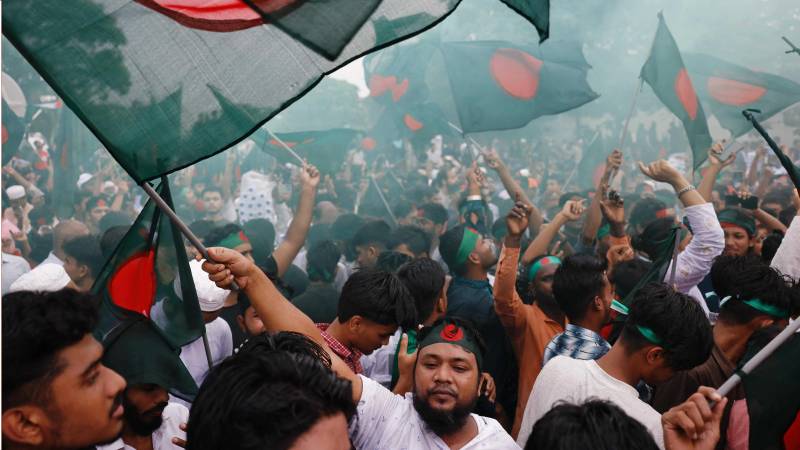
The political landscape in Bangladesh has changed significantly since the 2024 political transition, which followed large-scale student protests and led to the fall of the Hasina government. These protests, largely supported by young people from Generation Z, forced Sheikh Hasina to leave the country. Since then, the country has entered a new political phase.
The two strongest contenders in the upcoming election are the Bangladesh Nationalist Party (BNP) and Bangladesh Jamaat-e-Islami (BJI). Regardless of which party wins, it is widely believed that regional diplomacy in South Asia will shift. Both parties have shown interest in moving beyond the painful memories of the 1971 conflict and improving relations with Pakistan. If this approach continues, Pakistan and Bangladesh may enter a new era of friendship and cooperation. Such a development could also influence India’s strategic position in the region and affect climate diplomacy efforts between India and Pakistan.
One of the most striking developments since the fall of the Hasina government has been the growing support for Jamaat-e-Islami among students and young voters. Generation Z, who played a decisive role in the 2024 protests, are expected to have a strong influence in these elections. Many young voters are demanding a government free from corruption and political manipulation. They are calling for equality of opportunity, transparency, and a system based on fairness and accountability. They want a political order where all individuals are treated with equal dignity and have the same fundamental rights, regardless of race, gender, or social class.
Reports suggest that Jamaat’s rising popularity is largely due to its perceived distance from corruption. After the fall of the Hasina government, many citizens hoped that local-level extortion and rent-seeking practices would end. However, it has been reported that some of these networks were quickly taken over by groups aligned with the BNP. For voters seeking genuine change, this has created doubts about whether the BNP truly represents a new direction.
The absence of the Awami League from the electoral contest has altered political dynamics, as voters who once backed the BNP mainly to block an Awami League victory may now feel more comfortable supporting Jamaat
Understanding the aspirations of Generation Z, who are pragmatic, socially aware, and digitally connected, Jamaat-e-Islami has presented a more moderate and reform-focused image in recent years. Although the party has historically supported the long-term goal of introducing Islamic law, it has recently focused more on governance reforms, anti-corruption measures, and institutional accountability.
A clear example of this repositioning was seen in a speech by the party’s leader, Shafiqur Rahman, at the January 2026 Policy Summit titled “Aspiring Bangladesh.” Notably, his speech did not focus on religion. Instead, he described Jamaat as representing “mainstream Muslim democrats” and emphasised democratic values rather than religious ideology.
On Wednesday evening in Dhaka, Rahman unveiled his party’s ambitious election manifesto. He promised that if Jamaat wins the 12 February election, it would aim at increasing Bangladesh’s GDP fourfold to reach $2 trillion by 2040. He pledged strong investment in technology-driven agriculture, manufacturing, information technology, education, and healthcare. He also promised to attract higher foreign investment and increase public spending.
Although recent opinion polls suggest that the BNP may secure a majority in the 300-seat parliament, some political commentators believe that the Jamaat-led 11-party alliance could still achieve victory. If Jamaat comes to power, at least three student leaders who led the 2024 protests are expected to be included in the cabinet. This possibility may further encourage young voters to support the party.
The absence of the Awami League from the electoral contest has altered political dynamics, as voters who once backed the BNP mainly to block an Awami League victory may now feel more comfortable supporting Jamaat.
Even if Jamaat-e-Islami does not win a majority, it is likely to emerge as a powerful force in the parliament. A strong Jamaat presence could compel the BNP to act more responsibly and focus on good governance. In this way, the election may not only decide who forms the government but also shape the political culture of Bangladesh for the years to come.
The election is, therefore, more than a routine democratic exercise. It represents a possible turning point, not only for Bangladesh, but for the broader balance of power and diplomacy in South Asia.